
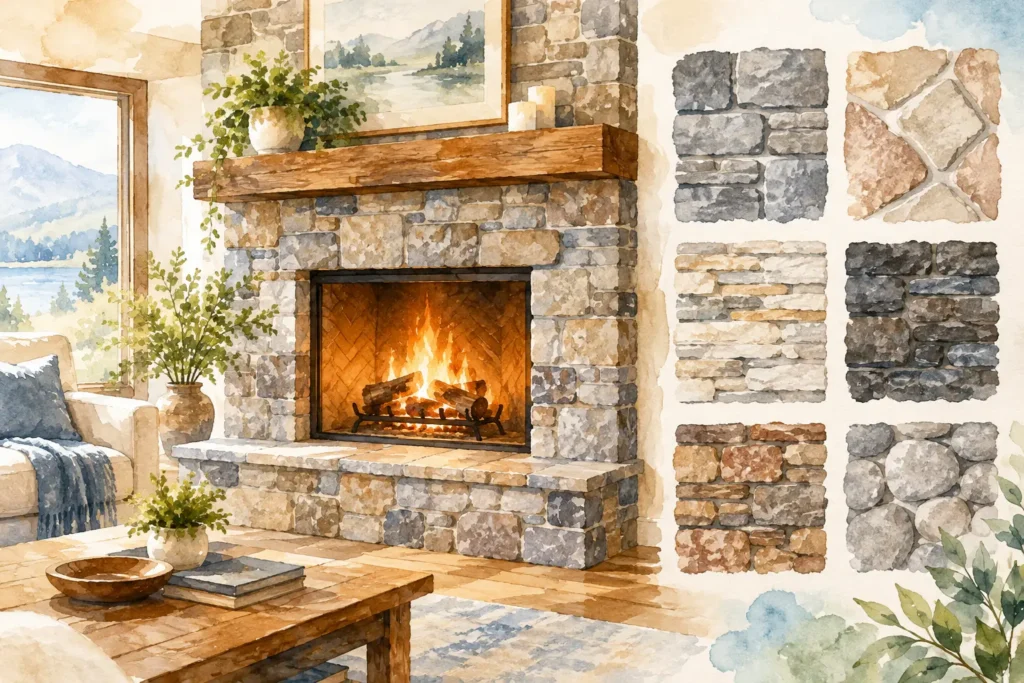
A fireplace can make a room feel finished, but the wrong surround can make it feel heavy, undersized, too busy, or disconnected from the rest of the home. Learning how to choose fireplace stone starts with more than finding a color you like. You need to consider the fireplace’s heat exposure, the room’s proportions, the character of your home, and how much maintenance you want over the years.
The best choice is usually one that works at two distances: it looks striking from across the room and still feels intentional when you stand close enough to see its natural movement, veining, texture, and craftsmanship.
Start With the Fireplace’s Role in the Room
Before choosing a material, decide what job the fireplace should do visually. In a formal living room, a fireplace may be the focal point that sets the tone for the entire space. In an open kitchen and family room, it may need to complement cabinetry, countertops, flooring, and nearby built-ins without competing with them.
A dramatic veined marble or quartzite surround can anchor a quieter room. A more uniform granite, limestone, or soapstone may be the better choice when the fireplace shares attention with a statement kitchen island or panoramic windows. There is no universal right answer. The room should tell you whether the fireplace needs to lead or support the design.
Also consider the shape of the feature. A traditional fireplace with a mantel, hearth, and detailed surround can carry richer stone movement and more architectural detail. A clean-lined contemporary fireplace often benefits from large-format slabs, minimal joints, and simple edges that let the material speak for itself.
How to Choose Fireplace Stone by Material
Natural stone offers a range of looks and practical characteristics. Seeing full slabs is essential because a small sample rarely captures the scale, color variation, or veining you will see on a finished fireplace.
Marble for Classic Character
Marble brings depth, movement, and a refined appearance that suits traditional, transitional, and modern interiors. White marble with soft gray veining remains a popular choice for bright, elegant rooms, while darker varieties can create a more tailored, dramatic focal point.
Marble is softer and more absorbent than some other stones, so it can develop a patina over time. For a vertical fireplace surround, this is often less of a concern than it would be on a heavily used horizontal surface. Still, homeowners should understand that natural variation and occasional etching are part of marble’s character, not defects.
Granite for Everyday Durability
Granite is a practical choice for homeowners who want natural stone with strong durability and comparatively low maintenance. It is available in colors ranging from soft neutrals to deep blacks, warm browns, and expressive patterns.
Granite works particularly well for hearths and surrounds in active family spaces. Its visual movement can be bold, so it is worth comparing the slab to nearby finishes. A heavily patterned granite may look beautiful on its own but can feel crowded next to active cabinetry or a patterned rug.
Quartzite for Natural Drama
Quartzite is often selected for its hardness and its striking resemblance to marble in certain varieties. It can offer sweeping veining, luminous color, and a distinctly natural look while standing up well to everyday living.
Not every quartzite looks delicate. Some have strong mineral movement, warmer earth tones, or a crystalline texture that gives a fireplace real presence. Because names and classifications can vary in the marketplace, work with an experienced stone professional who can explain the specific slab’s performance and care needs.
Soapstone and Limestone for Softer, Grounded Design
Soapstone has a matte, understated appearance that feels especially at home in cottages, historic homes, and relaxed contemporary interiors. Its color deepens naturally over time, giving the fireplace a lived-in quality. It is dense and heat tolerant, though it can scratch more easily than granite or quartzite.
Limestone offers a quiet, architectural look with soft color variation. It is often chosen for fireplaces that are meant to feel timeless rather than flashy. Since limestone is more porous, sealing and appropriate care are important, particularly for a hearth that may see ash, shoes, pets, or wood storage nearby.
Consider Heat, Hearth Use, and Installation Details
A fireplace surround is not just a decorative wall treatment. It is part of a system that must be designed around the fireplace manufacturer’s requirements, local codes, and the specific type of fireplace being installed.
Natural stone is well suited to fireplace applications, but the installation details matter. Clearances around the firebox, heat output, backing materials, expansion considerations, and the dimensions of the hearth all need professional attention. If you are replacing an existing surround, do not assume the new stone can simply follow the previous layout. The firebox, mantel, and wall construction may affect what is possible.
For a wood-burning fireplace, the hearth often takes more wear than the surround. Choose a finish that fits how your household uses the area. A honed surface can provide a softer, less reflective appearance, while a polished finish can highlight veining and make a room feel more formal. Discuss edge details as well. A substantial eased edge, a layered profile, or a simple mitered return can change the finished look considerably.
Use Scale to Avoid an Undersized or Overwhelming Fireplace
One of the most common design mistakes is choosing stone based only on a sample, then overlooking the scale of the finished installation. A small fireplace in a large room can disappear if the surround is too narrow. Conversely, a dark, heavily patterned stone extending floor to ceiling can overwhelm a compact space.
Measure the full elevation, including the mantel, adjacent walls, ceiling height, and nearby built-ins. If your fireplace will reach the ceiling, ask to see the slab layout before fabrication. Vein direction and bookmatching can create a beautiful intentional effect, but they need to be planned around the actual dimensions of the wall.
Large slabs generally mean fewer seams and a more continuous appearance. That can be especially effective on contemporary fireplaces. In other homes, carefully placed joints and traditional stone details can add structure and visual rhythm. The best approach depends on the architecture, not just the current design trend.
Coordinate Color Without Making Everything Match
Your fireplace stone does not need to match your countertops exactly. In fact, matching every surface can make a home feel flat. Instead, look for a shared undertone or a complementary element.
For example, a warm white limestone fireplace can work beautifully with creamy cabinetry and a darker natural-stone countertop. A charcoal soapstone fireplace may echo black window frames or hardware. A marble surround with warm gold or taupe veining can connect a room to wood flooring and brass accents.
Bring cabinet samples, paint colors, flooring samples, and fabric swatches to the showroom whenever possible. Natural stone changes with lighting, and North Carolina homes often have strong shifts between daylight and evening interior lighting. Looking at full slabs alongside your finishes gives you a much more reliable picture than making a decision from photos.
Plan for the Level of Care You Want
Every stone has a care routine, but the right routine should fit your household. If your priority is a low-maintenance fireplace in a busy gathering space, granite or many quartzites may be a comfortable choice. If you love the depth and evolving character of marble, soapstone, or limestone, choosing those materials means embracing their natural personality and following recommended sealing and cleaning practices.
Avoid harsh cleaners and abrasive tools on natural stone. A gentle, stone-safe cleaner and prompt attention to soot or spills will help preserve the finish. If the fireplace is wood-burning, periodic professional cleaning of the firebox and chimney also helps limit residue around the surround and hearth.
Make the Final Choice With the Full Slab in View
A fireplace is a custom architectural feature, not a boxed product. The final result depends on the specific slab, the fabrication plan, the edge treatment, and the installer’s ability to create clean lines around the firebox, mantel, and adjacent surfaces.
At Marble Unlimited, homeowners can compare full slabs and talk through how each material will work with the room, the fireplace type, and the desired level of maintenance. That hands-on process makes it easier to choose confidently, especially when a fireplace is part of a larger renovation.
A well-chosen stone fireplace should feel like it has always belonged in the home. Schedule a showroom visit before you commit, bring the finishes you are working with, and give the material the space to show you what it can become.