A quartzite slab can look nearly indestructible in a showroom: dramatic veining, crystalline movement, and a surface that feels built for real life. But homeowners often ask, does quartzite require sealing once it is installed in a busy kitchen or bathroom? In most cases, yes. A quality penetrating sealer is a simple, worthwhile layer of protection that helps preserve the stone’s appearance without changing the character that made you choose it.
Quartzite is one of the most durable natural stone options available, but it is still natural stone. Its exact density and absorbency vary from slab to slab, so care recommendations should be based on the material selected for your project, not a one-size-fits-all rule.
Does Quartzite Require Sealing? Usually, Yes
Most quartzite benefits from sealing because even a dense slab may have microscopic pores that can absorb liquids over time. The purpose of a sealer is not to create a plastic-like coating on top of the stone. A professional-grade penetrating sealer absorbs below the surface and slows the path of moisture, oil, and pigmented spills into the stone.
That extra time matters. It gives you a better opportunity to wipe up olive oil, coffee, red wine, berry juice, or cooking spills before they leave a mark. In a bathroom, sealing can also help reduce the chance of discoloration from cosmetics, soaps, and personal-care products.
Sealing does not make quartzite stain-proof, scratch-proof, or maintenance-free. It makes the surface more forgiving. A sealed countertop still deserves prompt cleanup and the right cleaning products, particularly around high-use areas such as the sink, cooktop, and island seating.
Why one quartzite slab may need more care than another
Quartzite is formed when sandstone undergoes intense heat and pressure. That process generally creates a hard, dense stone, but natural variations remain. Some slabs have a tighter structure and absorb very little. Others have more open areas, fissures, or mineral features that require closer attention.
Surface finish can also influence how a countertop behaves. A polished surface is often easier to wipe clean, while a textured or matte finish may need more deliberate cleaning. Color and movement matter as well. On a light slab, a dark cooking oil stain may be easier to notice. On a heavily patterned slab, it may be less visible, but it can still absorb if spills are left behind.
This is why viewing the actual slab is valuable. An experienced fabricator can discuss its appearance, intended use, edge details, sink cutouts, and practical maintenance expectations before fabrication begins.
How Often Should Quartzite Be Sealed?
For many interior quartzite countertops, sealing at installation and then checking the surface every one to three years is a sensible starting point. The right interval depends on the specific slab, the sealer used, and how the space is used. A lightly used bathroom vanity may go longer between applications than a family kitchen where meals, homework, and entertaining all happen around the same island.
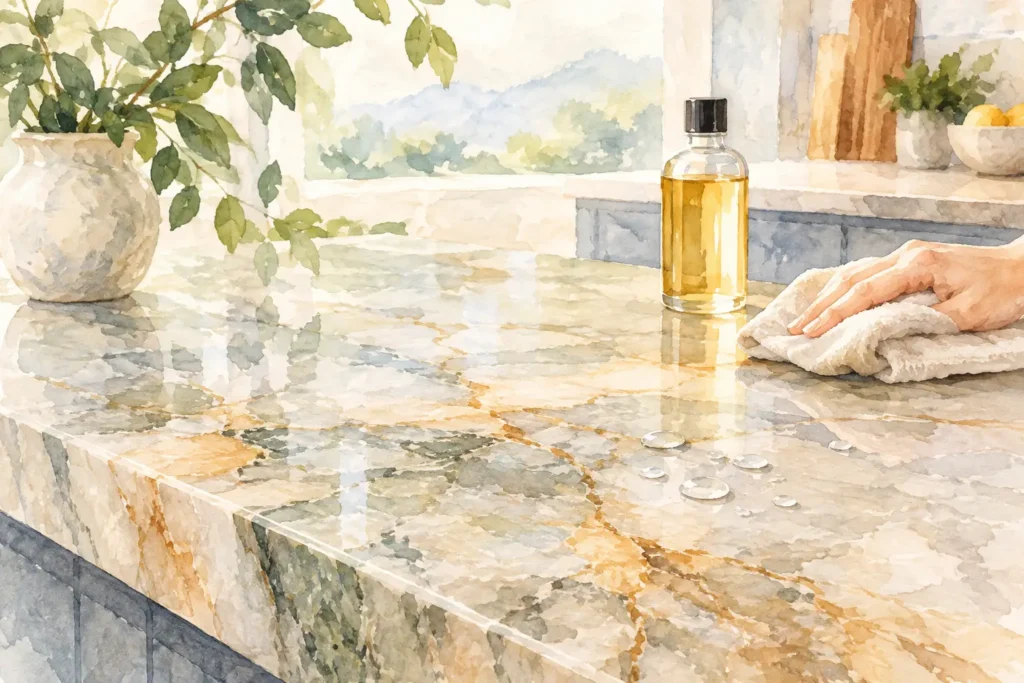
Rather than resealing on a fixed calendar date, test the stone. Place a few drops of water in an inconspicuous area, such as near the backsplash or on a section of the countertop that is not regularly used. Let the water sit for about 10 to 15 minutes, then wipe it away.
If the stone does not darken and the water remains beaded on the surface, the existing sealer is likely still doing its job. If the water quickly soaks in or leaves a darker spot that takes time to disappear, it may be time to reseal. The same test can be performed carefully with a drop of cooking oil, though oil should be wiped up promptly after checking.
Outdoor quartzite surfaces may need a different care plan because sun, rain, standing water, and seasonal temperature changes create additional exposure. Ask your stone professional to recommend a sealer designed for the specific application rather than using the same product chosen for an indoor countertop.
Signs Your Quartzite May Need Resealing
A water test is useful, but everyday clues can also tell you when it is time to take action. Watch for changes such as:
- Water no longer beads and instead spreads or darkens the stone quickly.
- The area around the sink looks darker after routine use and takes longer to dry.
- Cooking oils or colored liquids leave temporary dark spots more easily than before.
- The countertop has been professionally deep-cleaned, repaired, or refinished and needs its protection renewed.
A darker spot after water contact does not always mean permanent damage. Unsealed or under-sealed stone can darken as it absorbs moisture, then return to normal as it dries. Still, it is a useful signal that the surface needs more protection.
What Sealing Can and Cannot Do
A good sealer helps resist absorption. It does not prevent every surface issue, and understanding that distinction protects both your investment and your expectations.
Quartzite is prized for its hardness and generally performs very well in kitchens. It stands up well to daily wear, but sharp or abrasive materials can still affect any countertop surface. Use cutting boards for food preparation, especially when working with knives. Use trivets or heat pads for cookware as an added precaution, even though quartzite has excellent heat resistance.
Sealer also does not correct damage that is already present. If a spill has created a stain, the appropriate treatment depends on what caused it, how long it sat, and the slab’s makeup. Applying additional sealer over a stain will not pull the stain out. Professional evaluation is often the safest route before trying aggressive cleaners or DIY remedies.
There is also a difference between staining and etching. Staining occurs when a substance absorbs into the stone. Etching is a surface change caused by acidic materials reacting with minerals in the stone. True quartzite is generally far more resistant to etching than marble, but some slabs sold under the quartzite name may contain minerals that react differently. This is another reason slab-specific guidance matters.
The Best Way to Care for Sealed Quartzite
Daily quartzite care is uncomplicated. Wipe up spills promptly with a soft cloth or sponge, warm water, and a cleaner made for natural stone. For regular messes, gentle cleaning is more effective than harsh products used occasionally.
Avoid abrasive powders, strong degreasers, bleach-heavy cleaners, and acidic household products unless a stone-care professional has specifically approved them for your surface. These products can dull the finish, weaken the sealer, or leave residue that makes the countertop look cloudy.
After cleaning, dry the surface with a soft cloth if water spots are a concern, especially in areas with hard water. Do not allow soap, oil, or cleaning product residue to build up near the sink. Consistent, low-effort care is much easier than restoring a neglected surface later.
Professional Sealing Makes the Difference
Applying a sealer sounds straightforward, but the details matter. The stone must be clean and fully dry before sealing. The right product must be selected for the stone and application. Excess sealer must be removed according to the manufacturer’s directions, or it can leave a hazy finish that is difficult to correct.
During professional fabrication and installation, this is part of a larger conversation about how you live with the surface. A home that regularly hosts large gatherings may need different guidance than a low-use guest bath. Sink style, backsplash height, slab finish, and kitchen layout can all affect where water and spills collect.
At Marble Unlimited, our team helps homeowners make those decisions while they are selecting material, not after the countertop is already in place. Seeing full slabs and talking through real maintenance needs makes it easier to choose quartzite with confidence.
A sealed quartzite countertop does not ask for complicated upkeep. It asks for a little attention, the right cleaning habits, and a care schedule matched to your particular slab. That is a small commitment for a surface designed to bring natural beauty and everyday durability to your home for years to come.