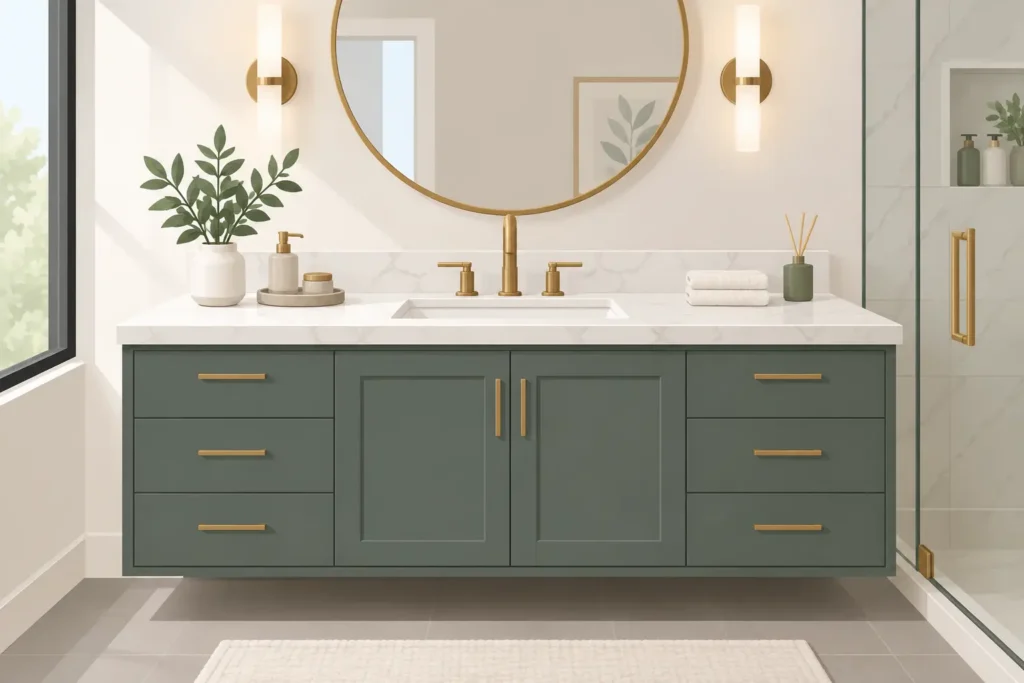
A bathroom vanity may occupy only a few feet of wall space, but it carries a surprising amount of visual and daily-use weight. Custom bathroom vanity tops give homeowners the opportunity to make that space work harder: fitting the room precisely, supporting the right sink style, and bringing natural character or clean consistency to the overall design. The result should not simply look good on installation day. It should feel right every morning, hold up to real routines, and belong with the cabinetry, wall finishes, fixtures, and lighting around it.
For homeowners planning a bathroom renovation in the Triangle area, a custom-fabricated top is often the difference between a vanity that looks selected and one that looks truly designed for the room.
Why Custom Bathroom Vanity Tops Make a Difference
A ready-made vanity top can be a practical choice in a straightforward space, but bathrooms are rarely as simple as they appear. Walls may not be perfectly square. A window trim, side splash, linen cabinet, or plumbing location can affect the available dimensions. In a primary bath, you may need two sinks while still preserving useful counter space between them. In a powder room, every inch may matter.
Custom fabrication allows the top to follow the actual measurements of the room and cabinetry rather than forcing the room to accommodate a standard size. It also gives you control over the details that shape both appearance and use: the stone selection, finished edge, sink cutouts, faucet spacing, backsplash height, and the placement of seams when a seam is necessary.
That flexibility matters especially with stone. A slab has movement, veining, mineral variation, and areas of distinct color. Working with an experienced fabricator lets you consider how those features will appear across the vanity top, instead of treating the material as an afterthought. A bold quartzite vein can become a focal point. A quiet quartz pattern can help a compact bath feel calmer and more open.
Choosing the Right Material for a Bathroom Vanity
There is no single best material for every bathroom. The right choice depends on how the space is used, the look you want, your comfort with maintenance, and how the vanity relates to the rest of the home.
Quartz for Consistent Color and Easy Care
Quartz is a popular option for bathrooms because it offers reliable color, consistent patterning, and a low-maintenance surface. It does not require sealing, making it well suited to busy family bathrooms, guest baths, and homeowners who prefer a clean, predictable finish.
Quartz can be especially helpful when you are coordinating a vanity with painted cabinetry, brushed metal fixtures, or a defined wall color. Since the pattern is generally more controlled than natural stone, it is easier to visualize during the design process. The trade-off is that it may not offer the one-of-a-kind depth and movement found in a natural slab.
Granite for Natural Durability
Granite remains a strong choice for bathroom vanity tops. Its natural variation gives each installation a distinct appearance, while its durability makes it comfortable for everyday use. With proper sealing and care, granite performs well around water, cosmetics, and the normal traffic of a shared bathroom.
Granite ranges from subtle to dramatic. A lighter option can bring softness to traditional cabinetry, while a darker, more active slab can add contrast to a modern vanity. Viewing the full slab is important, particularly when color movement is part of the reason you chose the material.
Marble for Timeless Character
Marble has a classic look that many homeowners want in a primary bathroom or powder room. Its veining, soft color shifts, and natural luminosity can make even a simple vanity feel elevated. It is also a material that ages with use, which is part of its appeal for some homeowners.
The trade-off is maintenance. Marble is more susceptible to etching and staining than harder surfaces, particularly when exposed to acidic products or spills left unattended. It can still be an excellent bathroom choice, but it is best for homeowners who understand its character and are willing to follow practical care recommendations.
Quartzite and Soapstone for Distinctive Style
Quartzite offers the depth and movement people often love in marble, with greater hardness and durability. Each slab is different, so careful slab selection and layout planning are essential. It can be a striking choice for a large double vanity where the stone has room to make an impact.
Soapstone has a softer, understated appearance and develops a natural patina over time. It works beautifully in homes that favor warmth, historic character, or a relaxed, collected design. It is not for everyone, but homeowners who appreciate materials that change gracefully often find it especially appealing.
Design Details That Change the Finished Look
The slab gets attention, but the small decisions are what make a vanity top feel complete. Sink choice is one of the first. An undermount sink creates a clean countertop line and makes wiping water into the basin easier. A vessel sink can add sculptural interest, though it changes the required cabinet height and faucet placement. Integrated stone sinks can create a tailored, architectural result, particularly in a powder room or contemporary primary bath.
Edge profiles deserve the same consideration. A simple eased edge works in nearly any style and keeps the focus on the material. A more detailed profile can complement traditional cabinetry, while a thicker laminated edge can give the vanity a more substantial presence without requiring an unusually thick slab.
Backsplashes are another decision worth making early. A short stone backsplash can protect the wall and create a finished transition at the rear of the vanity. In other bathrooms, the cleaner look of no backsplash may better suit the wall treatment and fixture layout. Neither approach is automatically better. The choice depends on the room’s design and the amount of water exposure behind the sinks.
For double vanities, think beyond symmetry. Equal sink spacing may look balanced, but a centered cabinet layout, drawer access, outlet placement, and the width of the mirrors all affect the final plan. A good fabrication and installation team will look at the vanity as a working surface, not just a stone rectangle.
Measure After the Cabinetry Is Set
Accurate measurement is where custom work becomes dependable work. Vanity cabinets should be installed, secured, and level before final field measurements are taken. This allows the fabricator to account for actual wall conditions, overhangs, and any small variations that are common in remodeled homes.
It is also wise to have the selected sink and faucet specifications available before fabrication. Faucet holes are not one-size-fits-all. The number of holes, spacing, reach, and handle clearance all matter, especially when using a vessel sink or a backsplash. If wall-mounted faucets are part of the plan, their location should be confirmed before the top is installed.
A professional template and measurement process reduces surprises, but it also gives you a final opportunity to confirm details. This is the time to review overhangs, edge treatment, sink placement, and how the selected slab will be oriented. Questions are easier to solve before cutting begins than after a finished surface arrives at the home.
Plan for Everyday Bathroom Use
Beautiful material should also suit the people using the room. A children’s bath may benefit from a forgiving, low-maintenance quartz surface and an undermount sink with generous counter room. A guest bath can be a place to choose something more expressive, since it may receive lighter use. A primary bath often calls for a balance: enough durability for daily routines, with a material and layout that make the space feel personal.
Consider where hair tools, soap dispensers, skincare products, and drinking glasses will sit. A narrow vanity can still work well, but only if the sink size and faucet placement leave usable landing space. In a compact powder room, a carefully chosen remnant may provide a high-end look while keeping material use efficient.
Work With a Fabricator Who Can See the Whole Project
Custom bathroom vanity tops involve more than selecting a color sample. The strongest results come from seeing full slabs, comparing material behavior, discussing the cabinet and sink plan, and having experienced professionals handle fabrication and installation. That process helps prevent common disappointments, such as a sink placed too close to an edge, a pattern that does not flow as expected, or a top that conflicts with the room’s proportions.
At Marble Unlimited, homeowners can review a broad selection of stone materials and receive guidance from people who understand how a slab becomes a finished surface. From the showroom conversation through measurement, fabrication, and installation, the goal is a vanity top that looks intentional and performs well for years.
Before making a final selection, bring cabinet dimensions, finish samples, fixture information, and a few photos of the bathroom to a showroom appointment. Seeing those elements together is often the clearest way to find a vanity top that feels right for your home.