A countertop can look perfect under showroom lighting and behave very differently after a year of coffee, citrus, family dinners, and daily cleanup. That is the real question behind quartzite vs marble: not which stone is universally better, but which one suits the way your household lives and the look you want to create.
Both are natural stones with remarkable character. Both can make a kitchen island, bathroom vanity, fireplace surround, or outdoor surface feel more considered and lasting. Their differences show up in mineral composition, everyday performance, maintenance expectations, and the kind of patina each develops over time.
Quartzite vs Marble at a Glance
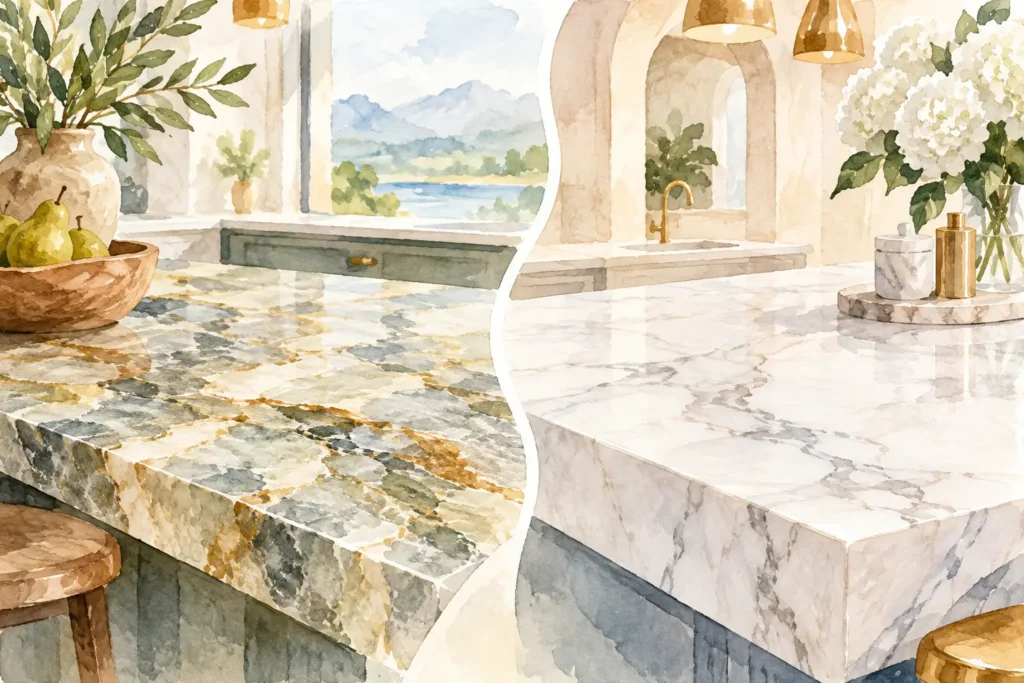
Quartzite begins as sandstone and changes under intense heat and pressure into a dense metamorphic stone. It is primarily made of quartz, which gives it notable hardness and resistance to scratching. Many quartzites feature soft white or gray backgrounds with veining that can resemble marble, along with colors ranging from warm gold and blue to green and charcoal.
Marble begins as limestone and transforms into a calcite-rich metamorphic stone. It is celebrated for its depth, movement, and luminous surface. From quiet white slabs with delicate gray veining to expressive selections with dramatic color, marble has a visual quality that is difficult to duplicate.
The practical distinction is straightforward: quartzite is generally the tougher choice for a busy kitchen, while marble is more reactive and develops a lived-in patina more readily. That does not make marble a poor choice. It simply asks its owner to appreciate its character, including the marks that come with use.
Durability: How Each Stone Handles Daily Life
For homeowners who cook often, quartzite is frequently the easier natural-stone recommendation. Its hardness helps it stand up well to everyday abrasion from dishes, utensils, and general kitchen activity. It also handles heat well, although trivets remain a sensible habit for any finished surface.
Marble is softer than quartzite. It can scratch or wear at edges more easily, particularly in a heavily used kitchen. A honed finish can make this wear less noticeable than a highly polished finish, which is one reason many homeowners choose honed marble for areas where a relaxed, timeworn appearance feels right.
Neither material is indestructible. A heavy dropped object can chip either stone, especially along an exposed edge or corner. Professional fabrication and installation matter here. Proper support, careful seam placement, a well-chosen edge profile, and accurate cutouts for sinks and cooktops all contribute to a surface that performs beautifully over time.
The Difference Between Staining and Etching
Staining and etching are often confused, but they are not the same issue. A stain happens when a substance penetrates the stone. Sealing helps reduce this risk, though it does not make natural stone completely stain-proof.
Etching is a change in the stone surface caused by acidic materials. Lemon juice, vinegar, wine, certain cleaners, and some foods can react with calcite in marble, leaving a dull spot or faint mark. Etching is especially visible on polished marble because it disrupts the reflective finish.
Quartzite is usually much more resistant to etching, making it a more forgiving choice around food preparation. Still, each slab should be evaluated individually. Some stones sold under broad commercial names can vary in mineral makeup and performance, which is why seeing the actual slab and discussing its intended use is so valuable.
Maintenance Expectations for Quartzite and Marble
Natural stone care is manageable when homeowners begin with realistic expectations. Both quartzite and marble benefit from periodic sealing, with the schedule depending on the specific material, finish, and amount of use. A properly sealed surface gives you more time to wipe up spills before they can absorb.
For day-to-day cleaning, use a soft cloth and a stone-safe, pH-neutral cleaner. Avoid harsh chemicals, abrasive powders, and acidic cleaners. Wipe spills promptly, particularly oils, dark sauces, wine, and citrus-based foods.
Quartzite offers more margin for error. A homeowner can enjoy its natural movement without constantly worrying about every splash or glass ring. Marble requires more attentiveness in a kitchen, but it can be an excellent fit for a homeowner who values its classic appearance and accepts that the surface will gain personality with use.
In bathrooms, the decision is often closer. Marble vanities can be beautiful, especially in powder rooms or primary baths where food acids are less likely to be part of daily life. Quartzite can be the preferred option in high-traffic family bathrooms because of its stronger scratch resistance and lower sensitivity to common products.
Which Look Works With Your Design?
Performance matters, but stone is also an emotional choice. The slab you select becomes one of the largest visual elements in a room, and natural variation is part of its appeal.
Marble has a long architectural history for good reason. Its veining can feel crisp and tailored or richly dramatic, depending on the selection. It works naturally with traditional homes, transitional kitchens, European-inspired interiors, and clean contemporary spaces that need warmth and movement. Marble can make a room feel established rather than newly finished.
Quartzite provides a similarly elevated natural look with a broader range of visual personalities. Some slabs offer the pale, flowing movement homeowners associate with marble. Others bring bolder mineral lines, crystalline texture, or layered earth tones. It is often a strong choice when a homeowner wants statement stone without the same level of sensitivity to etching.
The best way to compare is not by looking at a small sample alone. View full slabs whenever possible. A small cut piece cannot show the direction of the veining, the color shifts across the slab, or the areas that may become the focal point of an island, backsplash, or fireplace.
Finish Changes the Experience
A polished finish reflects light and emphasizes color, depth, and veining. It can feel formal, bright, and refined. On marble, it also makes etching easier to notice.
A honed finish has a softer, lower-sheen appearance. It is often chosen for its understated feel and because it can make minor wear blend in more naturally. The right finish depends on the slab, the room’s lighting, and how you want the surface to age.
Cost Depends on More Than the Stone Name
It is tempting to assume quartzite always costs more than marble, or the reverse. In reality, either material can fall into a wide range depending on rarity, origin, color, slab availability, thickness, finish, and demand.
The finished project cost also includes more than the selected slab. The layout, amount of material needed, edge detailing, cutouts, sink choice, access to the installation area, and complexity of the fabrication all affect the investment. An island with a waterfall end, for example, requires careful planning to align the stone’s movement across surfaces.
A showroom consultation helps clarify these variables early. It also gives you a chance to compare multiple slabs in a similar price range rather than making a decision based on a single photograph or a generic material label.
Where Each Material Makes the Most Sense
Quartzite is a practical favorite for active kitchens, large islands, bar areas, and family bathrooms. Its durability is especially appealing when a surface needs to look refined while handling regular use. Because it is natural stone, it also brings variation that makes each project distinct.
Marble shines in bathrooms, fireplaces, formal gathering spaces, pastry areas, and kitchens where its patina is considered part of the design. It can also be right for a hardworking kitchen when the homeowner understands and embraces its maintenance needs. Many of the most admired marble kitchens are not pristine – they are beautiful because they reflect years of real life.
For exterior applications, both material selection and installation details deserve careful review. Exposure to sun, moisture, temperature changes, and surrounding conditions can affect long-term performance. The right stone, finish, setting materials, and drainage plan should be considered together.
Make the Decision With the Actual Slab in Front of You
Photos are useful for inspiration, but they cannot replace seeing a natural stone slab in person. Look at it in different lighting, stand back to understand its overall movement, and consider how it will relate to your cabinetry, paint colors, flooring, and fixtures. Ask where seams may fall and how the fabricator can orient the pattern for the strongest finished result.
At Marble Unlimited, our team helps homeowners weigh these details before fabrication begins, from selecting slabs through planning edges, sinks, and installation. Whether you choose the resilience of quartzite or the unmistakable character of marble, the right decision is the one that fits your home, your habits, and the way you want the space to feel for years to come. Schedule a showroom visit to compare full slabs and make your choice with confidence.