
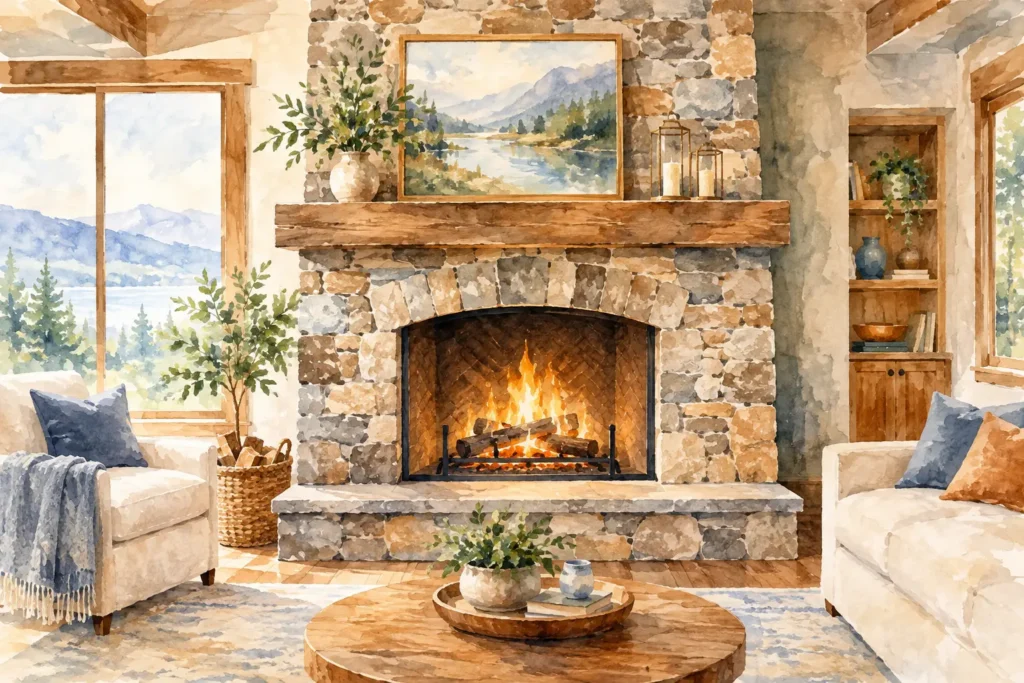
A fireplace can be the visual anchor of a living room long before the furniture is in place. The right surround gives that focal point weight, texture, and a finish that feels intentional in every season. These stone fireplace surround ideas can help you choose a material and design direction that suits both your home’s character and the practical demands of a working fireplace.
A beautiful surround is not only about selecting a favorite color from a small sample. Veining, finish, slab movement, firebox dimensions, mantel details, wall height, and surrounding millwork all affect the final result. Seeing full slabs in person makes a real difference, especially when the stone has dramatic variation.
Start With the Fireplace’s Architectural Role
Before choosing a stone, decide what role the fireplace should play in the room. Some homeowners want a quiet, tailored surround that lets artwork, built-ins, or large windows take the lead. Others want the fireplace to feel like a substantial architectural feature, with a sweeping slab face or a full-height stone wall.
For a more traditional room, a carved mantel profile, honed limestone, or softly veined marble can bring a sense of permanence without feeling overly formal. In a contemporary space, large-format stone panels, clean edges, and a simplified hearth can create a crisp, composed look. The best choice is usually one that relates to the scale of the room rather than simply following a trend.
Consider sightlines, too. A fireplace viewed from the kitchen, entry, or dining area needs to coordinate with those finishes. A warm-toned granite may connect beautifully to wood cabinetry, while a cool gray quartzite can complement darker painted built-ins and brushed metal details.
Stone Fireplace Surround Ideas by Material
Each natural stone has its own visual character, maintenance profile, and fabrication considerations. A knowledgeable fabricator can help you narrow the options based on your desired look, how often the fireplace is used, and the construction requirements of the unit.
Marble for Refined Movement
Marble is a classic fireplace choice for good reason. Its natural veining can make even a simple rectangular surround look custom and layered. White and soft gray marbles work well in bright interiors, while deeper green, brown, or black marbles can create a more dramatic focal point.
A honed finish is often a practical choice for a fireplace surround because it gives the stone a softer, less reflective appearance. Polished marble delivers more formal shine and makes veining feel especially crisp. Marble is best for homeowners who appreciate natural variation and understand that the material develops character over time.
Granite for Strength and Depth
Granite offers a broad range of colors and patterns, from quiet neutral fields to rich, mineral-driven movement. It is a strong choice for active homes and spaces where durability is a priority. Darker granites can give a fireplace a grounded, substantial appearance, especially when paired with light walls or natural wood accents.
Granite can also be effective for hearths, where the surface may see more contact from fireplace tools, logs, or foot traffic. The final appearance depends heavily on the particular slab, so viewing the full material is essential.
Quartzite for Natural Drama
Quartzite is often chosen when homeowners want the visual movement associated with marble but prefer a harder natural stone. Many quartzites feature sweeping veining, crystalline depth, and soft neutral tones that work across a range of interior styles.
A bookmatched quartzite surround can become a true statement feature. This technique mirrors adjoining slab sections so the veining opens symmetrically from the center. It requires careful planning, additional material, and experienced fabrication, but the result can be striking in a tall fireplace design.
Limestone for Soft, Timeless Texture
Limestone brings warmth that polished materials cannot always replicate. Its gentle color variation and matte texture fit beautifully in homes with traditional, European-inspired, coastal, or transitional design. It can feel relaxed and substantial at the same time.
Because limestone is naturally more porous than some other stones, the right finish, sealing approach, and ongoing care matter. It is often an excellent choice for a fireplace that is intended to feel aged-in and architectural rather than glossy or high contrast.
Soapstone for a Quiet, Tailored Look
Soapstone has a distinctive velvety surface and a deep, understated color palette. It works particularly well with painted cabinetry, wood beams, and classic hearth rooms. Over time, soapstone develops a natural patina that many homeowners find appealing.
It is not the best choice for every design, particularly if you want bold veining or a very light surround. But for a fireplace with calm presence and heritage character, it is difficult to duplicate.
Design Details That Change the Entire Surround
The same stone can look entirely different depending on how it is cut, finished, and installed. Large slabs create a clean, expansive effect with fewer visible joints. This approach suits contemporary fireplaces and highlights the natural patterning in marble, granite, or quartzite.
A framed surround, with a defined opening and mantel shelf, feels more traditional and can add dimension to a wall that would otherwise feel flat. Mitered edges are another useful detail. They allow the face and return pieces to meet at a sharp, continuous corner, giving thicker-looking stone a refined appearance.
For a more sculptural installation, consider extending the stone from the hearth to the ceiling. This can visually heighten a room, particularly where ceilings are tall or the fireplace sits between built-ins. In a smaller room, a lower surround with a carefully proportioned mantel may feel more balanced and leave wall space for art or lighting.
Finish deserves equal attention. A polished surface reflects light and makes color variation more pronounced. Honed stone is softer and more relaxed. A leathered finish can add tactile depth to certain granites and quartzites, though it may not suit every architectural style. Samples are helpful, but a full-slab viewing is the best way to understand how light will move across the material.
Plan for Heat, Clearances, and Construction
A fireplace surround must look beautiful, but it also has to be compatible with the fireplace system. Gas, wood-burning, and electric units have different manufacturer requirements for clearances, framing, mantel placement, and surrounding materials. Those specifications should guide the design from the beginning.
Natural stone is commonly used around fireplaces, yet the installation details still matter. The substrate must be properly prepared, stone pieces need appropriate support, and seams should be positioned with both appearance and performance in mind. A tall slab installation may require additional planning for weight, access, and wall structure.
If your fireplace includes a television above it, think through the full composition before fabrication begins. The screen size, viewing height, wiring access, sound equipment, and mantel depth can all affect the proportions of the stonework. Planning these details early prevents awkward cutouts or last-minute changes.
Engineered materials should always be evaluated carefully for fireplace use. Heat exposure varies by unit, and manufacturer guidance should be followed before selecting any surface. When there is uncertainty, a natural stone chosen for the application is often the more straightforward path.
Coordinate the Surround With the Rest of the Home
A fireplace does not need to match kitchen countertops exactly to feel connected to the home. In fact, using the identical material everywhere can make a renovation feel overly coordinated. Instead, look for a shared element: a similar undertone, complementary veining, or a repeated finish.
For example, a kitchen with warm white quartzite may pair beautifully with a cream limestone fireplace. Black soapstone countertops can relate to a charcoal granite surround through depth of color rather than an exact match. This layered approach feels more personal and gives each room its own purpose.
Bring cabinet samples, paint colors, flooring pieces, and inspiration photos to a showroom appointment. At Marble Unlimited, homeowners can compare these elements against full slabs and discuss edge details, layout options, and fabrication considerations before committing to a design.
Choose for the Way You Live
The strongest fireplace designs are not always the loudest. They are the ones that look right at home on an ordinary Tuesday evening and still feel special when friends gather around the fire. Whether you are drawn to the quiet texture of limestone, the depth of granite, or a statement-making quartzite slab, choose a surround that fits your home’s architecture, your maintenance preferences, and the way you want the room to feel for years to come.
A showroom visit and a free project quote can turn a saved image into a well-planned installation, with the right stone selected before the first cut is made.