
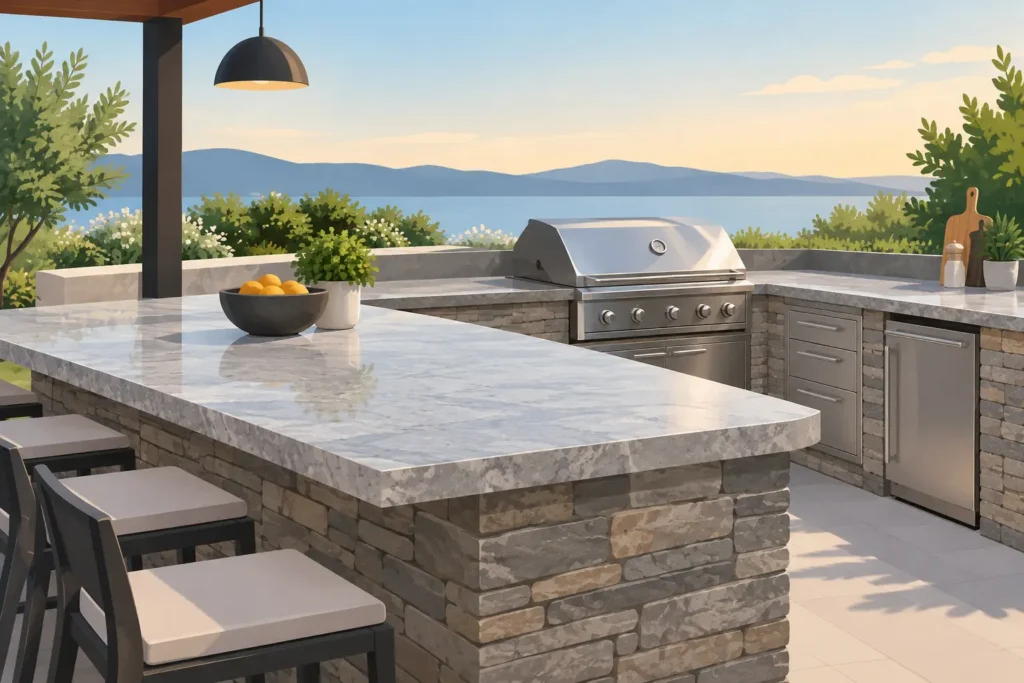
A beautiful outdoor kitchen can lose its appeal quickly if the countertop fades, stains, or develops damage after its first North Carolina summer. Outdoor kitchen stone countertops need to do more than look good beside a grill. They must handle heat, rain, humidity, direct sun, food spills, and the changing temperatures that come with year-round outdoor living.
The right choice depends on how you use the space, how much sun it receives, and the level of natural variation you want in the finished design. For many homeowners, a natural stone surface offers the best balance of character, performance, and long-term value, especially when it is selected carefully and installed by an experienced fabricator.
What an Outdoor Countertop Must Handle
An indoor kitchen countertop is protected from weather. An outdoor surface is not. Afternoon sun can heat a dark slab dramatically, while shaded areas may stay damp after a storm. Grease from cooking, citrus, wine, barbecue sauce, and pollen can all become part of normal life around an outdoor kitchen.
That is why material selection should begin with the conditions at your home rather than color alone. A covered porch kitchen has different needs than a poolside grilling station with full western exposure. The countertop should also complement the cabinetry, grill cutout, sink, and nearby hardscape without becoming the highest-maintenance feature in the backyard.
Natural stone performs well outdoors because it is formed under extreme conditions, but each material has its own strengths. The best result comes from matching the stone to the setting and fabricating it with the right support, seams, overhangs, and drainage details.
Best Stone Choices for Outdoor Kitchen Countertops
Granite: a dependable outdoor favorite
Granite remains one of the most practical choices for an exterior kitchen. It is hard, heat-resistant, and available in a broad range of colors and movement, from subtle grays and warm neutrals to dramatic veining. A properly sealed granite countertop is well suited to frequent entertaining and everyday grilling.
Not every granite slab looks or performs exactly the same way. Some lighter or more porous selections may need more attentive sealing than dense, darker varieties. Finish also matters. A polished surface delivers a more formal look, while a textured or leathered finish can feel especially at home in a casual patio setting and may hide fingerprints and water marks more easily.
Quartzite: natural movement with serious strength
Quartzite is often chosen by homeowners who love the layered veining and lighter palette associated with high-end interior design but need a tougher natural stone for an outdoor area. True quartzite is dense, durable, and highly resistant to heat. It can create a refined connection between an indoor kitchen and an outdoor entertaining space.
The important word is true. Stone names are sometimes used loosely in the marketplace, and materials with a similar appearance may have different properties. Viewing the actual slab and discussing its care needs with a stone professional helps ensure you are selecting a material appropriate for exterior exposure.
Quartzite can be an excellent option for a covered kitchen, an open patio bar, or a built-in cooking area where the countertop is a central visual feature. Its natural pattern means no two installations are alike.
Soapstone: relaxed character and heat resistance
Soapstone has a soft, understated appearance that works beautifully with wood cabinetry, masonry surrounds, and traditional outdoor living spaces. It is naturally dense and nonporous, so it does not require the same sealing routine as many other natural stones. It also handles heat well, making it a compelling choice near grills and pizza ovens.
The trade-off is that soapstone is softer than granite and quartzite. It can develop scratches or small marks over time, although many homeowners appreciate this lived-in patina. If you want a countertop that stays visually pristine with very little evidence of use, granite or quartzite may be the better fit. If you prefer a surface that gains character over the years, soapstone is worth considering.
Marble: beautiful, but best for the right setting
Marble brings unmatched elegance to an outdoor bar, serving area, or covered kitchen. Its veining can turn a simple countertop into a focal point, particularly when the outdoor space is designed as an extension of the home. It is also naturally heat-resistant.
However, marble is more susceptible to etching and staining than granite or quartzite. Acidic foods and drinks can alter its finish, and an open, heavily used grilling station may be more than some marble selections should be asked to handle. For a covered entertaining area with thoughtful care, marble can be a rewarding choice. For a busy family cook station, it is usually wiser to reserve marble for a lower-risk application or select a more forgiving stone.
Why engineered quartz is usually not the exterior answer
Engineered quartz is popular indoors, but direct sunlight and outdoor temperature swings can affect its color and performance. For an exposed outdoor kitchen, natural stone is typically the safer recommendation. Your countertop should be selected for the conditions it will face, not simply to match an interior material.
Design Details That Matter as Much as the Stone
A durable exterior countertop is not only about the slab. Professional fabrication and installation determine how well the entire kitchen performs over time. Grill cutouts need proper clearances, sink openings must be accurately supported, and overhangs require planning based on the stone’s strength and the layout of the cabinetry below.
Drainage deserves attention as well. Water should not collect around seams, sink areas, or against cabinet frames. When a countertop meets a wall, post, or stone veneer surround, the installation needs room for normal movement and weather exposure. These details are easy to overlook in a sketch, but they make a meaningful difference after several seasons outdoors.
Edge profiles also shape the final look. A clean eased edge works with nearly every design and is easy to maintain. A more substantial built-up edge can give an island or bar a stronger architectural presence. The right profile depends on the thickness of the slab, the scale of the kitchen, and whether the countertop should feel modern, rustic, or more traditional.
Planning Color and Slab Movement
Outdoor spaces often have more competing finishes than indoor kitchens: cabinetry, decking, brick, painted trim, stainless appliances, stone cladding, and landscaping all influence the final palette. This is where seeing full slabs makes a difference. A small sample cannot show the true scale of veining, color variation, or mineral detail.
For a calm, cohesive look, choose a stone that relates to one or two existing elements rather than trying to match everything exactly. Warm granite can complement brick and wood. A soft gray or white quartzite can brighten darker cabinetry. Dark soapstone creates contrast against light painted cabinets and stainless appliances.
Consider sunlight before committing to a very dark surface. Deep charcoal and black stones can look striking, but they absorb heat in full sun. Lighter stones often feel more comfortable for a bar or serving area used during summer afternoons. Placement of umbrellas, pergolas, and roof coverage can change that decision.
Care That Protects Your Investment
Most outdoor natural stone countertops benefit from simple, consistent care. Clean spills promptly with mild soap and water or a cleaner made for natural stone. Avoid harsh acidic or abrasive products, which can dull the finish or affect the sealer. Do not use a countertop as a cutting board, and use trivets when practical, even though many natural stones tolerate heat well.
Sealing needs vary by stone. Granite and quartzite commonly benefit from periodic sealing, while soapstone follows a different care routine and marble may need more attention depending on use. The best schedule is based on the specific slab, finish, exposure, and cooking habits. A fabricator should provide care guidance that fits the material you actually selected, not a generic checklist.
During the design process, ask to see slabs in person and discuss where the kitchen will sit, how much direct sun it receives, and whether it will be covered. Marble Unlimited can help homeowners compare stone options, coordinate a slab with cabinetry and surrounding finishes, and fabricate an outdoor countertop built for the way the space will be used. Schedule a showroom visit or request a free quote before choosing your surface. The right stone should make you want to spend more evenings outside, not more weekends worrying about maintenance.