
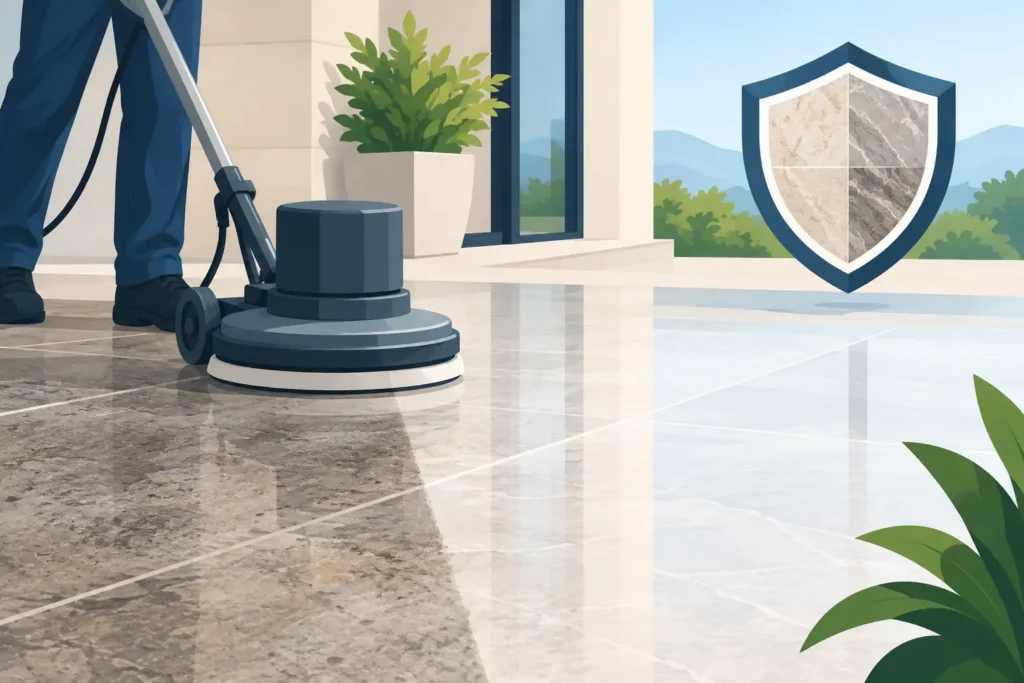
A beautiful stone surface should not be written off because it has lost its shine, developed a stubborn stain, or shows chips around a hard-working edge. Professional stone restoration services can bring back clarity, color, and function while preserving the material you chose for its character in the first place. For homeowners, that often means extending the life of a kitchen countertop, bathroom vanity, fireplace surround, stair tread, patio, or natural-stone floor without taking on the cost and disruption of full replacement.
The right approach depends on the stone, the type of damage, where the surface is installed, and how it has been maintained. Restoration is not simply making a surface look cleaner. It is a careful process of evaluating the material, correcting damage where possible, refining the finish, and protecting the stone for continued use.
What Stone Restoration Services Can Address
Natural stone is durable, but it is not indestructible. Daily use, moisture, acidic spills, outdoor weather, and abrasive cleaning products can all change its appearance over time. A polished surface may become dull in traffic areas. Marble can develop etching from acidic foods or cleaners. Granite may lose its protective seal. Limestone can show discoloration, and exterior stone can collect organic growth or develop issues related to water exposure.
A professional assessment separates surface-level concerns from deeper damage. Some marks are absorbed stains that may respond to specialized treatment. Others are etching, which is a change in the stone itself and requires refinishing rather than ordinary cleaning. Chips, cracks, loose pieces, worn edges, uneven surfaces, and failed caulk lines each call for a different repair method.
Common restoration work includes deep cleaning, stain treatment, chip and crack repair, honing, polishing, sealing, edge refinishing, re-caulking, waterproofing, and resetting or stabilizing stone components when needed. The goal is not to make every surface look artificially new. It is to restore a clean, consistent, well-maintained finish that suits the material and the home.
Why Material Identification Comes First
No two stones should be treated exactly alike. This is one reason professional guidance matters. A product or polishing method that works well on granite may damage marble or limestone. Quartz and hybrid materials have their own care requirements, particularly around heat, harsh chemicals, and surface repairs.
Marble and limestone
Marble and limestone are valued for their depth, movement, and softer visual character. They also require a more informed maintenance plan than harder materials. Dull spots on polished marble are often etching, not stains. A technician may need to hone and polish the affected area to blend it with the surrounding finish. Depending on the design preference, some homeowners choose a honed finish because it makes future etching less visually noticeable.
Granite and quartzite
Granite and quartzite are typically more resistant to scratching and everyday wear, but they still benefit from periodic sealing and professional care. A darkened area around a sink, for example, may signal that moisture is entering an unsealed or compromised area. Chips along an edge can often be repaired and color-matched, although the final result depends on the stone’s pattern and the extent of the damage.
Soapstone and engineered surfaces
Soapstone develops a natural patina that many homeowners appreciate. Restoration may involve cleaning, light sanding in select situations, and reapplying an appropriate finish to even out the appearance. Engineered surfaces may require a more limited repair strategy, since aggressive refinishing can alter the factory finish. A qualified fabricator can determine whether repair is practical or whether a damaged section needs another solution.
The Restoration Process Should Be Deliberate
Quality restoration starts with a site evaluation. Before any work begins, the technician should identify the material, inspect seams and edges, assess water exposure, and determine whether a concern is cosmetic, structural, or installation-related. This step protects the surface from unnecessary treatments and gives the homeowner a realistic expectation for the outcome.
The work itself generally begins with preparation. Nearby cabinets, walls, flooring, and fixtures should be protected. The surface is then cleaned with products suited to the stone, not generic household chemicals that may leave residue or worsen damage. If stains are present, they may require a targeted treatment and time to draw the discoloration out of the stone.
Repairs come next. Chips and small cracks can often be filled with a color-matched resin or epoxy, then shaped and refined to follow the original edge profile. More significant cracks may need stabilization from below or a closer examination of what caused the movement. A repair that ignores an underlying support or installation issue may not last.
Honing and polishing are used when the finish itself needs correction. Honing removes a fine layer of material to address scratches, etching, or uneven sheen. Polishing rebuilds the desired level of reflection. Not every project should end in a high-gloss finish. A fireplace hearth, exterior stair, or heavily used floor may be better suited to a honed or textured appearance that is more forgiving and appropriate for the setting.
The final stage is protection. Sealing helps reduce the rate at which porous stone absorbs moisture and spills, but it does not make the surface maintenance-free. Exterior applications may need waterproofing systems that account for drainage, exposure, and the construction behind the stone.
When Restoration Makes More Sense Than Replacement
Restoration is often the smart choice when the stone is fundamentally sound and the issue is limited to wear, staining, minor damage, or a tired finish. It can be especially worthwhile for a distinctive slab, a custom fireplace surround, a large floor area, or architectural stone that would be difficult to match today.
Replacement may be the better investment when there are major structural cracks, widespread deterioration, recurring moisture problems, or damage that extends beneath the visible surface. It may also make sense when a renovation calls for changing the layout, enlarging an opening, or coordinating a surface with new cabinetry and fixtures.
This is where an experienced stone company can offer useful perspective rather than a one-size-fits-all answer. Marble Unlimited evaluates restoration in the context of the whole project. If repair is the sensible path, the work should preserve what you already have. If replacement is necessary, material selection, fabrication, and installation can be planned as part of a coordinated update.
Protecting Restored Stone for the Long Term
The best restoration results last longer when day-to-day care matches the material. Use a pH-neutral stone cleaner or mild soap and water for routine cleaning. Wipe spills promptly, especially oils, wine, citrus, vinegar, and strongly colored foods. Avoid abrasive powders, acidic cleaners, and harsh degreasers unless a stone professional has confirmed they are appropriate.
Use cutting boards on countertops, trivets for hot cookware, and protective pads beneath heavy or abrasive objects. In bathrooms, regular drying around faucets and soap dispensers helps limit mineral buildup. Outdoors, keep drainage paths clear and address standing water before it has the opportunity to affect the stone or the installation beneath it.
A simple water test can indicate whether a porous surface may need resealing. Place a few drops of water on a clean, dry area. If the stone darkens quickly, it may be time for an evaluation. This is only a screening tool, not a diagnosis, since surface finish and stone type affect how water behaves.
Choosing a Restoration Partner
Stone restoration involves more than applying a topical product. Look for a provider that understands fabrication, installation, repair, and material-specific care. That broader knowledge matters when a visible problem is connected to a seam, a sink cutout, exterior water exposure, support conditions, or an older installation detail.
Ask how the stone will be identified, what process is recommended, and what level of improvement is realistic. Natural variation, veining, prior repairs, and deep damage can affect the final appearance. A trustworthy professional will explain those trade-offs clearly before work begins.
For homeowners in Chapel Hill, Durham, Hillsborough, Cary, Raleigh, and nearby communities, a showroom consultation can also be helpful when restoration leads to a larger design decision. Bringing photos, measurements, and a clear description of the concern makes it easier to determine whether your existing stone can be renewed or whether a new surface would better serve the space.
A well-restored stone surface should feel like a lasting part of the home again. Schedule a professional evaluation before assuming replacement is your only option, and give skilled craftsmanship the chance to preserve the material, detail, and investment already in place.