
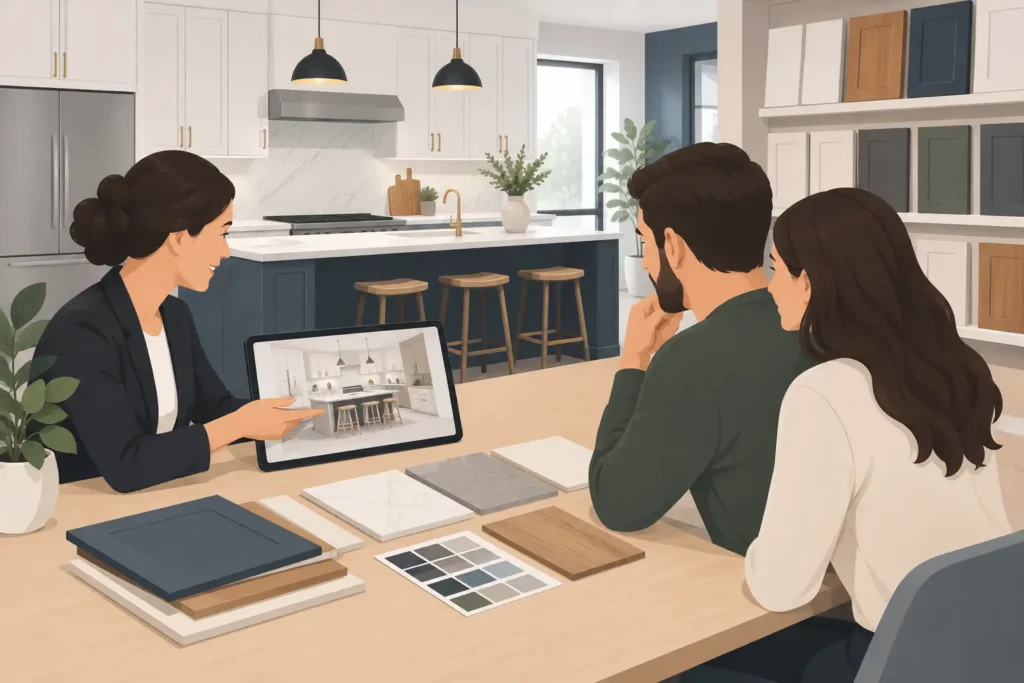
A kitchen design center is where the decisions that make a remodel feel personal start to become clear. Instead of choosing a countertop color from a small sample or trying to picture a sink from an online photo, you can see full slabs, compare cabinet finishes, touch materials, and discuss how each choice will work in your actual home.
For homeowners in the Triangle and surrounding North Carolina communities, that hands-on process can prevent expensive second guesses. A kitchen is not a collection of separate purchases. The countertop, cabinetry, backsplash, sink, lighting, flooring, and layout all need to support one another. The right showroom consultation brings those choices into the same conversation.
Why a Kitchen Design Center Makes a Difference
A kitchen renovation involves decisions that are difficult to make in isolation. A quartz sample may look warm under showroom lights but read cooler beside your existing hardwood floors. A dramatic quartzite slab may be exactly right for a large island, yet too active when paired with a patterned backsplash. Even a seemingly simple choice, such as a white countertop, can range from crisp and modern to creamy and traditional.
At a well-equipped kitchen design center, you can compare materials at a useful scale. Full slabs reveal veining, movement, variation, and natural fissures that small chips cannot show. This is especially valuable with granite, marble, quartzite, soapstone, and other natural stones, where every slab has its own character.
The consultation also gives you a practical place to ask questions before fabrication begins. How will this material handle daily cooking? Does the edge profile suit the style of the cabinets? Will an undermount sink fit the way you prep and clean? Can the backsplash be cut from the same slab for a more continuous look? These details affect the finished kitchen as much as the material itself.
Start With How You Use the Kitchen
The best kitchen design is not built around a single trend. It is built around the routines that happen there every day.
A busy household may prioritize durable, low-maintenance surfaces, generous prep space, and a sink configuration that can handle frequent cleanup. A homeowner who loves to bake may want a large uninterrupted work area and a surface that feels comfortable for rolling dough. For people who entertain, an island may need seating, serving space, storage, and a statement slab that gives the room a focal point.
Share those priorities during your showroom visit. Bring cabinet-door samples if they are available, along with photos of the room, flooring samples, paint colors, and approximate measurements. If you are keeping existing cabinets, a few clear photos in natural light can help a design professional guide you toward materials that complement what is already in place.
It also helps to be honest about maintenance. Marble offers timeless depth and a naturally elegant patina, but it can etch when exposed to acidic foods and drinks. Granite is durable and distinctive, with visual variation that many homeowners love. Quartz is a popular choice for consistent color and easy day-to-day care, while quartzite offers the dramatic movement of natural stone with excellent hardness. There is no universal best countertop. The right choice depends on the look you want and the way you live.
See the Whole Slab, Not Just the Sample
Choosing from a full slab is one of the strongest reasons to visit a showroom. With natural stone, the section selected for your island may have a bold sweep of veining, while the perimeter counters may be quieter. A knowledgeable team can help plan the layout so the most striking areas are used where they will have the greatest impact.
Slab viewing is equally helpful when selecting engineered materials. Quartz patterns and colors can vary between production batches, and a larger view makes it easier to judge the scale of a veined design. You can see whether the pattern feels refined and subtle or more dramatic than expected once it covers an entire island.
Coordinate the Materials That Define the Room
Countertops often lead the design, but they should not have to carry it alone. The kitchen looks most intentional when its major surfaces are selected together.
Cabinet color changes the way stone reads. Dark cabinets can make a light marble or quartz surface feel bright and tailored, while light cabinets may allow a richer granite or soapstone to anchor the room. Wood cabinetry adds warmth to crisp white quartz, and painted cabinetry can pull a secondary tone from a veined stone. Looking at these combinations side by side is much more reliable than comparing photos on separate screens.
Backsplashes deserve the same attention. A full-height slab backsplash can create a clean, high-end look with fewer grout lines, especially behind a range. Tile can add texture, color, or pattern, and it may be the better choice when the countertop is already visually active. The trade-off is simple: pairing a highly figured stone with a busy tile can compete for attention, while a quiet backsplash lets the countertop be the feature.
Sinks and edge profiles shape both function and finish. An undermount sink creates a smooth transition from counter to basin and makes wiping crumbs into the sink easier. A farmhouse sink offers character and a generous bowl, though installation requirements vary by cabinet and countertop material. For edges, eased profiles are clean and versatile, while ogee or more detailed profiles can suit traditional cabinetry. Your fabricator can explain which options work best for the slab thickness, layout, and overall style.
Ask About Fabrication and Installation Early
A beautiful slab needs skilled fabrication to become a finished countertop. This is where a full-service partner provides meaningful value. The team measuring your kitchen should understand the material you selected, the cabinet layout, overhang requirements, seams, cutouts, and installation conditions.
During planning, ask where seams may be located and why. Some kitchens require seams because of slab size, access to the home, or the dimensions of a large island. An experienced fabricator will place them thoughtfully, considering both structural needs and the direction of the stone’s pattern. Ask about sink and cooktop cutouts, backsplash returns, faucet holes, and whether any cabinetry needs adjustment before installation day.
Timing matters as well. Countertops are typically templated after cabinets are installed and secured. Appliances, sinks, faucets, and backsplash plans should be confirmed before fabrication, particularly when dimensions or mounting methods affect cutouts. Making these choices early helps keep the project moving without forcing rushed decisions at the end.
At Marble Unlimited, homeowners can explore a large selection of slabs, cabinetry options, sinks, tile, and complementary surfaces while working with a team that handles custom fabrication and installation. That continuity helps protect the design from the common gaps that occur when materials, measurements, and installation are managed by separate providers.
Make Your Showroom Visit More Productive
You do not need every decision made before you arrive. In fact, a showroom visit is often most valuable when you are weighing a few directions. Still, basic preparation gives the conversation a clearer starting point.
Bring room measurements if you have them, photos of the existing kitchen, and samples of anything that will remain. Set a comfortable investment range and identify the decisions that matter most to you, whether that is a statement island, low-maintenance cleanup, a deep workstation sink, or a backsplash with real visual impact. If you are working with a builder, designer, or remodeler, bring their plans or confirm the cabinet and appliance specifications in advance.
Be open to alternatives. A material you had not considered may fit your goals better once you see it in person. For example, a homeowner drawn to the look of marble may find that a soft-veined quartz better suits a high-traffic family kitchen. Another may decide that the natural variation and developing patina of marble is exactly what gives the room its warmth. Good guidance is not about steering you toward one material. It is about helping you make a choice you will appreciate years after installation.
Design for the Years Ahead
The most successful kitchens balance immediate visual impact with long-term practicality. Think about how the room will age, how easily surfaces can be maintained, and whether the selections will continue to work if you repaint cabinets, update hardware, or sell the home in the future.
A showroom consultation is a chance to slow down at the right point in the project: before the slabs are cut, before the sink is installed, and before a small detail becomes a costly change. Schedule a visit, bring the pieces of your project together, and let the materials tell you which kitchen feels like home.