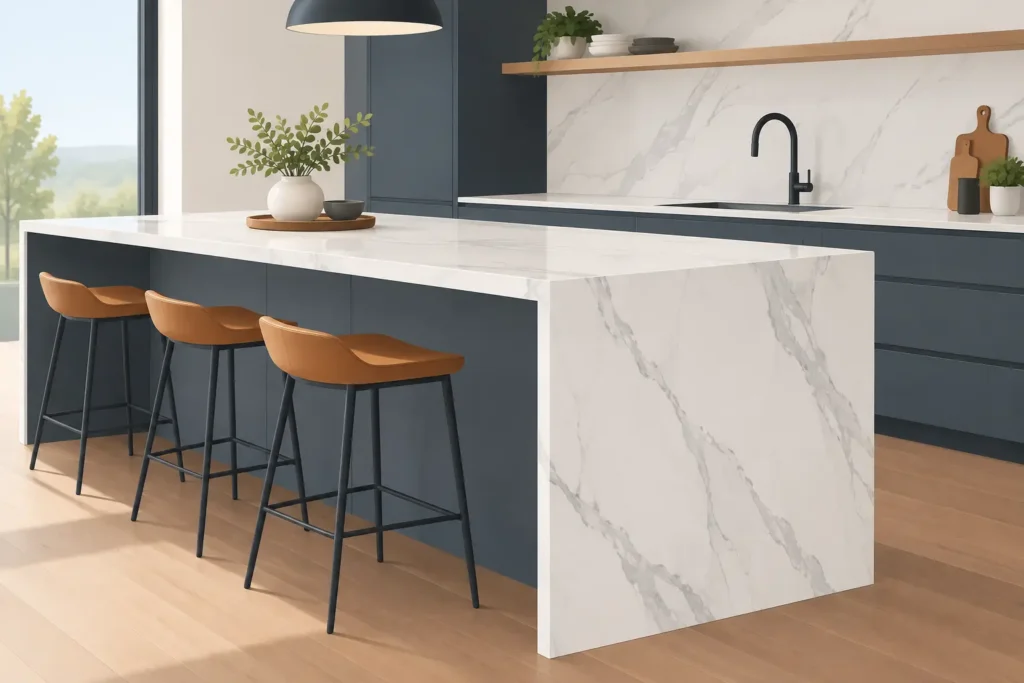
A waterfall edge does more than finish a countertop. It carries the same surface down the side of an island or cabinet run, turning the stone into a strong architectural feature. That visual impact is why waterfall edge countertop cost is often higher than a standard countertop installation – and why careful planning matters before a slab is selected or cut.
For many North Carolina homeowners, the question is not simply whether a waterfall edge fits the budget. It is whether the material, slab layout, cabinet design, and fabrication details will produce the clean, continuous look they have in mind. The best answer comes from reviewing the actual slabs and measuring the finished space, not from relying on a single per-square-foot number.
What Drives Waterfall Edge Countertop Cost?
A waterfall edge requires more stone than a conventional top because the material extends vertically to the floor or near the floor. It also requires more labor. The fabricator must measure the finished cabinet height, plan the slab cuts, shape and polish exposed edges, and create a carefully aligned corner where the horizontal and vertical pieces meet.
In many kitchen projects, adding one waterfall end may increase the installed countertop investment by roughly $1,500 to $5,000 or more. A compact quartz island with a straightforward layout may fall closer to the lower end. A large quartzite or marble island with a long return, dramatic veining, complicated access, or a mitered corner can move well beyond it.
Those ranges are useful for early budgeting, but they are not a substitute for a project-specific quote. The size of the end panel, the selected material, and the way the slab must be laid out can change the final number considerably.
Material and slab availability
The slab itself is usually the largest cost factor. Quartz often provides predictable color and pattern options, while granite, marble, quartzite, soapstone, limestone, and hybrid materials vary widely by grade, origin, thickness, and availability. A material with subtle movement may be simpler to orient at the corner than a slab with bold directional veining.
The waterfall edge also affects how much of a slab can be used efficiently. A fabricator may need additional material to preserve a particular vein direction or to avoid placing a natural variation in a highly visible location. Some designs require two slabs even when the island’s basic square footage appears to fit within one.
This is one reason a showroom visit is so valuable. Looking at a small sample can help narrow a color family, but viewing a full slab shows the movement, scale, and possible cut paths that affect both the finished appearance and the price.
Fabrication detail at the corner
Most premium waterfall edges use a mitered corner. Rather than exposing the thickness of the slab at the joint, the fabricator cuts two pieces at precise angles and joins them so the pattern appears to flow around the corner. When done well, the joint is discreet and the edge reads as one substantial piece of stone.
That result calls for experienced templating, advanced cutting equipment, hand finishing, and careful installation. The material must be supported and handled safely, particularly with heavier natural stone. A simpler eased edge may cost less than a detailed profile, but the waterfall corner itself remains a precision fabrication feature.
How Material Choice Changes the Budget
There is no single best material for a waterfall island. The right choice depends on the way your household uses the kitchen, the amount of maintenance you prefer, and the design statement you want the island to make.
Quartz is a popular option for homeowners seeking consistent color, a broad design selection, and straightforward daily care. It can work especially well in clean, contemporary kitchens, though large patterns still deserve thoughtful slab planning at the miter.
Granite offers natural variation and dependable performance for active kitchens. Quartzite brings dramatic movement and exceptional visual depth, but pricing can be higher depending on the specific selection and the fabrication requirements. Marble has a distinctive, classic character that many homeowners love, particularly when they welcome the patina that develops with use. Soapstone and limestone can create a softer, more understated look, each with its own care considerations.
Material cost should never be considered in isolation. A less expensive slab that requires extra pieces or difficult layout work may not create the savings expected. Conversely, a higher-value slab used efficiently in a well-planned design can deliver a better overall result.
The Design Decisions That Add Cost
The vertical drop is a major variable. A 24-inch-deep island with a full-height waterfall panel uses far more material than a short decorative return. An island with two waterfall ends doubles the number of vertical panels and corners, although it may create a balanced, furniture-like appearance that is worth the added investment.
Overhangs, seating areas, sink cutouts, cooktop cutouts, and thicker-looking edge profiles also influence the final estimate. So do site conditions. Stairs, narrow entries, long carries, and the weight of oversized pieces can require additional installation planning.
Cabinet construction matters as well. Waterfall panels need stable, properly positioned support. Before fabrication begins, cabinets should be installed, level, and secured. If the island will include an outlet, cabinetry detail, or open seating area adjacent to the stone, coordinate those elements early so the waterfall panel is not asked to solve an avoidable layout problem.
What a Complete Quote Should Clarify
When comparing estimates, make sure each proposal describes the same scope. A lower number may not include the same slab allocation, edge treatment, installation work, or finishing details as another quote.
A helpful countertop quote should clarify the selected material and thickness, the number of waterfall ends, the edge and miter details, required cutouts, and installation conditions. It should also identify whether the estimate assumes one slab or more, since this is often the biggest point of confusion with patterned natural stone.
Ask to see the proposed slab layout when possible. This discussion is especially useful for veined materials, where the direction of movement can either enhance the waterfall effect or make the corner look disconnected. There is no universal rule: some homeowners prefer a continuous vein that appears to turn the corner, while others like the visual contrast created by a bookmatched or intentionally shifted pattern.
Is a Waterfall Edge Worth the Investment?
A waterfall edge is most compelling when the island is a focal point visible from the living area, entry, or dining space. It can visually anchor a large open kitchen, conceal a cabinet end, and bring the countertop material into the room in a more deliberate way. It is also a durable surface treatment for the side of an island, where painted cabinetry might otherwise receive scuffs from stools, bags, or daily traffic.
It may be less necessary in a small kitchen where the island is not highly visible, where budget needs to prioritize cabinetry or appliances, or where a simple stone overhang already suits the home’s style. A well-selected standard countertop can still feel custom and substantial. The right choice is the one that supports the overall renovation rather than competing with it.
Before committing, stand at the island location and consider sightlines from surrounding rooms. Think about the flooring, cabinet finish, backsplash, and lighting. A waterfall edge works best when it feels connected to the room’s architecture, not added as an afterthought.
Plan the Waterfall Edge Before Fabrication
The most successful projects begin with material selection and design coordination early in the remodel. Bring cabinet drawings, room dimensions, paint or cabinet samples, and inspiration images to the showroom. A fabricator can help translate those ideas into practical decisions about slab size, seam placement, edge detail, and material performance.
Marble Unlimited can help homeowners compare full slabs and build a quote around the actual kitchen, rather than a generic allowance. A thoughtful consultation makes it easier to understand where the investment is going and to choose a waterfall edge that will look right for years. Schedule a showroom visit or request a free quote when your cabinet plan is ready, and let the slab guide the final design.