
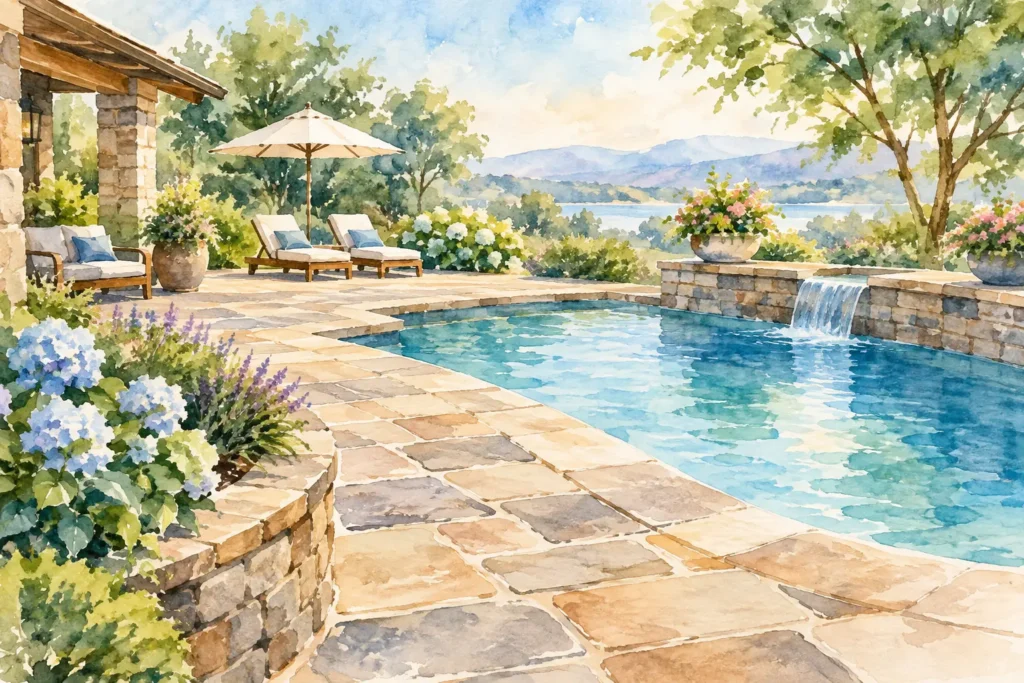
A patio should feel like part of the home, not an afterthought beyond the back door. The right stone pavers create that connection with natural color, texture, and permanence that work beautifully alongside landscaping, pools, fireplaces, and exterior architecture. They also need to perform through North Carolina heat, heavy rain, leaf debris, and years of everyday use.
For homeowners planning an outdoor upgrade, the best choice is rarely about selecting the most dramatic sample. It is about matching the stone, finish, layout, and installation method to the way the space will actually be used. A quiet courtyard, a busy pool deck, and a front walkway each have different demands.
Why Stone Pavers Remain a Lasting Choice
Natural stone brings variation that manufactured surfaces cannot duplicate. Every paver has its own movement, mineral character, and subtle shifts in tone. That variation can make a large patio feel layered and established rather than flat or repetitive.
Stone also offers real design range. A light limestone can support a relaxed, coastal-inspired pool area. Dense granite can give an entry or walkway a more tailored, formal look. Bluestone, sandstone, travertine, and flagstone each bring their own color families and textures, making it easier to coordinate an outdoor surface with an existing home rather than forcing a one-style-fits-all solution.
Durability is another reason homeowners choose stone. Properly selected and professionally installed pavers can handle foot traffic, outdoor furniture, grills, and changing weather exceptionally well. Still, natural stone is not maintenance-free, and no single material is right for every project. Absorption rates, surface texture, heat retention, and sealing needs should all be part of the decision.
Choosing Stone Pavers by Application
The intended use of the area should guide the material choice before color becomes the deciding factor. A surface that looks beautiful at the showroom can be the wrong fit if it becomes slick around water, uncomfortably hot in full sun, or difficult to keep clear of debris.
Patios and Outdoor Living Areas
For patios, comfort underfoot and visual warmth usually lead the conversation. Many homeowners prefer a cleft, brushed, tumbled, or naturally textured finish because it adds traction and gives the surface a relaxed character. Larger-format pavers can make a spacious patio feel clean and contemporary, while mixed sizes or irregular shapes often suit traditional homes and garden settings.
Consider how the patio will be furnished. Dining areas need a relatively even walking surface so chairs sit securely. A lounge area may allow for more texture and variation. If the patio connects to interior flooring, stone color and scale should complement the transition without trying to match it exactly.
Pool Decks
Pool decks require a more technical approach. The surface needs dependable traction when wet, comfortable temperature characteristics, and drainage that moves water away from the pool and house. A polished finish may look refined indoors, but it is generally not the practical choice for an exposed wet area.
Lighter-colored stones can be more comfortable in strong sun, although the specific material and finish matter as much as color. Some stones are naturally more porous and may need regular sealing to help resist sunscreen, food spills, and organic staining. Around a saltwater pool, it is particularly wise to discuss the stone’s suitability, grout or jointing materials, and maintenance plan before installation begins.
Walkways and Entries
A walkway should make the approach to a home feel intentional while remaining safe in rain and low light. Smaller pavers or a pattern with clear visual rhythm can help define a path, especially where the route curves through planting beds. Dense, durable stones are often well suited to front entries and high-traffic paths.
Thickness matters here. A paver system should be designed for the base conditions and expected loads, particularly if the path may carry equipment, carts, or frequent deliveries. Proper edge restraint also helps preserve clean lines over time.
Material, Finish, and Color: The Details That Matter
A stone sample tells only part of the story. Natural materials vary from piece to piece, so viewing multiple pavers or larger samples is the best way to understand the full color range. This is especially valuable when selecting stones with veining, fossil detail, or broad tonal movement.
Granite is often valued for density and durability. Bluestone can offer rich blue-gray, green-gray, and earth-toned character that works well with both brick and painted exteriors. Limestone may provide a softer, more refined palette, while travertine brings a warm, relaxed appearance. Sandstone and flagstone can be excellent choices where organic texture and natural color variation are central to the design.
The finish is as important as the species. Thermal, brushed, cleft, tumbled, and honed surfaces all look and perform differently. For exterior spaces, traction, bare-foot comfort, and ease of cleaning deserve as much attention as appearance. A knowledgeable stone professional can show how these choices behave in real-world conditions, not just under showroom lighting.
Installation Is What Protects the Investment
Even exceptional stone can disappoint when the installation below it is not properly planned. Outdoor pavers depend on a stable base, correct grading, thoughtful jointing, and well-managed water movement. If water settles beneath or across the surface, it can contribute to shifting, staining, and avoidable maintenance issues.
Before work begins, the site should be evaluated for slope, existing drainage patterns, soil conditions, nearby trees, downspout discharge, and the elevation at doors or pool coping. The goal is not simply to create a level surface. It is to create a surface that looks level while directing water where it belongs.
The installation method also depends on the project. Some pavers are set over a prepared aggregate base, while others may be installed over a concrete substrate with an appropriate setting system. Each approach has advantages, but the correct choice depends on the stone thickness, site conditions, design, and surrounding structures.
Careful layout makes a noticeable difference. Well-planned cuts, balanced border pieces, and intentional joint spacing keep the finished area from looking improvised. For stairs, landings, columns, fire features, or stone cladding that connect to the paver area, coordinating materials early creates a more complete outdoor design.
Caring for Natural Stone Outdoors
Routine care is straightforward when the stone and finish have been chosen appropriately. Sweep away leaves, soil, and mulch regularly so organic debris does not sit on the surface. Rinse with clean water as needed, and use a stone-safe cleaner for more persistent buildup. Avoid harsh acidic or abrasive products, which can dull or damage certain natural stones.
Sealing is not a substitute for cleaning, but it can help reduce absorption and make spills easier to manage. The right sealing schedule varies by material, finish, exposure, and use. A covered patio may need far less attention than a sun-exposed pool deck surrounded by mature landscaping.
It is also wise to inspect joints, edges, and drainage periodically. Small issues are easier to address before they become movement, loose pavers, or standing water. Professional installation gives the project a strong start, while practical upkeep preserves its appearance for years.
Plan the Space as a Whole
Stone pavers are most successful when they are selected as part of the larger exterior plan. Consider the home’s siding or masonry, roof color, landscaping, outdoor kitchen finishes, pool coping, retaining walls, and interior sightlines. A paver that looks understated on its own can become the element that ties every outdoor feature together.
At Marble Unlimited, homeowners can compare natural stone options with guidance from a team that understands both material selection and installation details. A showroom conversation can help narrow the choices based on your home, budget, maintenance preferences, and plans for the space.
The best outdoor surface is one you will enjoy using without second-guessing every rainy day, dropped drink, or rearranged chair. Start with the way you want to live outside, then let the right stone, finish, and craftsmanship carry that vision into the years ahead.