
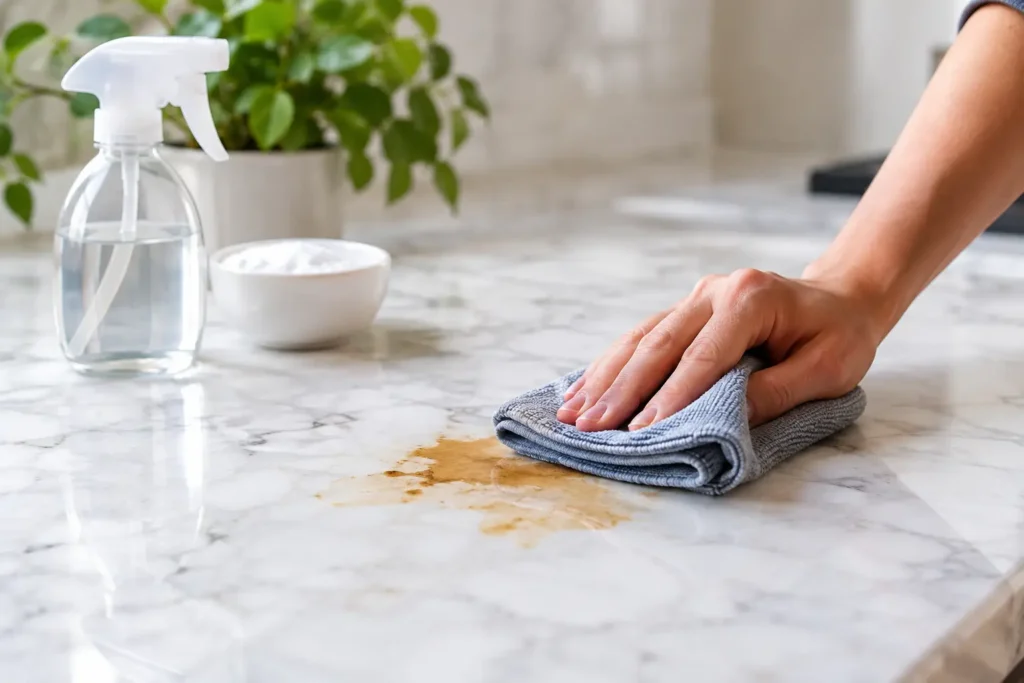
A dark ring beside the kitchen sink, a dull spot under a lemon wedge, or a shadowy mark around a bathroom faucet can make homeowners fear the worst. The good news is that many marks can be improved when you remove marble stains with the right method. The first step is knowing whether you are looking at a true stain, surface etching, or a deeper issue that needs professional restoration.
Marble is a natural, calcium-based stone with distinctive veining and depth. It is also porous and sensitive to acidic products. That does not make it a poor choice for a kitchen, bath, fireplace, or vanity. It simply means marble benefits from informed care, prompt cleanup, and a tailored approach when a mark appears.
Before You Remove Marble Stains, Identify the Mark
A stain has penetrated the stone and changed its color. It may look darker than the surrounding marble, yellowish, brown, pink, or gray, depending on what caused it. Common sources include cooking oil, coffee, tea, wine, cosmetics, soap residue, hard-water minerals, metal containers, and moisture.
Etching is different. Acidic liquids such as citrus juice, vinegar, wine, or certain cleaners react with the surface of marble and leave a lighter, duller, or slightly rough area. On polished marble, an etch often catches the light differently than the rest of the surface. It can look like a stain, but it is actually a change in the finish.
That distinction matters because a poultice may draw out a true stain, while it will not repair etching. Etched marble usually needs honing and polishing to restore a consistent finish. Trying stronger cleaners on an etched area often makes the damage more noticeable.
If you are unsure, wipe the area with a soft cloth and a pH-neutral stone cleaner, then let it dry completely. Look at it from several angles in natural light. A discoloration that remains within the stone is more likely a stain. A cloudy or dulled patch that reflects light differently is more likely etching.
Start With the Safest Cleaning Method
For a fresh spill or a light surface mark, begin simply. Blot, rather than wipe, any remaining liquid with a clean white cloth or paper towel. Wiping can spread the spill across more of the stone and push it toward seams or edges.
Clean the area with warm water and a pH-neutral cleaner made for natural stone. Use a soft microfiber cloth, rinse with clean water, and dry the surface thoroughly. Do not reach for vinegar, lemon-based cleaners, bathroom cleaners, abrasive powders, or harsh degreasers. Even products that work well on other household surfaces can permanently dull marble.
Avoid scrubbing with stiff brushes or abrasive pads. Marble can scratch, and aggressive scrubbing can open the surface further or create a visibly different sheen. A careful, patient method is far more effective than force.
Match the Treatment to the Type of Stain
Once a stain has set, the most appropriate treatment depends on its source. This is where homeowners should resist the urge to try several internet remedies at once. Mixing products or using the wrong chemical can discolor the stone, damage surrounding materials, or make a professional repair more difficult.
Organic stains
Coffee, tea, fruit, food, leaves, and some cosmetics can leave pinkish-brown or dark marks. On white or light-colored marble, a hydrogen peroxide-based stone poultice may help lift this type of discoloration. Because peroxide can affect the appearance of some darker marbles, always test in an inconspicuous spot first.
Oil-based stains
Cooking oils, grease, lotions, and some cosmetics usually create a darker area in the stone. These stains need to be drawn upward rather than simply cleaned from the surface. A solvent-compatible poultice may be needed, but the correct solvent depends on the stone, the stain, and what is installed nearby. Good ventilation and careful testing are essential.
Rust stains
Rust often appears orange, copper-colored, or brown, typically near metal containers, shaving cream cans, furniture feet, or iron-bearing materials beneath the surface. Rust removal is especially delicate. Many common rust removers contain acids that can etch marble quickly. Do not apply a general-purpose rust product to natural stone. This is a strong reason to call a stone restoration professional.
Water marks and mineral buildup
A white, chalky crust around a faucet or along a backsplash is often mineral buildup rather than a deep stain. A stone-safe cleaner and soft cloth may remove light deposits. If the surface underneath looks dull after cleaning, mineral buildup and etching may both be present. In that case, polishing rather than more cleaning is typically the answer.
How a Marble Poultice Works
A poultice is an absorbent paste designed to pull a stain out of porous stone as it dries. It is one of the most effective techniques for a genuine, set-in marble stain, but it requires patience and the right materials.
Commercial stone poultice products are often the safest option because they are formulated for natural stone. A professional can also customize the absorbent material and treatment agent based on the stain. The poultice is spread over the affected area, extended slightly beyond the stain, then covered so it can work gradually. As it dries, it draws contaminants from the marble into the paste.
One application may noticeably improve a stain, but deeper marks can require several treatments. There is no guaranteed one-time fix, particularly when oil, moisture, or a colored liquid has penetrated deeply. Between applications, let the stone dry fully and assess whether the mark is becoming lighter. Repeated treatment should be based on visible improvement, not frustration.
Be cautious with do-it-yourself poultice recipes. Baking soda, flour, clay, acetone, peroxide, and other ingredients are frequently suggested online, but their suitability changes with the marble’s color, finish, existing sealer, and source of staining. A small test area is non-negotiable. If the marble is rare, heavily veined, dark, honed, or part of a newly installed project, professional guidance is the wiser investment.
When Cleaning Will Not Solve the Problem
Some marble concerns are not stains at all. Etching, scratches, chips, cracks, worn polish, and moisture-related darkening around seams require a different repair strategy.
For example, a dull ring left by a glass may be an etch that needs refinishing. A persistent dark area near an undermount sink may point to moisture entering through a failed seam or compromised caulk. A spreading shadow near a faucet could be related to a leak. Applying poultices repeatedly without addressing the moisture source can waste time and allow the underlying problem to continue.
Professional stone restoration can hone away light etching, polish the surface to match adjacent marble, repair chips, and evaluate whether sealing or recaulk work is needed. The goal is not simply to make a mark less visible. It is to preserve the surface’s appearance and prevent the same issue from returning.
Protect Marble After the Stain Is Gone
A quality penetrating sealer can help slow absorption and give you more time to clean up spills, but it does not make marble stain-proof or acid-proof. Sealer is a practical layer of protection, not a substitute for everyday care.
Use coasters under drinks, trays beneath toiletries and soap dispensers, and mats under oil bottles or frequently used cooking items. Wipe up citrus, wine, sauces, and cosmetics promptly. Clean with a pH-neutral stone cleaner and dry the surface after use, especially around sinks and faucets where standing water can leave deposits.
For busy kitchens and bathrooms, the finish matters too. Honed marble has a softer, matte appearance that can make minor etching less obvious than a high-polish finish. Polished marble offers more reflectivity and visual drama, but it can show surface changes more readily. Neither choice is universally better. The right finish depends on how you use the space and what level of natural variation you are comfortable living with.
If a mark will not lift, or if you are unsure whether it is a stain, etch, or moisture issue, stop before trying stronger products. An experienced stone professional can identify the cause and recommend a repair that respects the material. For homeowners planning a new marble kitchen or bath in the Triangle, Marble Unlimited can also help select the right stone and finish for the way your household lives, so the beauty of natural marble remains a pleasure rather than a worry.