
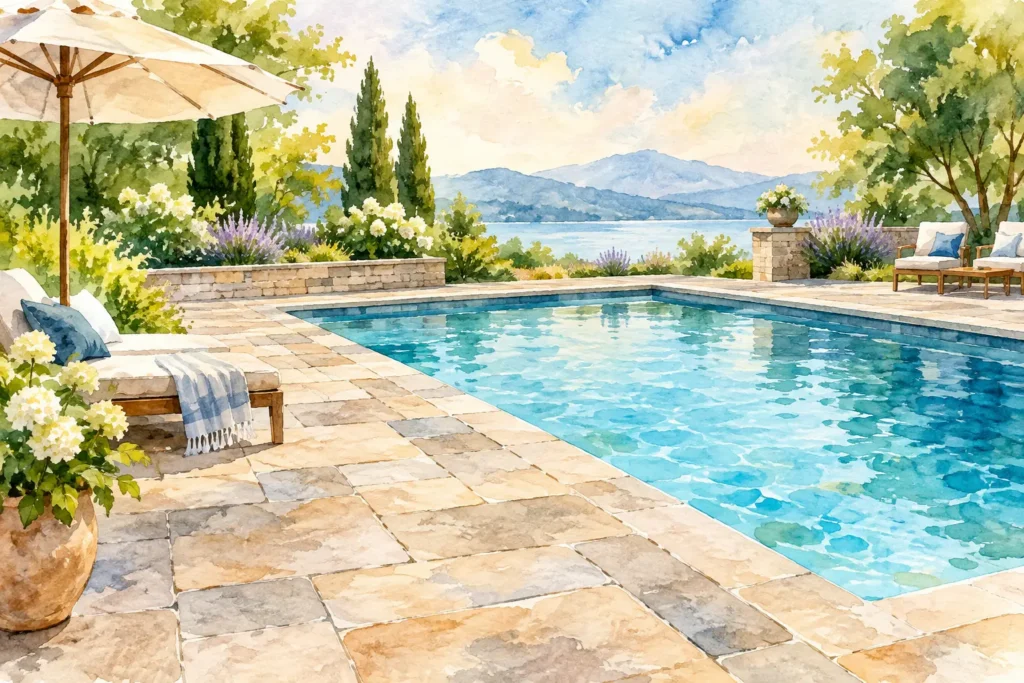
A pool deck has to do more than frame the water beautifully. It needs to stay comfortable under bare feet, provide dependable traction when wet, shed rain away from the pool, and stand up to North Carolina heat, humidity, and changing seasons. A pool deck with stone pavers can meet those demands while giving the entire backyard a more established, custom look.
The best result comes from treating the deck as a complete exterior surface project, not simply choosing a color and laying stone around the pool. Material characteristics, finish, joint design, drainage, base preparation, and installation workmanship all affect how the space looks and performs years from now.
Why Stone Pavers Work Around a Pool
Natural stone brings variation that manufactured materials cannot duplicate. Each paver has its own movement, mineral character, and color range, which helps a large deck feel connected to the landscape rather than flat or repetitive. It also gives homeowners more flexibility to coordinate the pool area with a stone patio, outdoor kitchen, retaining wall, steps, or architectural accents elsewhere on the property.
Performance is just as compelling as appearance. Many natural stones are well suited to exterior conditions when they are selected and installed correctly. Lighter colors can be more comfortable in direct sun than darker surfaces, while a textured or honed finish can provide a more secure walking surface than a highly polished stone.
Still, stone is not one-size-fits-all. A material that looks excellent in a covered entry or interior bath may not be the right choice around a heavily used pool. The goal is to choose a stone with the right density, finish, thickness, and installation method for the site.
Choosing Stone for a Pool Deck With Stone Pavers
A showroom visit is especially useful for this decision because samples reveal more than color. Homeowners can compare surface texture, edge profiles, natural variation, and how a stone looks in warm versus cool light. Whenever possible, view larger pieces rather than making a final choice from a small sample.
Travertine offers a relaxed, light-toned look
Travertine is a familiar choice for pool settings because its natural texture and often lighter palette can create a warm, resort-inspired setting. Its small voids and surface variation are part of its character. For pool decks, the finish and installation details matter greatly, particularly when deciding how open areas and joints will be treated.
Travertine is often a strong fit for homeowners who want an informal, elegant surface with soft color movement. It does require thoughtful sealing and routine care to help protect the stone from pool water, sunscreen, leaf tannins, and outdoor spills.
Limestone creates understated elegance
Limestone can give a pool deck a calm, tailored appearance, especially in cream, sand, gray, or muted earth tones. Its visual consistency makes it appealing for contemporary homes and classic outdoor living spaces alike. Because limestone varieties differ in density and absorption, selection should be based on the specific stone rather than the category name alone.
A suitable exterior limestone with the proper finish can look refined without feeling fussy. Avoid assuming that every limestone is appropriate for every exposure. An experienced stone professional can help match the material to sun, shade, water exposure, and expected foot traffic.
Granite and quartzite bring exceptional durability
For a more dramatic, dense natural stone surface, granite and quartzite can be excellent options. Both offer strong durability, rich movement, and a broad range of colors. Their heat performance, texture, and final finish vary by material, so the right slab or paver selection is more important than a broad rule about either stone.
These materials can be particularly appealing where a pool deck needs to coordinate with substantial stone steps, wall caps, outdoor counters, or a bold architectural exterior. A flamed, brushed, leathered, or otherwise texture-appropriate finish may be preferable to a polished finish in a wet walking area.
Finish Matters as Much as the Stone
A beautiful stone can become a poor pool-deck choice if its surface finish is wrong. Around water, the deck should feel secure underfoot without being rough or uncomfortable. The ideal finish depends on the selected stone, the amount of shade, whether the pool is used by young children or older adults, and how homeowners plan to use the area.
A lightly textured finish usually offers a practical balance of comfort and traction. Highly reflective polished surfaces are generally better reserved for applications where standing water and bare feet are not part of daily use. Edge details deserve the same attention. Coping around the pool should be smooth enough to sit beside comfortably, yet carefully fabricated and installed for safe transitions at the waterline.
Ask to see finished samples in person. Run a hand across them, compare them under natural light, and discuss how the finish will behave when wet. That small step can prevent a decision based solely on a photo.
The Installation Details That Protect Your Investment
The most durable pavers cannot compensate for a weak base or poor drainage plan. A pool deck should be designed to direct water away from the pool structure and, when feasible, away from the home. Proper slope is subtle enough to preserve a comfortable, level-feeling deck but intentional enough to prevent puddling.
Base preparation depends on site conditions, soil, existing concrete, grading, and the chosen installation method. In the Triangle area, clay soils, seasonal rain, and heat cycles can make this preparation particularly important. Movement, settling, or trapped water can lead to uneven pavers and joint problems over time.
Expansion and control considerations also matter. Stone, concrete, and adjacent structures react differently to changing temperatures. A professional installer evaluates transitions at the house, coping, steps, walls, and existing hardscape so the finished deck has room to perform as intended.
Joint selection affects both the look and function of the deck. Tighter joints may create a more formal appearance, while wider joints can emphasize the individual pavers and support a more relaxed design. The best approach depends on paver size, stone variation, drainage needs, and the installation system. It should be decided early, not improvised on installation day.
Design the Deck for How You Actually Use It
Before selecting pavers, picture the busiest summer afternoon at your home. Where will people enter the pool? Where will loungers sit? Is there room for towels, a dining table, a grill area, or a clear path from the house? These practical questions often shape a better layout than choosing a pattern first.
Large-format pavers can make an open pool area feel clean and expansive, with fewer visible joints. Smaller pavers and mixed sizes can add rhythm and visual interest, particularly on a deck that connects to gardens or curved landscape features. Neither is automatically better. A larger pattern may suit a modern rectangular pool, while a varied layout may feel more at home around a traditional backyard retreat.
Color deserves a practical conversation as well. Pale stone can brighten a shaded yard and feel cooler in strong sunlight, but it may show leaves, soil, or marks more readily. Darker stone can create a striking contrast with the water, though it may absorb more heat. Natural variation usually helps disguise everyday outdoor wear better than a completely uniform surface.
Consider connecting the pool deck to the rest of the property with complementary materials rather than making every surface identical. A related stone on steps, a fireplace surround, wall caps, or an outdoor serving area can make the yard feel intentionally designed without becoming overly matched.
Care That Keeps Natural Stone Looking Its Best
Natural stone is durable, but it benefits from straightforward, consistent care. Sweep away leaves and debris, rinse off spills promptly, and use cleaners formulated for natural stone rather than harsh acidic products. Pool chemicals should not be allowed to sit on the deck, especially near the coping and joints.
Sealing needs vary by stone, finish, exposure, and use. A sealer does not make stone maintenance-free, nor does it eliminate the need for proper drainage. It adds a layer of protection against staining and moisture absorption when used appropriately. Your installer can recommend a maintenance schedule based on the exact material selected.
For established decks, professional cleaning, re-sealing, joint repair, and targeted restoration can often refresh the appearance before a full replacement is necessary. Address loose pavers, standing water, or cracked joints early, while the repair is still localized.
Start With the Right Material Conversation
The right pool deck balances comfort, beauty, maintenance expectations, and the realities of the site. It should look like a natural extension of your home while giving your family a dependable place to gather through many seasons.
At Marble Unlimited, homeowners can compare natural stone options in person and get experienced guidance on finishes, fabrication, drainage considerations, and installation details. Schedule a showroom visit or request a free quote to begin designing an outdoor space that feels as well built as it looks.