A beautiful stone surface should feel permanent, whether it frames an outdoor living area, surrounds a pool, or brings character to a bathroom wall. Natural stone waterproofing helps protect that investment, but the term can be misleading. Stone is not made waterproof simply by applying a product to its face. Long-lasting protection comes from choosing the right material, preparing the installation correctly, managing water behind and beneath the stone, and using the proper sealer where it is needed.
For North Carolina homes, that distinction matters. Humidity, driving rain, freeze-thaw weather, pool splash, and everyday shower use can expose a surface to much more moisture than homeowners expect. A thoughtful plan prevents staining, loose material, mineral deposits, and the hidden moisture issues that are far more expensive to correct later.
What Natural Stone Waterproofing Actually Means
Most natural stone is porous to some degree. Even dense granite and quartzite can absorb small amounts of moisture through microscopic openings, while more open-textured limestone and certain marbles may absorb more readily. Absorption does not automatically mean a stone will fail. It means the surface and installation need to be designed for the location.
A penetrating sealer is often part of natural stone waterproofing. It enters the stone rather than leaving a heavy coating on top, helping resist water and oil-based stains while allowing vapor to move through the material. This is especially valuable in kitchens, bathrooms, patios, and exterior cladding where a natural appearance matters.
But a sealer is not a substitute for proper waterproofing behind stone in wet areas. In a shower, for example, the wall assembly must direct water safely back to the drain. On an exterior project, the substrate, flashing, drainage plane, and installation method must manage rain before it can reach vulnerable parts of the structure. Surface sealer is a finishing layer of protection, not the entire moisture-management system.
Start With the Stone and the Location
The best waterproofing decision is often made before fabrication begins. A material that performs beautifully on a kitchen island may need different care when used around a pool or on an uncovered patio.
Granite is generally dense and durable, making it a strong choice for many exterior and high-use applications. Quartzite can offer excellent durability as well, though its performance varies by slab and finish. Marble provides unmatched movement and elegance, but it is more reactive and can show etching or weathering over time. Limestone creates a warm, architectural look, yet many varieties require more careful placement and maintenance in wet or exposed settings. Soapstone is naturally dense and has a distinctive character, but its softer composition means it can develop marks that become part of its patina.
The finish matters, too. A polished surface is easier to wipe clean, while a honed, textured, or split-face finish can provide a more natural look and better traction outdoors. Those textured finishes can also hold more dirt and moisture, so they need a maintenance plan suited to their use.
A knowledgeable showroom consultation helps homeowners compare actual slabs, not just material names. Stone varies naturally, and the right recommendation depends on exposure, traffic, drainage, the desired appearance, and how much routine care you want to take on.
Waterproofing Is Different in Showers and Outdoors
Shower Walls and Other Interior Wet Areas
A shower is a controlled wet environment, but it is still a wet environment. Water will reach joints, corners, penetrations, and wall edges. The installation must include a waterproof barrier system behind the stone and careful treatment around valves, niches, benches, and transitions.
The stone itself should be sealed when appropriate, particularly if it is absorbent or likely to encounter soaps, body oils, cosmetics, or hard-water deposits. Grout and joints also need proper selection and maintenance. Good ventilation reduces lingering humidity, but it cannot correct missing waterproofing behind the finished surface.
Homeowners sometimes assume a sealed shower surface never needs attention again. In reality, regular cleaning with stone-safe products and prompt removal of residue will do more for appearance than repeatedly applying sealer. Sealer helps resist absorption. It does not prevent soap film, mineral buildup, or damage from harsh cleaners.
Patios, Pool Decks, and Exterior Stone
Outside, water management begins below the surface. A patio or pool deck needs appropriate slope so water moves away rather than collecting along the home, at joints, or beneath pavers. The base, edge restraint, drainage details, and movement joints all affect how well the installation performs over time.
Exterior walls and architectural stone cladding need equally careful attention. Flashing, weep paths, proper attachment, and a drainage cavity where the system calls for one protect the structure from water intrusion. Applying a sealer to the front of exterior stone without addressing those details can create a false sense of security.
A breathable penetrating sealer may be recommended for exterior stone that is susceptible to staining, moisture absorption, or freeze-thaw stress. The exact product and schedule depend on the stone, finish, exposure, and local conditions. A heavily shaded patio, for instance, may stay damp longer than a sunny one and may need more frequent cleaning to limit organic growth.
Signs Your Stone May Need Attention
Waterproofing and sealing concerns usually reveal themselves gradually. Darkened areas that remain after the surface should be dry, white mineral deposits, recurring stains, crumbling joints, or movement in an exterior installation all deserve a closer look. In interior wet areas, loose sections, discoloration near corners, persistent musty odors, or water appearing beyond the shower enclosure can point to a problem behind the stone.
Do not assume every dark spot means the stone has failed or every stain requires replacement. Some conditions can be addressed with professional cleaning, resealing, joint repair, or targeted restoration. Others indicate a larger drainage or waterproofing issue. Finding the cause before applying another surface treatment saves time and protects the surrounding structure.
How to Know When Sealer Is Needed
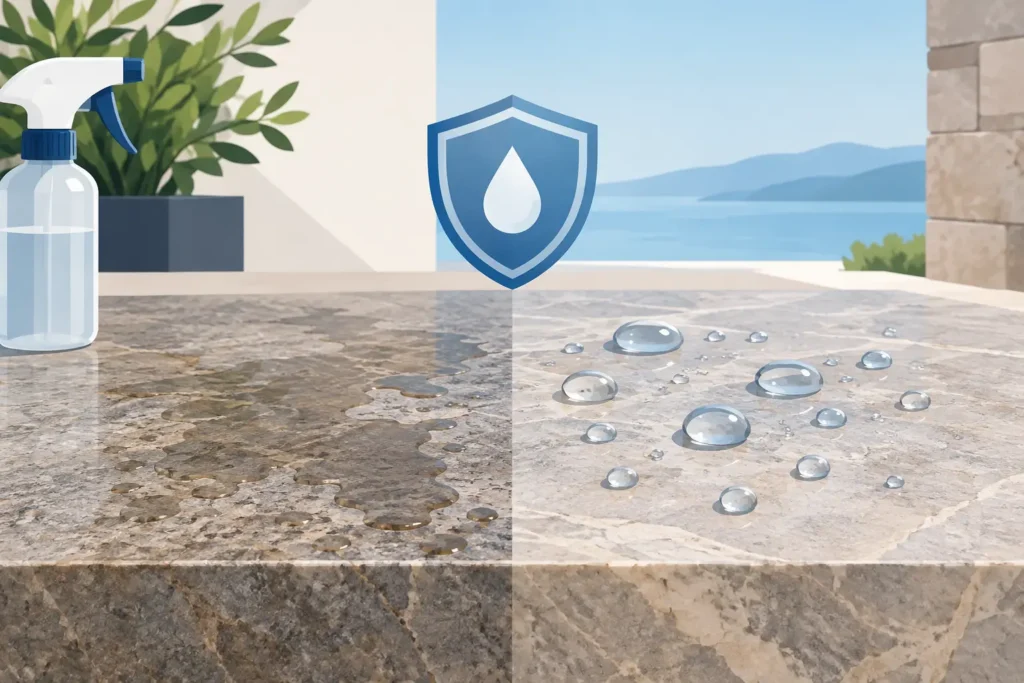
A simple water test can offer a useful starting point. Place a few drops of water on a clean, dry, inconspicuous area of stone and watch what happens. If the water beads and remains on the surface for several minutes, the existing protection may still be performing well. If the stone darkens quickly as it absorbs the water, resealing may be worth discussing.
This test is only a screening tool. It does not tell you whether water is getting behind the stone, whether the correct sealer was used, or whether an exterior assembly drains properly. It also should not be performed on a surface that has just been cleaned, is damp from recent use, or has a finish that naturally changes color when wet.
When resealing is appropriate, surface preparation is critical. The stone must be thoroughly clean and dry, and any stains should be addressed first. Applying sealer over moisture, residue, or a failing topical coating can trap problems instead of solving them. A professional can identify the stone type, evaluate its condition, and select a compatible penetrating product.
Maintenance That Protects the Installation
Stone care does not need to be complicated. Use a pH-neutral cleaner made for natural stone, wipe spills promptly, and avoid acidic or abrasive products that can dull or damage sensitive materials. Outdoors, keep drains and joints clear of debris so water can move as intended.
For a busy household, plan a seasonal visual check of exterior stone and a periodic review of shower joints, corners, and sealant lines. Look for changes rather than waiting for a dramatic failure. The earlier moisture-related wear is found, the more options you usually have for repair.
Marble Unlimited helps homeowners assess stone selections and installation details as part of a complete project, from slab choice and fabrication through professional installation. If you are planning a shower, patio, pool surround, fireplace surround, or exterior cladding project, bring photos and measurements to a showroom visit or request a free quote. The right plan will preserve the look you chose while giving water a safe place to go.