
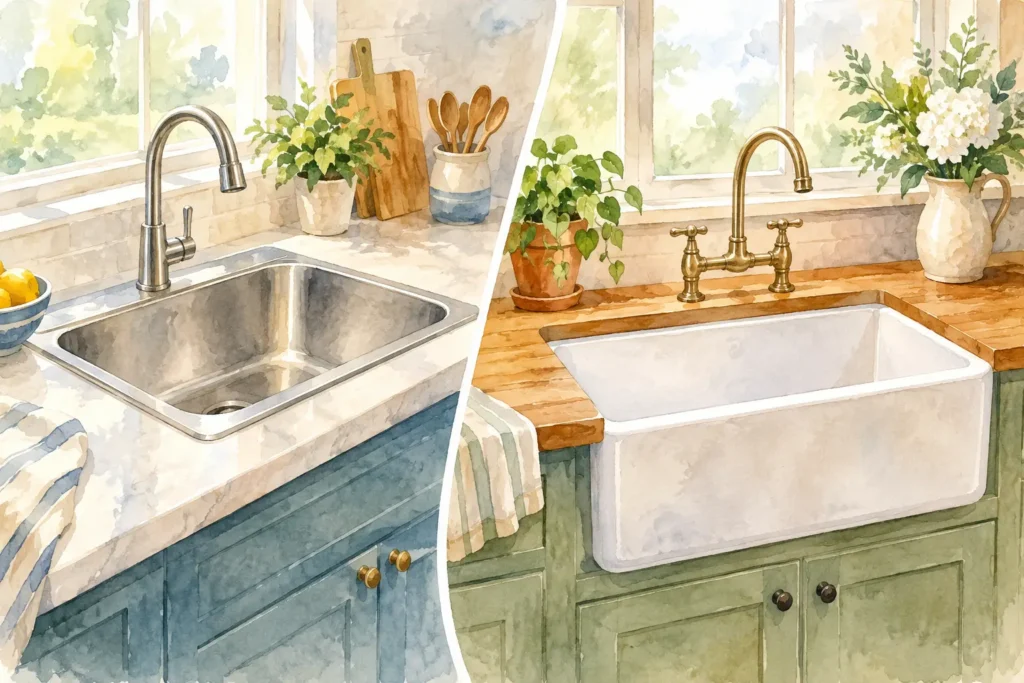
A kitchen sink is used hard and seen often. It catches cookware, anchors the work area, and can either support the lines of your cabinetry or fight them. When homeowners compare drop in versus farmhouse sinks, the better choice usually comes down to more than appearance. Cabinet construction, countertop material, daily cooking habits, and installation details all matter.
A drop in sink offers flexibility and a familiar, contained look. A farmhouse sink creates a more tailored focal point and generous work space. Both can be beautiful beside natural stone or engineered quartz countertops when the sink, slab, cabinetry, and faucet are planned as one design.
Drop In Versus Farmhouse Sinks: The Core Difference
A drop in sink, also called a top-mount sink, is lowered into an opening in the countertop. Its finished rim rests on top of the counter and supports the sink around the cutout. This mounting style works with many countertop materials and is often a practical choice for a kitchen refresh where existing cabinets will remain.
A farmhouse sink has an exposed front panel, often called an apron, that extends past the countertop edge. It is typically larger and deeper than a standard sink, creating room for stockpots, baking sheets, and busy cleanup. The visible apron makes it a defining design feature, especially in kitchens with warm wood cabinetry, painted cabinets, or a statement stone countertop.
One important detail: farmhouse describes the sink’s shape and exposed front, not one universal installation method. Some farmhouse sinks are installed beneath the counter edge, while others use a finished rim that sits above it. The specific sink model determines the cabinet modifications, countertop cutout, support requirements, and reveal at the sink edge.
When a Drop In Sink Makes the Most Sense
Drop in sinks are a strong fit when practicality, budget control, or easier replacement is high on the list. Because the rim covers the countertop cutout, it can be more forgiving of small variations in the opening. That is particularly helpful during a renovation that retains existing cabinetry or when replacing a sink without rebuilding the surrounding work area.
The rim also creates a clear transition between the sink and counter. Many homeowners like this finished boundary, especially with stainless steel sinks in hardworking kitchens. A drop in sink can be a sensible choice for a secondary kitchen, laundry area, rental property, or any project where dependable performance matters more than making the sink the main visual feature.
There is a cleaning trade-off. Crumbs and water cannot be swept straight from the countertop into the basin because the rim interrupts the surface. The seam around that rim needs regular wiping, particularly in a kitchen that sees frequent cooking. This is not difficult maintenance, but it is worth considering if quick countertop cleanup is one of your priorities.
Drop in installation can also preserve more flexibility during a future sink replacement. Dimensions still need to be checked carefully, but the covered edge may allow another compatible model to fit without changing the countertop opening. That convenience is valuable, though it should not outweigh choosing a sink you will enjoy using every day.
Why Homeowners Choose a Farmhouse Sink
The appeal of a farmhouse sink is immediate: it brings depth, presence, and an intentional furniture-like quality to the cabinet run. It can soften a sleek quartz kitchen, complement the movement of granite or quartzite, or give a marble countertop a classic, tailored partner. In the right kitchen, the apron front becomes a focal point without competing with the stone.
Function is just as compelling. The broad basin makes it easier to wash large pans and prep for family meals. Its front-forward position can also reduce the reach from the counter edge to the bowl, which some homeowners find more comfortable during long cleanup sessions.
That said, larger is not automatically better. A single-bowl farmhouse sink gives maximum open space, but it removes the separation some cooks prefer for washing on one side and rinsing on the other. A divided farmhouse model offers more organization, although each bowl may be narrower. Think about the cookware you use, whether you hand-wash often, and how many people typically work in the kitchen at once.
Farmhouse sinks also require a more deliberate installation plan. The base cabinet usually needs modification to accommodate the apron front, and the sink must be properly supported from below. A heavy fireclay, cast iron, or natural stone sink cannot rely on the countertop alone for support. This is why coordinating the cabinet installer, countertop fabricator, and plumber before fabrication is so valuable.
Countertop Material Changes the Conversation
The sink choice and countertop choice should be made together whenever possible. A precise cutout is essential with every material, but the visible edges around a farmhouse sink make fabrication details especially noticeable. The reveal, or the amount of sink edge visible at the counter, should be selected intentionally rather than decided on installation day.
With granite, quartzite, marble, soapstone, and quartz, the fabricator can create a clean, durable sink opening tailored to the selected model. Each material has its own visual character and maintenance profile, yet all benefit from accurate templates and careful handling around sink cutouts. Stone is strong, but narrow areas around openings require experienced fabrication and proper support.
For an undermount-style farmhouse sink, a positive, negative, or flush reveal can change the look and cleanup experience. A positive reveal leaves a small portion of the sink rim visible. A negative reveal brings the countertop slightly over the sink edge. A flush reveal aligns the two. Many homeowners prefer a subtle positive or flush reveal because it is easy to clean while still showing the sink material clearly.
A drop in sink simplifies some of these edge decisions because its rim covers the opening. That does not make it a lesser choice. It simply creates a different look: practical, defined, and often easier to adapt within an existing kitchen footprint.
Cabinet Size, Faucet Placement, and Daily Use
Before falling in love with a sink, measure the base cabinet and confirm the manufacturer’s minimum cabinet requirement. Do not assume a wide-looking cabinet will accept every farmhouse model. The apron, bowl depth, interior sink width, and required support can all affect fit. Existing drawer fronts and false panels may also need to be altered.
Faucet placement deserves equal attention. A deep farmhouse sink paired with a tall faucet can be striking, but the faucet must clear windows, cabinets, and any backsplash detail behind it. Consider the reach of the spout as well. Water should land near the basin’s center rather than splashing against the back wall or front apron.
Depth is another personal decision. Deep basins hold more, but a very deep sink can feel less comfortable for shorter users or anyone who spends a lot of time washing dishes. If possible, stand at a similar sink in a showroom and picture how it feels to reach the bottom. This small step can prevent a beautiful choice from becoming an everyday inconvenience.
Cost and Installation: Where the Difference Shows Up
A drop in sink is often less expensive to install because it generally requires less cabinet alteration and has a more forgiving countertop cutout. Costs vary by sink material, size, faucet configuration, and plumbing conditions, but the installation path is usually straightforward.
A farmhouse sink can add cost through the sink itself, cabinet modifications, structural support, and more detailed countertop fabrication. If cabinets are being replaced anyway, those requirements are easier to build into the project from the start. If you are keeping cabinets, a farmhouse sink may still be entirely achievable, but the work should be evaluated before a countertop is ordered.
The most costly outcome is choosing the sink after the countertop has been templated or fabricated. Sink dimensions can vary even among similarly named models, and an incorrect cutout can delay the project or require a costly solution. Select the exact sink early, keep its specification sheet available, and make sure the installation team has the actual sink before final measurements whenever possible.
Choosing the Sink That Will Still Feel Right Years From Now
Choose a drop in sink if you want a versatile, efficient option that works well with existing cabinets and offers a defined countertop edge. Choose a farmhouse sink if you want generous basin space and a statement feature worth planning the cabinetry around. Neither style is universally better. The right answer depends on how you cook, how you clean, what your cabinetry can support, and whether the sink should blend in or lead the design.
At Marble Unlimited, we encourage homeowners to bring cabinet measurements, faucet ideas, and a preferred sink model to the showroom consultation. Seeing countertop slabs alongside the sink choice helps turn a collection of decisions into a kitchen that feels considered from every angle. Schedule a showroom visit or request a free quote before fabrication begins, and give your sink the same thoughtful attention as the countertop surrounding it.