
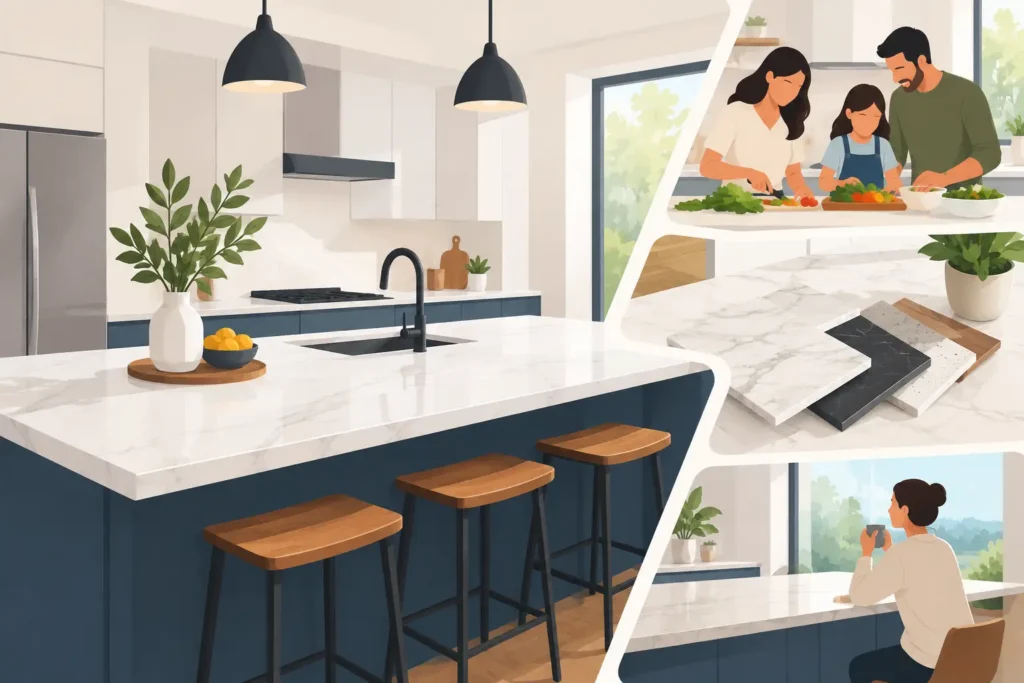
A countertop can look beautiful in a sample and still feel wrong once it is installed around your cabinets, sink, lighting, and daily routine. That is why custom countertops are about much more than choosing a color. The right project considers the slab itself, the way your family uses the room, the details at every edge, and the skill required to measure, fabricate, and install it properly.
For homeowners across the Triangle, a custom surface is an opportunity to make a kitchen or bathroom work better while adding a lasting design feature. Whether you are replacing worn laminate, updating a builder-grade kitchen, or planning a full renovation, thoughtful material selection and professional fabrication make the difference between a surface that simply fills a space and one that belongs there.
Why Custom Countertops Are Worth the Planning
Unlike prefabricated tops, custom stone surfaces are measured for your actual cabinets and walls after the layout is in place. This allows for precise cutouts, intentional overhangs, coordinated seams, and edge details that suit the room. It also gives you more freedom with slab selection. Natural stone has movement, veining, and color variation that should be viewed at full scale, not judged from a small chip.
That planning matters especially in older homes, where walls may not be perfectly square, or in renovated kitchens where an island, range, or window wall has unusual dimensions. A professional template helps ensure the finished countertop follows the real conditions of the room. It also creates time to resolve practical questions before fabrication begins, such as where a seam will fall, how far an island should overhang, and whether the stone needs extra support.
Custom does not always mean elaborate. A clean eased edge on a durable quartz countertop can be exactly right for a busy family kitchen. In another home, a waterfall island, full-height backsplash, or richly veined quartzite may be the detail that transforms the entire design. The best choice depends on how you live, what you love visually, and where you want to invest.
Choose the Material for the Way You Use the Room
Every countertop material has strengths, maintenance expectations, and a distinct visual character. Seeing full slabs in person is often the most useful next step because lighting and natural variation can change the appearance dramatically.
Quartz for Everyday Consistency
Quartz is an engineered material valued for its wide range of colors, patterns, and low-maintenance performance. It is nonporous, so it does not typically require sealing, and it handles common kitchen messes well. For homeowners who want the look of soft marble veining without the maintenance needs of natural marble, quartz can be an excellent fit.
The trade-off is that quartz is not indestructible. It should not be used as a landing spot for hot pans, and a cutting board is still recommended. Its consistent pattern is a benefit for many projects, though homeowners seeking one-of-a-kind movement may prefer natural stone.
Granite for Natural Durability
Granite remains a dependable choice for kitchens, outdoor living areas, and hardworking bathroom surfaces. Each slab is unique, with colors ranging from quiet and uniform to highly dramatic. Properly sealed granite offers strong resistance to everyday staining and heat, making it a practical material for households that cook often.
Granite can vary widely from slab to slab, which is precisely why in-person selection is valuable. The particular slab you choose matters more than a product name or online photograph. A fabricator can also help identify the best areas of the stone for an island, perimeter tops, or a statement backsplash.
Marble, Quartzite, and Soapstone for Distinctive Character
Marble brings a classic, luminous quality that is difficult to duplicate. It is especially popular in bathrooms, fireplace surrounds, baking areas, and kitchens designed around timeless natural materials. Marble can etch when exposed to acidic ingredients, so it is best for homeowners who understand that a living finish may develop character over time.
Quartzite offers the movement and depth many people admire in marble, generally with greater hardness and durability. Still, quartzite is a natural stone, not a maintenance-free product. Sealing and care recommendations can differ by slab, so material-specific guidance is essential.
Soapstone has a softer, more understated appearance and a naturally dense surface. It can darken with age or oil treatment, and it may scratch more easily than granite or quartzite. Those marks are often part of its appeal, but they are not right for every household. The question is not which material is universally best. It is which material suits your expectations for appearance, upkeep, and everyday use.
The Details That Make a Countertop Feel Finished
A countertop becomes truly custom through the decisions around it. Edge profiles, sink style, backsplash height, and slab layout all affect the finished result. An eased edge offers a simple contemporary profile, while an ogee or more decorative edge can complement traditional cabinetry. Thicker-looking edges and mitered details can give an island a substantial furniture-like presence.
Sink selection should happen early. An undermount sink creates a clean transition from counter to bowl and makes wiping crumbs into the sink easier. A farmhouse sink makes a stronger visual statement but may require cabinet modifications and careful planning around the front edge. For bathrooms, the faucet spread, vessel sink height, and backsplash dimensions should be considered before fabrication.
Vein direction deserves equal attention. On a dramatic quartzite or marble island, the slab can be oriented so the movement flows along the length of the surface. If a waterfall edge is part of the plan, bookmatching or continuing the veining can create a striking effect. These details require experienced layout and fabrication, not last-minute decisions at installation.
Plan for Fabrication and Installation, Not Just Selection
The most successful countertop projects follow a clear order. Cabinets should be installed and secured before final measurements are taken. Appliances, sinks, faucets, and backsplashes should be selected early enough for the fabricator to confirm dimensions and cutout requirements. If you are changing plumbing or adding a heavy stone island, your remodel team may also need to plan for support, outlet placement, and final connections.
At Marble Unlimited, the process begins with a showroom conversation where you can compare materials and discuss the needs of your space. From there, precise field measurements, fabrication, and skilled installation bring the design together. Working with one experienced stone partner helps keep important decisions connected, from slab selection through the final fit.
Installation day should be treated as a key stage of the project, not an afterthought. Stone is heavy, seams need careful alignment, and natural walls and cabinets can require knowledgeable adjustments. After the countertop is installed, plumbing and any final wall treatment can be completed. Your installer should also provide clear care guidance based on the material you selected.
Care That Protects Your Investment
Good habits keep stone surfaces looking their best without making daily life complicated. Wipe spills promptly, use a mild cleaner approved for the material, and avoid harsh abrasives. Use trivets for very hot cookware and cutting boards for food preparation, even on harder stone surfaces.
Natural stone may need periodic sealing, depending on the material and its use. Sealer helps resist absorption, but it does not make stone immune to stains, etching, or damage. Quartz typically needs less ongoing maintenance, though it still benefits from gentle cleaning and protection from excessive heat. If a surface is scratched, stained, or damaged, restoration options may be available, but prevention is always easier.
A countertop should serve the way you gather, cook, clean, and enjoy your home. Schedule a showroom visit before making a final choice, bring cabinet or tile samples when possible, and let the full slab, the room, and your daily routine guide the decision.