
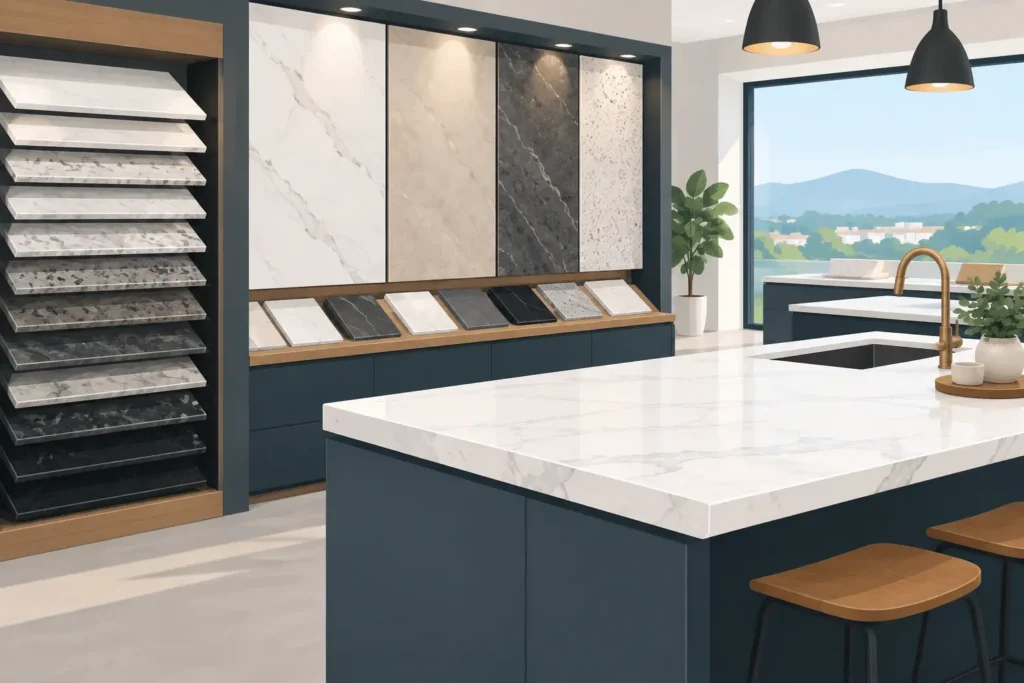
A countertop is not a sample-sized decision. The slab you choose will sit beside your cabinetry every morning, catch the light from nearby windows, and handle years of meals, homework, entertaining, and everyday cleanup. A countertop showroom Hillsborough homeowners can visit in person gives you something online photos cannot: the chance to see the real color movement, feel the finish, and compare materials under one roof before you commit.
For a kitchen or bathroom renovation, that hands-on step can prevent expensive second-guessing. A surface that looks bright white on a phone may read cream beside your cabinets. A dramatic slab may be exactly what gives a quieter room its character. The right choice depends on your home, how you use the space, and the level of maintenance you are comfortable with.
What a Countertop Showroom in Hillsborough Should Help You Do
A well-planned showroom visit should feel less like browsing and more like moving your project forward. You should be able to compare full slabs, discuss your room’s measurements and layout, and get clear answers about how different materials will perform after installation.
At Marble Unlimited, homeowners can view hundreds of natural and engineered surface options in one location. Seeing full slabs matters because every piece of stone has its own veining, mineral patterns, tonal variation, and depth. A small sample may represent the general color, but it cannot show how a large island, long perimeter run, or waterfall edge will actually look.
The visit is also a practical opportunity to coordinate the elements that make a kitchen feel intentional. Bring a cabinet door, a paint swatch, a backsplash sample if you have one, or even several photos of the room in natural light. These references help narrow the field quickly and make it easier to identify colors that complement rather than compete.
Start With How You Live in the Space
The most beautiful surface is not always the best fit for every household. Before choosing a material, think honestly about how the room works on an ordinary Tuesday, not just how it will look on installation day.
A busy family kitchen may need a forgiving material that handles frequent cooking, spills, and quick cleanup. A bathroom vanity may allow more freedom to choose a softer, more expressive stone because it sees different kinds of use. For a homeowner who loves to bake, heat resistance and workspace layout may rise to the top of the priority list. For someone designing a statement island, slab movement and edge detail may matter most.
Quartz is a popular choice for homeowners seeking consistent color, easy care, and a broad range of looks. Granite remains a dependable natural option with distinctive patterning and strong everyday performance. Quartzite offers the visual drama of natural stone with impressive durability, though each slab should be considered individually. Marble brings unmatched elegance and a soft, luminous character, but it develops a natural patina over time and benefits from owners who appreciate that lived-in quality. Soapstone has a warm, understated appearance and often appeals to homeowners who want a quieter, more traditional look.
There is no single winner across every project. The best material is the one that matches your design goals, maintenance preferences, budget, and expectations for the years ahead.
Look at the Whole Slab, Not Just the Color
When you stand in front of a full slab, pay attention to more than the background color. Notice where the veining begins and ends, whether the movement is subtle or bold, and how the pattern may travel across an island or turn at a corner. These details determine whether the finished countertop feels calm, dramatic, modern, classic, or somewhere in between.
Ask how the fabricator will lay out the cuts. This is especially valuable for materials with strong directional veining or large areas of movement. A thoughtful layout can make an island look like a focal point rather than a collection of separate pieces. If a seam is necessary, its location should be discussed early, along with realistic expectations for how visible it may be.
Details That Shape the Finished Countertop
A countertop is more than a slab laid over cabinets. The edge profile, sink choice, overhang, splash height, and cutout placement all influence daily use and the final appearance.
An eased edge offers a clean, versatile profile that works in many homes. A more decorative edge can bring traditional character to a vanity or kitchen with detailed cabinetry. Thicker-looking edges can add visual weight to a large island, while a simpler profile may better suit a streamlined contemporary design.
Sink selection deserves the same attention. An undermount sink creates a clean transition from counter to basin and makes wiping crumbs and water into the sink easier. The size and placement of the sink should work with the cabinet configuration, faucet reach, and the way you prep meals. If you are adding a second sink to an island or beverage area, discussing it during slab selection helps ensure the layout remains balanced.
Overhangs also require planning. A comfortable seating area needs appropriate support, especially when the design includes a deep projection or a heavy natural stone. Experienced fabricators will account for the material, thickness, cabinet construction, and structural needs before installation.
Questions Worth Asking During Your Visit
A showroom consultation should give you confidence, not a stack of unanswered decisions. Ask which materials best fit your household’s habits and which surfaces need sealing or specific cleaning practices. Ask to see slabs with the level of variation you are considering, because natural materials can differ significantly from one shipment to another.
It is also smart to ask about fabrication timelines, template scheduling, installation preparation, and how cabinetry should be ready before measurements are taken. Countertops are often one part of a larger renovation, so coordination matters. A knowledgeable team can help you understand the order of work and identify details that should be decided before fabrication begins.
If you are comparing estimates, make sure you are comparing the same scope. The material itself is only one component. Template work, fabrication, edge details, cutouts, installation, removal of existing surfaces, and project complexity can all affect the final investment. Clear communication at the beginning is the best way to avoid surprises later.
Bring Your Vision, Even If It Is Not Fully Formed
Many homeowners wait to schedule a showroom visit until every design choice is final. In practice, visiting earlier often makes the rest of the renovation easier. A favorite slab can guide cabinet color, wall paint, hardware finish, and the overall character of the room.
You do not need a complete plan to begin. A few inspiration photos, basic room dimensions, and an idea of your priorities are enough for a productive conversation. If you are replacing existing countertops, photographs of the kitchen or bathroom can help a design professional spot potential considerations around corners, window ledges, backsplashes, and appliances.
For larger projects, a showroom can also help you think beyond the kitchen. The same material palette may carry into a primary bath vanity, fireplace surround, outdoor entertaining area, stairs, or architectural stone feature. Repeating a stone in carefully chosen places can create continuity without making every room look identical.
Choose With Confidence, Then Let Craftsmanship Carry It Forward
The showroom is where a countertop project becomes real, but skilled fabrication and installation are what turn a chosen slab into a finished surface that fits your home. Accurate measurements, thoughtful cut planning, careful handling, and precise installation matter as much as the material itself.
Schedule a showroom visit with your samples, questions, and rough ideas. With the right guidance, you can choose a surface that feels right in the room, performs for the way you live, and remains a part of your home you enjoy seeing every day.