
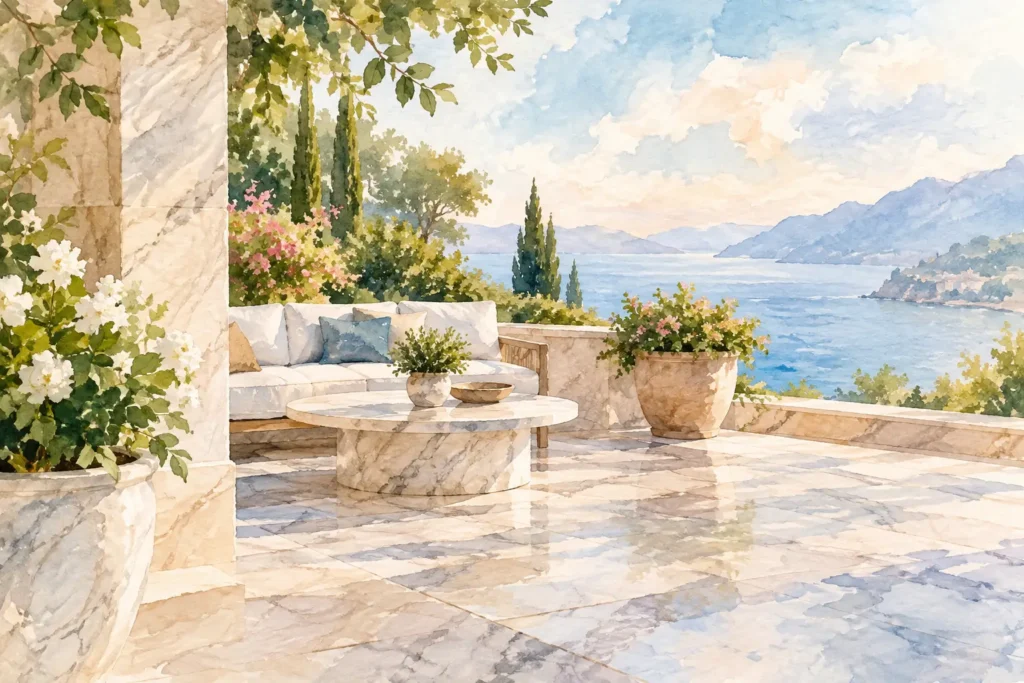
A sunlit marble entry, terrace, or pool surround can give a home a finished, architectural look that few materials match. But can marble be used outdoors in North Carolina? Yes, provided the stone, finish, location, and installation details are selected for the conditions it will face. Marble is not a set-it-and-forget-it exterior material. It rewards thoughtful planning with a surface that can age beautifully for decades.
Can Marble Be Used Outdoors Successfully?
Marble has been used on exterior buildings, steps, fountains, courtyards, and monuments for centuries. Its outdoor performance depends less on whether it is “allowed” outside and more on how it is specified. Some projects call for marble’s light-reflecting color and distinctive movement; others require a harder, lower-maintenance natural stone better suited to constant wear or severe exposure.
For a covered front porch, a protected outdoor fireplace surround, an entry wall, or a lightly used patio, marble can be an excellent choice. In high-traffic areas, around a pool, on exposed stairs, or in locations that collect standing water, the decision needs more care. A professional stone fabricator can help match the slab and finish to the way your family will actually use the space.
North Carolina’s weather creates a particular mix of challenges. Summer heat and humidity encourage organic buildup, while rain, pollen, leaves, and occasional freezing temperatures all affect exterior surfaces. A marble installation that drains well and receives routine care will perform very differently from one installed flat over a poorly prepared base.
Where Outdoor Marble Works Best
Marble is especially effective where its visual character can be appreciated without subjecting it to nonstop abrasion. Architectural cladding, columns, window surrounds, fireplace facings, accent walls, and covered entries are all strong applications. These uses showcase the stone while limiting exposure to pooled water, grit, and heavy foot traffic.
Patios and outdoor living areas
A marble patio can create an elegant extension of the home, particularly when it coordinates with interior flooring, fireplaces, or other natural stone features. For this application, surface texture matters. A polished finish can become slick when wet, so a honed or otherwise traction-conscious finish is generally the better choice for walking areas.
Patio marble should also be selected with expected traffic in mind. Outdoor dining, bare feet, furniture movement, and pets are very different from a formal sitting area used occasionally. The right slab thickness, finish, edge treatment, and joint layout all contribute to a surface that feels intentional rather than delicate.
Pool decks and water features
Marble can be used around pools and water features, but this is one of the applications where a material consultation is most valuable. Light-colored marble can stay more comfortable underfoot than darker stone in direct sun, and its appearance pairs beautifully with water. At the same time, it needs an appropriate finish for wet conditions and an installation designed to move water away from the house and pool edge.
Chemical exposure, sunscreen, leaves, and frequent moisture can change the maintenance picture. Homeowners who want the look of marble near a pool should expect to seal it and clean it consistently. They should also choose a design that minimizes places where water and debris can linger.
Steps, entrances, and cladding
Exterior marble steps and landings make a memorable first impression, but they must provide secure footing and have adequate support below. A polished, highly reflective surface may be beautiful on a protected vertical feature, yet it is rarely the best choice for rain-exposed treads.
For cladding and architectural details, marble is often easier to manage because the surface is vertical. Proper attachment methods, flashing, joints, and waterproofing behind the stone are still essential. The stone itself is only one part of a successful exterior assembly.
The Outdoor Factors That Matter Most
Marble is a calcite-based natural stone, which gives it its sought-after depth and variation but also makes it more sensitive than some alternatives. It can etch when exposed to acidic substances, develop a softer patina in active areas, and absorb moisture if left unsealed. These changes are not always damage in the structural sense, but they can alter the surface appearance.
Freeze-thaw exposure deserves special attention. When water enters small pores or joints, then freezes and expands, it can contribute to cracking, loosening, or surface deterioration over time. This does not mean marble is unsuitable for the Triangle area. It means the project needs a sound base, correctly placed joints, effective drainage, and a sealer suited to the stone.
Direct sunlight matters, too. Marble’s color may appear different outdoors than it does under showroom lighting, especially at midday. Viewing full slabs and samples in natural light helps homeowners assess tone, veining, and how the material coordinates with siding, brick, paint, and landscaping.
Installation Is the Difference Between Beautiful and Problematic
An exterior stone project should never be approached as simply setting slabs on a surface. Substrate preparation, slope, waterproofing, drainage, movement accommodation, and properly selected setting materials all affect longevity. Even a premium marble slab cannot overcome a base that shifts, traps water, or lacks support.
For horizontal installations, water should move away from the structure rather than collecting at doors, edges, or low points. The layout should account for joints and transitions, including the natural expansion and contraction that occur as temperatures change. Steps need stable support, carefully finished edges, and a surface appropriate for wet footwear.
For vertical work, the team must address how water is managed behind the stone. Exterior cladding requires attention to attachment, flashing, and the connection points where stone meets windows, walls, and other building materials. This is where experienced fabrication and installation protect both the appearance of the project and the home behind it.
Custom fabrication also lets you make practical design choices before the installation begins. A gently eased edge may be more comfortable on a seating wall. A thicker profile can give a fireplace surround more presence. A carefully planned slab layout can place dramatic veining where it will have the greatest visual impact while avoiding unnecessary seams.
How to Care for Marble Outside
Outdoor marble needs simple, consistent attention rather than aggressive cleaning. Sweep away grit and fallen leaves regularly, then rinse the surface as needed with clean water. For more thorough cleaning, use a pH-neutral cleaner formulated for natural stone and follow the product directions.
Avoid harsh cleaners, acidic products, and de-icing salts. They can affect the surface, grout or joint materials, and the stone’s protective sealer. If food, plant matter, or spills sit on marble for a long period, clean them promptly to reduce the chance of staining or etching.
Sealing is part of responsible marble ownership, not a substitute for good design. A quality penetrating sealer helps reduce absorption, but it does not make marble stain-proof or eliminate the need for proper drainage. Resealing frequency depends on the specific stone, finish, exposure, and use. A water-drop test can be a useful indicator: if water darkens the stone quickly instead of beading at the surface, it may be time to evaluate the sealer.
Expect marble to develop character outdoors. Fine changes in finish, subtle color shifts, and a naturally softened look can be part of its appeal. If you prefer an exterior surface that looks nearly unchanged with minimal maintenance, discuss that expectation early in the selection process.
Choosing Marble With Confidence
The best question is not only, “Can marble be used outdoors?” It is, “Is marble right for this exact outdoor space?” Bring photos, measurements, inspiration images, and details about sun exposure, water, pets, and expected traffic to your showroom consultation. Seeing full slabs makes it easier to select a marble whose color and movement suit the project, while an experienced team can explain the practical trade-offs.
For homeowners in Chapel Hill, Durham, Hillsborough, Cary, and Raleigh, Marble Unlimited can help evaluate exterior marble alongside other natural stone options, then fabricate and install a design built around your home and how you live in it. Schedule a showroom visit or request a free quote to turn an outdoor stone idea into a plan with the right material, finish, and installation details from the start.