
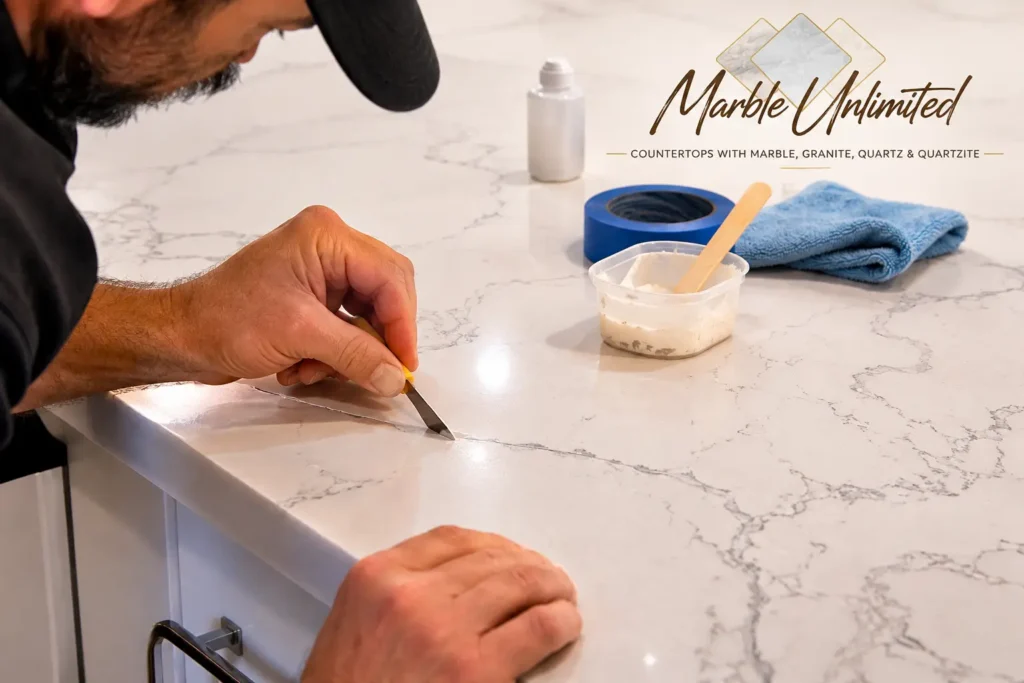
A dropped cast-iron pan, a hard impact along the sink edge, or an unexpected crack can make a beautiful quartz countertop feel suddenly fragile. The good news is that, in many cases, the answer to “can quartz be repaired” is yes. Small chips, shallow scratches, separated seams, and certain stains can often be addressed with the right materials and experienced workmanship. The right repair depends on the damage, where it occurred, and how closely the finished area must match the surrounding surface.
Quartz is a durable engineered surface, but it is not indestructible. A thoughtful inspection is the best first step before attempting a quick fix or assuming the entire countertop needs to be replaced.
Can Quartz Be Repaired After It Chips or Cracks?
Minor damage is usually the most repairable. A small chip near an edge or a nick around a sink cutout can often be filled with a color-matched epoxy or resin. Once the material has cured, a professional can carefully level and polish the repair so it blends with the countertop as naturally as possible.
Cracks require more judgment. A short, stable crack may be repairable, particularly if it is away from a sink opening, cooktop cutout, or unsupported overhang. However, a crack that continues to spread, runs through a narrow section of material, or appears near a structural stress point may point to an underlying installation or support issue. Filling the visible line without correcting the cause can leave the countertop vulnerable to further damage.
Repairs tend to be least noticeable on solid colors and darker patterns. On bright white quartz, designs with prominent veining, or surfaces with a highly polished finish, even a well-executed repair may remain faintly visible from certain angles. That does not necessarily make repair the wrong choice. It simply means expectations should be realistic before work begins.
Common Quartz Problems and What Can Be Done
Chips and Edge Damage
Chips are common along exposed edges, especially near sinks, corners, and seating overhangs. A professional repair typically involves cleaning the damaged area, building it back with a carefully selected resin, and shaping the repair to match the original edge profile. Small repairs can be very difficult to notice in everyday use.
Larger broken sections are more challenging. If an entire corner has fractured or a long edge has separated, the repair may be visible and may not provide the same long-term strength as an intact slab. Depending on the countertop layout, replacing one section may be a more durable solution.
Cracks Near Sinks and Cutouts
Sink and cooktop openings create natural stress points because they interrupt the slab. Cracks in these areas can happen after an impact, from inadequate support, or when the countertop experiences movement over time. The repair may involve stabilizing the crack from below, filling the surface line, and reviewing the surrounding support.
This is not an area for a casual do-it-yourself repair. The countertop must safely carry the weight and use demands around the opening. An experienced fabricator can determine whether reinforcement and repair are appropriate or whether replacing the affected piece will offer a more reliable result.
Seam Separation
Seams are necessary when a countertop design requires more than one slab or includes an L-shaped layout. A seam that feels rough, opens slightly, or shows a change in height can sometimes be corrected. The process may include removing old seam material, bringing the pieces back into alignment, and re-bonding them with the proper adhesive.
Seam repairs are often very successful when the cabinets remain level and secure. If a cabinet has shifted, settled, or lost support, however, the base issue should be addressed before the seam is repaired. Stone surfaces perform best when the cabinetry beneath them is stable and properly prepared.
Stains, Haze, and Surface Marks
Quartz is nonporous, which makes it resistant to many common kitchen stains. Still, residue from oils, dyes, hard water, or certain household products can leave a dull film or discolored area. In many cases, the problem is on the surface rather than inside the material and can be removed with a suitable quartz-safe cleaning approach.
Harsh chemicals and abrasive pads can create another kind of issue: a dulled finish that looks like a stain but is actually surface damage. Because quartz is manufactured with resins and pigments, aggressive polishing methods are not always appropriate. A professional assessment can help distinguish removable buildup from permanent finish damage.
When Repair Is Not the Best Choice
A repair is not automatically the best long-term value. Replacement may be the wiser path when a crack is extensive, the slab has fractured into multiple pieces, or the damage affects a high-stress area that cannot be safely reinforced. The same is true if heat has caused deep discoloration, blistering, or resin damage.
Quartz is highly durable for normal kitchen use, but it should not be treated like a trivet. Direct heat from hot cookware can damage the resin binders in some quartz products, leaving marks that cannot be fully restored. A repair may improve the appearance, but it cannot always return the material to its original condition.
Replacement can also make sense when a repair would be highly visible in a focal area, such as a large island or a prominent perimeter section. A fabricator can help compare the likely appearance and cost of repair against replacing only the damaged portion. If the original color or pattern is no longer available, selecting a coordinated new slab section may require careful design planning.
Why Professional Quartz Repair Matters
Quartz repair is as much about diagnosis as it is about filling a chip. An experienced countertop professional looks at the type of damage, the slab thickness, the location of seams and cutouts, the cabinet support, and the possibility of movement beneath the surface. Those details determine whether a repair will hold up or simply mask a larger problem.
Color matching also takes skill. Quartz patterns often combine multiple pigments, flecks, and veins, so an off-the-shelf filler can stand out immediately. Professional-grade resins can be tinted and adjusted to better suit the individual surface. Careful shaping and finishing make just as much difference as the color itself.
For homeowners planning a kitchen update, a repair consultation can also be an opportunity to assess the full countertop system. If an older surface has repeated seam problems, unsupported areas, or damage around a sink, it may be time to discuss a better long-term fabrication and installation plan rather than making the same repair again.
How to Prevent Future Damage
Most quartz countertops need only simple care. Clean spills promptly with a soft cloth, mild soap, and water, then dry the surface to prevent residue from building up. Use a cutting board instead of cutting directly on the countertop, and place trivets beneath hot pans, slow cookers, and countertop appliances that generate concentrated heat.
Avoid harsh drain cleaners, oven cleaners, paint removers, and highly abrasive scrubbers on the surface. If a spill involves a strong chemical, wipe it away promptly and rinse with clean water. It is also wise to avoid standing or sitting on countertop overhangs, even when the surface appears thick and solid.
If you notice a new crack, a raised seam, or a chip near the sink, address it early. Small problems are often easier to stabilize before daily use, moisture exposure, or additional movement turns them into a larger repair.
A quartz countertop can often be restored, but the best result starts with an honest evaluation of what happened beneath the surface as well as what is visible above it. Marble Unlimited can help homeowners in the Triangle area evaluate damaged quartz, explore repair options, and choose a lasting solution that fits the way their kitchen or bath is used.