
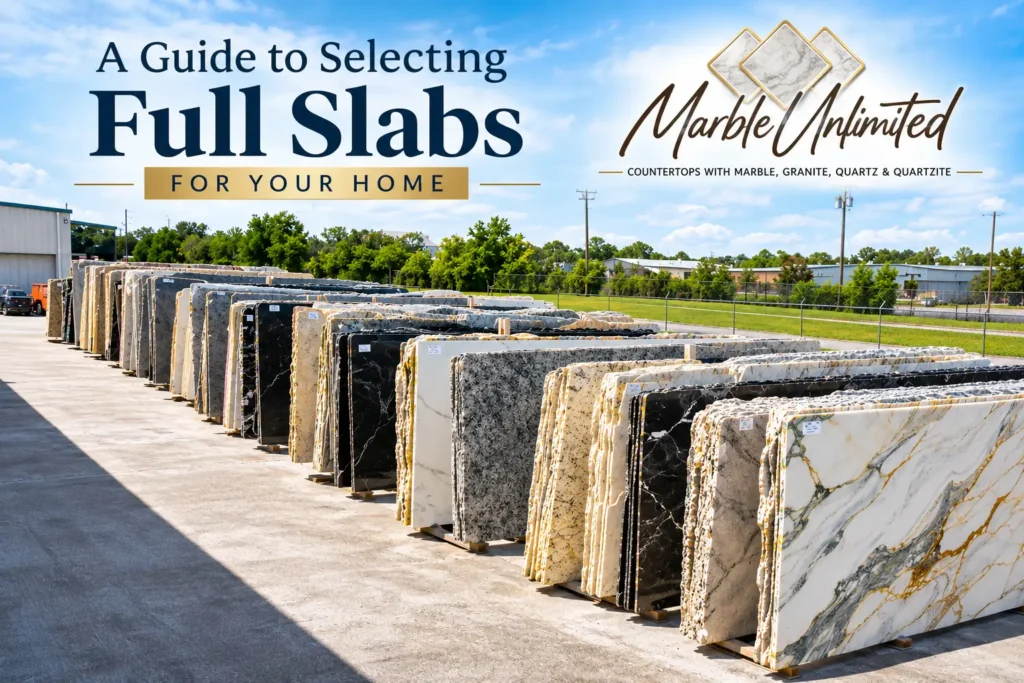
A slab can look completely different once it becomes part of your kitchen, bath, fireplace surround, or outdoor living space. The right selection is not simply the prettiest sample on a showroom rack. This guide to selecting full slabs helps you look at the entire piece of stone, understand how it will be fabricated, and make choices that will still feel right years after installation.
Full slabs give you the opportunity to see the real character of a material before fabrication begins. You can evaluate veining, color shifts, natural markings, and the amount of usable material available for your project. For homeowners planning a lasting upgrade, that full-picture view is one of the most valuable parts of the design process.
Start With How You Will Use the Surface
Before falling in love with a particular slab, consider the room and the way your household uses it. A busy family kitchen has different demands than a guest bathroom vanity, a fireplace feature, or a covered outdoor counter. Daily cooking, entertaining, sunlight, moisture exposure, and your comfort with routine care should all influence the material conversation.
Quartz offers consistent color and pattern with low day-to-day maintenance, making it a practical choice for many kitchens and baths. Granite is naturally durable and brings distinctive movement to a hardworking space. Quartzite often appeals to homeowners who want dramatic natural veining with strong performance, while marble offers classic beauty and develops character over time. Soapstone has a softer, more understated look and a naturally forgiving feel, while limestone can bring warmth to the right interior application.
There is no single best material for every home. The best choice is the one that matches your design goals, expected use, and maintenance preferences. A knowledgeable showroom consultation can help narrow the options before you spend time comparing individual slabs.
See the Whole Slab, Not Just a Sample
A small sample is useful for comparing general color, but it cannot show the full story. Natural stone varies across the surface. One end may have more movement, a darker mineral deposit, a quiet area that works beautifully around a sink, or a vein that becomes the focal point of an island.
When viewing a full slab, step back several feet first. Look at its overall background color and whether it reads warm, cool, bright, soft, or bold in natural and artificial light. Then move closer to inspect the details. Natural fissures, crystals, pits, mineral lines, and color variation are often part of the material’s inherent beauty, not flaws. Your fabricator can explain which features are expected characteristics and how they may appear after finishing.
Ask to see all slabs from the same lot when your project requires more than one. Even slabs with the same material name can vary. Selecting from a coordinated group gives you greater control over continuity across a large island, perimeter counters, a backsplash, or a fireplace installation.
Check the Slab Under the Right Lighting
Showroom lighting helps reveal material details, but your home has its own lighting conditions. Bring cabinet, paint, flooring, hardware, and wall-color samples when possible. Hold them against the slab rather than relying on memory.
Pay special attention to undertones. A white surface may lean cream, gray, blue, or taupe. A dark slab may contain warm brown, green, or charcoal notes that become more visible alongside cabinetry. If your kitchen receives abundant afternoon sun, view your finalists near a window or ask how the material may respond to changing light. This extra step can prevent a color surprise after installation.
Plan the Layout Before You Approve the Material
Selecting a slab also means deciding where its most distinctive areas should go. This is particularly important with marble, quartzite, granite, and other materials with pronounced veining or directional movement.
For an island, many homeowners choose a dramatic section of the slab as the visual centerpiece. A quieter area may be better suited to perimeter counters, a vanity, or sections interrupted by appliances. If you are including a full-height backsplash or a fireplace surround, discuss whether the veining should continue upward and whether a mirrored, bookmatched effect is appropriate.
Bookmatching places two adjoining pieces so their movement mirrors across a seam. It can create a striking feature wall or fireplace, but it is a design decision, not an automatic upgrade. Strongly mirrored movement can feel artistic and bold; a continuous flow may look calmer and more natural. The right approach depends on the slab and the room.
A professional template and layout review are essential. During this stage, your fabrication team considers cabinet dimensions, overhangs, appliance openings, seams, cutouts, and the structural needs of the material. A beautiful slab must also be used responsibly. Sometimes preserving a preferred vein placement may require a seam in a less obvious location, while other times the dimensions of the room make a different layout more practical.
Understand Seams, Cutouts, and Edge Details
Every project has physical constraints, and discussing them early makes the finished result more predictable. Large surfaces may need seams due to slab size, access into the home, or safe handling requirements. Skilled fabrication makes seams as discreet as possible, but no seam is entirely invisible. Material pattern, lighting, and viewing distance all affect how noticeable it will be.
Sink and cooktop cutouts also change the appearance and strength of the finished surface. A heavily veined area may be better positioned away from a cutout if you want to preserve its visual impact. For a kitchen sink, decide whether you prefer an undermount installation and consider how the sink material and faucet finish will work with the slab’s color and movement.
Edge profiles deserve attention as well. A simple eased edge supports a clean, current look and lets the slab take center stage. A more detailed profile can add traditional character, especially in a formal bath or classic kitchen. Thickness, edge treatment, and waterfall panels should be decided alongside the slab, since each affects both appearance and material yield.
Balance Beauty With Care Requirements
Natural stone rewards homeowners who appreciate individuality, but each material has its own care profile. Some surfaces benefit from periodic sealing. Marble can etch when exposed to acidic foods or drinks, creating a softened mark in the finish rather than a stain. For some homeowners, that lived-in patina is part of marble’s appeal. For others, a lower-maintenance option may be a better fit.
Do not choose a material based only on a social media image or a showroom display. Ask direct questions about cleaning, sealing, heat, staining, scratching, and the finish you prefer. Honesty about your household matters. If you love to cook with lemon, wine, and tomato-based foods but do not want to think about surface care, that should guide the recommendation.
The same principle applies outdoors. Sun exposure, weather, drainage, and the intended use of a patio, pool deck, or exterior counter all affect which materials and finishes are appropriate. Material selection for exterior work should be evaluated as its own conversation, not treated as an extension of an indoor kitchen choice.
Confirm What Is Included in Your Project
A full slab price is only one part of the project investment. Ask how fabrication, templating, delivery, installation, sink cutouts, edge work, removal of existing surfaces, and any needed support are handled. Clear scope helps you compare proposals accurately and prevents assumptions from affecting the schedule.
It is also wise to ask when the slab will be reserved and what happens after you approve it. Popular materials and distinctive natural slabs can move quickly. Once your selection is made, documenting the chosen slabs and reviewing the planned layout gives everyone a clear reference point before fabrication begins.
For homeowners in the Triangle area, Marble Unlimited offers the advantage of viewing a broad selection of full slabs alongside experienced guidance on fabrication and installation. Seeing the materials in person, with your project details in hand, turns a difficult decision into a focused design conversation.
A Confident Choice Starts in the Showroom
Bring your measurements, inspiration photos, cabinet samples, and questions to your slab appointment. You do not need to arrive with every detail decided. A good selection process helps you understand the options, identify the trade-offs, and choose a surface that belongs in your home rather than simply looking good in a photograph.
Schedule a showroom visit or request a free quote when you are ready to compare full slabs side by side. The right piece of stone should feel considered, personal, and built to serve your home well for years to come.