
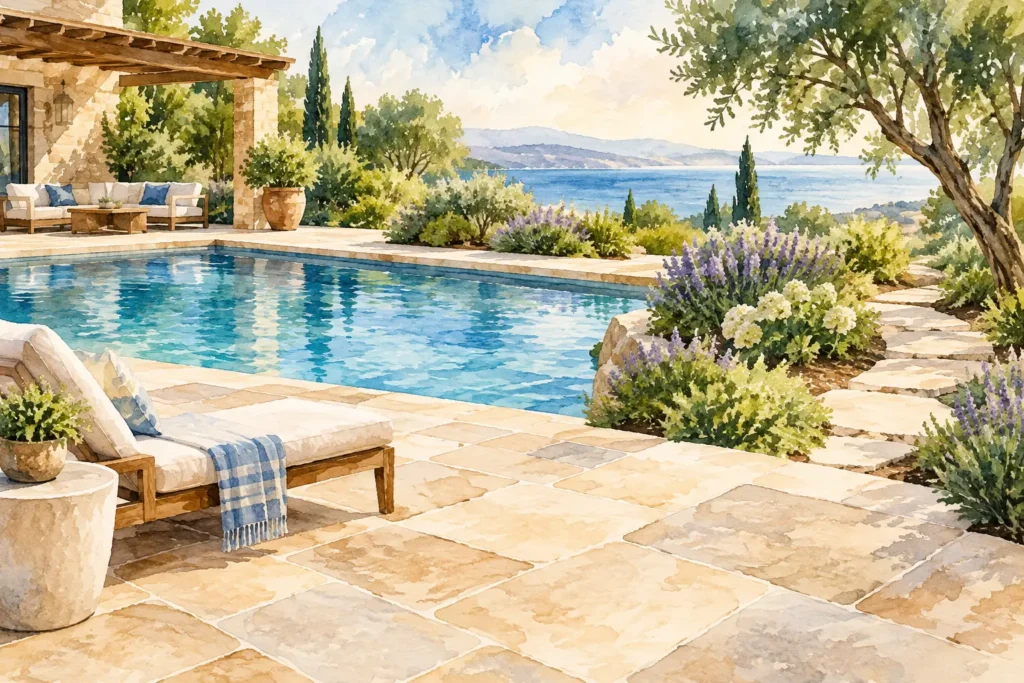
A patio has to do more than look good on the day it is installed. It has to handle humid North Carolina summers, heavy rain, muddy shoes, outdoor meals, and years of changing furniture layouts. Limestone pavers bring a calm, established character to those everyday spaces, with natural variation that feels considered rather than overly formal.
For homeowners who want an exterior surface that connects naturally with stone steps, wall cladding, a fireplace surround, or interior flooring, limestone is often worth a closer look. The right selection and installation details matter as much as the color, especially around pools, covered porches, and areas that receive frequent moisture.
Why Limestone Pavers Create a Lasting Outdoor Space
Limestone is a natural sedimentary stone valued for its soft movement, layered texture, and broad range of warm neutral tones. Depending on the quarry and finish, it may lean creamy white, beige, buff, gray, or blue-gray. Its variation is more restrained than highly veined marble, which makes it especially useful when a homeowner wants the architecture and landscaping to remain the focus.
Pavers made from limestone can suit traditional brick homes, clean-lined contemporary residences, and properties with a more relaxed garden setting. A light limestone patio can brighten a shaded yard, while gray or taupe material can provide a quieter transition from a home’s exterior finishes to the landscape.
The material also has a tactile quality that manufactured surfaces do not replicate. Small fossils, subtle mineral shifts, and natural edge variation make each installation distinctive. That does not mean every piece should look dramatically different. A knowledgeable stone professional can help you select material with an overall color range that feels cohesive across a larger patio or pool deck.
Choosing Limestone Pavers for the Right Application
Not every limestone is equally suited to every exterior project. Density, absorption rate, finish, thickness, and the way the stone will be installed should all be reviewed before materials are ordered. This is where samples are helpful, but larger pieces viewed in natural light provide a much better sense of the stone’s true color and movement.
Patios and Outdoor Living Areas
A limestone patio is a strong choice for a dining area, fire feature, terrace, or outdoor kitchen. Larger-format pavers can create a more open, tailored appearance with fewer joints, while smaller pieces or varied sizes can add a more traditional, garden-inspired rhythm.
Consider the patio’s exposure before deciding on color and finish. A very light stone can make a sunny area feel brighter and may be more comfortable underfoot than a dark surface, but it can also show leaves, pollen, and grill spills differently. A warmer beige or weathered gray may be more forgiving in a heavily landscaped yard. There is no universal best color – the ideal choice depends on the home, surrounding hardscape, and how the space will be used.
Pool Decks
Around a pool, finish and drainage deserve as much attention as appearance. A finish with appropriate texture can provide better traction when wet than a highly smooth surface. Honed, brushed, tumbled, or textured options each create a different look and feel, so it is worth discussing how a finish performs under bare feet as well as how it looks from inside the home.
Limestone can be an appealing pool-deck material because many selections have a naturally relaxed, resort-like appearance. However, pool chemicals, standing water, sunscreen, and constant splash-out require a thoughtful sealing and cleaning plan. Proper slope is essential so water moves away from the home and does not remain on the surface or collect along the coping.
Walkways, Courtyards, and Garden Paths
Limestone paths can give a landscape a sense of permanence without making it feel rigid. Rectangular pavers lend themselves to clean running patterns, while irregular pieces can create a more informal route through a garden. The decision should follow the architecture of the home and the desired level of formality.
For walkways, the base beneath the stone is particularly important. A beautiful paver will not compensate for inadequate excavation, poor compaction, or drainage that directs water beneath the path. Movement, uneven joints, and pooling water are usually installation issues, not simply material issues.
Finish, Format, and Color Matter More Than Most Homeowners Expect
When selecting limestone, many homeowners begin with color. That is natural, but the finish often has an even larger effect on the finished project. A crisp, sawn-edge paver can look refined and architectural. A tumbled edge introduces a softer, time-worn feeling. A textured finish can make an outdoor surface feel more casual while supporting better footing in wet conditions.
Format changes the visual scale as well. Oversized pavers make a compact patio feel less busy, while a patterned layout can add interest to a broad terrace. Joint width and grout or joint-fill color also influence the final result. A high-contrast joint emphasizes the pattern; a closely matched tone lets the stone read as one continuous field.
Bring photographs of your home’s exterior, existing stonework, paint colors, and outdoor furniture to the selection process. If you are coordinating a larger renovation, consider how the exterior material relates to indoor surfaces seen through major doors or windows. The goal is not to match every material exactly. It is to create a transition that feels intentional.
Installation Details That Protect Limestone Pavers
Exterior stone performs best when the site is prepared to manage water from the beginning. A professional installation plan should account for the existing grade, the condition of the soil, nearby downspouts, and the direction of runoff. In the Triangle area, intense rain can expose weak drainage quickly.
The installation method depends on the project. Some limestone pavers are installed over a carefully prepared aggregate base with joints designed for that system. Others are set in mortar over a properly constructed concrete base. Each approach has advantages, but both require correct preparation, perimeter restraint where appropriate, and joints that accommodate the intended design and local conditions.
Thickness should also match the application. A pedestrian garden path has different demands than a high-use pool deck or a driveway approach. Limestone is generally best reserved for pedestrian areas unless a specific material and engineered installation are selected for vehicle loads.
Good craftsmanship also includes thoughtful cuts at steps, drains, columns, and curved planting beds. Those details are where an outdoor surface either looks custom-built or looks like material forced into place. Marble Unlimited approaches exterior stone as a complete project, helping homeowners evaluate material, layout, fabrication needs, and installation conditions before work begins.
Care for Limestone Without Overcomplicating It
Limestone does not need constant attention, but it does benefit from sensible care. Most exterior installations should be sealed with a penetrating sealer chosen for the specific stone and finish. Sealer can help reduce absorption and make routine cleanup easier, but it is not a permanent shield against every stain or weather condition. Resealing intervals vary based on exposure, traffic, and product performance.
For regular cleaning, use water and a stone-safe, pH-neutral cleaner when needed. Avoid harsh acidic cleaners, which can etch or dull limestone, and avoid aggressive pressure washing that may damage joints or disturb softer surface areas. Address food, oil, and leaf stains promptly rather than allowing them to sit through changing weather.
Expect natural stone to develop character outdoors. Some color mellowing, subtle weathering, and a changing surface patina are normal parts of limestone’s appeal. If you prefer an exterior surface that will remain visually uniform with minimal variation over time, limestone may not be the right fit. If you appreciate materials that settle into the landscape gracefully, it can be an excellent long-term choice.
Before choosing a final stone, view full-size samples outdoors at different times of day and ask how the selected limestone will be finished, installed, sealed, and maintained. A showroom consultation can turn a beautiful first impression into an outdoor surface that is equally practical for the way you live.