
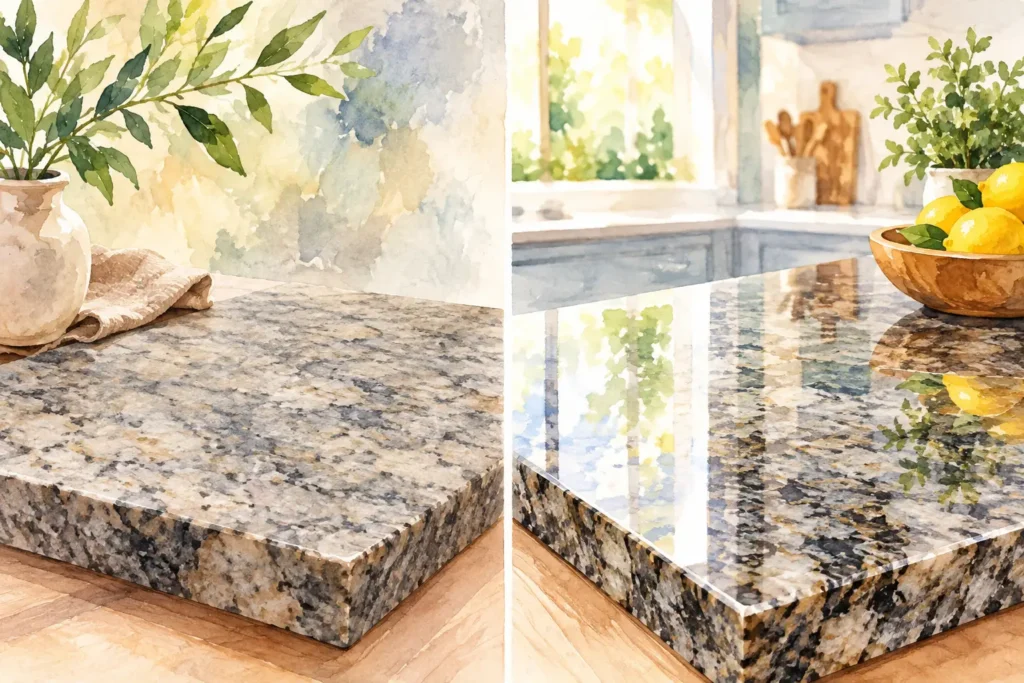
A dark granite countertop can look completely different at 10 a.m. than it does after dinner. Sunlight may emphasize its natural movement, while overhead lighting reveals water spots, fingerprints, or a rich reflective shine. That is why the decision between honed versus polished granite deserves more attention than a quick color match. The finish affects the way granite looks, feels, cleans, and works with the rest of your room.
Honed Versus Polished Granite: The Real Difference
Granite begins as natural stone with mineral variation, veining, crystals, and color movement formed over millions of years. A finish is created during fabrication by working the surface to a particular level of smoothness and sheen. It does not change granite into a different material, but it can noticeably change how the slab presents itself in your kitchen, bathroom, fireplace surround, or outdoor living area.
A polished finish is smooth and reflective. It brings out depth, color, and the crystalline details that make granite distinctive. On many slabs, especially darker colors and dramatic patterns, polishing creates a richer, more formal appearance.
A honed finish is also smooth, but it has a soft matte to low-sheen appearance. Rather than reflecting light sharply, it diffuses it. Honed granite often feels quieter and more contemporary, making it a natural fit for homeowners who want the character of real stone without a glossy surface.
What polished granite looks and feels like
Polished granite has the classic countertop appearance many homeowners recognize immediately. Its surface catches light, which can make a smaller room feel brighter and can bring additional visual depth to a slab with metallic flecks or bold mineral movement. It works especially well with traditional cabinetry, warm wood tones, polished metal fixtures, and spaces where the countertop is intended to be a focal point.
The same reflectivity that makes polished granite striking can also make it more visually active. A heavily patterned slab beneath bright lighting may compete with busy cabinetry, wall color, or decorative fixtures. In a kitchen with already-dramatic design elements, a polished surface should be viewed alongside the actual cabinet and paint samples before making a final decision.
What honed granite looks and feels like
Honed granite has a more understated finish, but understated does not mean plain. The stone’s natural movement remains visible, often with a softer, more relaxed expression. It can complement painted cabinetry, modern hardware, textured wood, and designs where the overall room should feel warm rather than formal.
Because a honed surface absorbs and scatters light, colors may appear slightly softer than they do in a polished sample. Black granite may read as charcoal in some lighting. Gray, green, and blue tones can also shift depending on the slab and the room. This is one reason a full-slab viewing is far more useful than choosing from a small sample.
Which Granite Finish Works Better in a Kitchen?
For a busy kitchen, the right finish depends less on a universal rule and more on how your household cooks, cleans, and uses the space. Both honed and polished granite are durable choices when properly fabricated, installed, and maintained. Granite handles everyday kitchen demands well, including normal food preparation, frequent cleaning, and occasional contact with warm cookware when sensible care is used.
Polished granite is often the easier choice for homeowners who want a finish that highlights color and offers a traditional, finished appearance. Its smoother, more reflective surface can make crumbs and spills easy to see and wipe away. A polished finish may also offer slightly better resistance to staining because the surface has been refined to a higher sheen, although every natural slab has its own porosity and should be sealed as needed.
Honed granite is popular in kitchens designed around a softer, less reflective look. It can be forgiving of light glare and may make a large island feel less visually dominant. However, honed finishes can show marks differently. On darker colors in particular, water spots, fingerprints, cooking oils, and handprints may be more noticeable. Some homeowners appreciate the lived-in character; others prefer the consistently crisp look of polished stone.
The best test is practical. If your family gathers around the island every day, place a sample near the sink and cooktop area if possible. Look at it in daylight, at night, and after touching it with clean, slightly damp hands. A finish that looks perfect in a showroom may behave differently under your own lighting and routines.
Bathroom Use Calls for a Different Decision
In bathrooms, polished granite is often chosen for its light-catching appearance and easy-clean appeal. It pairs beautifully with mirrors, decorative lighting, and cabinetry designed to create a more refined vanity area. Lighter polished granite can help brighten bathrooms with limited natural light.
Honed granite creates a calm, tailored look in a bathroom, especially when paired with warm wood vanities or matte fixtures. Since bathroom counters encounter water, hand soap, cosmetics, and personal-care products, regular wiping remains important regardless of finish. A honed dark stone around frequently used sinks may require a little more attention if mineral deposits or water marks stand out.
For shower walls, flooring, pool decks, and exterior applications, finish selection also involves traction, drainage, exposure, and intended use. Those conditions require a project-specific recommendation rather than simply choosing the same finish used on an indoor countertop.
Maintenance Differences You Will Actually Notice
Neither finish should be treated as maintenance-free, but granite care is straightforward. Clean surfaces with a soft cloth, warm water, and a stone-safe cleaner. Avoid harsh abrasives and cleaners that leave a film behind. Wipe spills promptly, particularly oils, wine, citrus, and strongly colored foods.
Sealing is not a one-time promise. The need for sealer varies by stone, finish, color, and daily use. A simple water test can help: place a few drops of water on the surface and watch whether they bead or darken the stone after several minutes. If the water absorbs and leaves a temporary dark spot, it may be time to reseal.
Honed granite can need more diligent sealing than polished granite, but that is not guaranteed. Some dense honed granites perform exceptionally well, while some lighter or more porous polished stones benefit from more frequent care. The individual slab matters more than the finish label alone.
One common misconception is that granite is impervious to every form of damage. It is extremely durable, but it can still chip at an exposed edge if struck hard, and sudden extreme temperature changes are never ideal. Thoughtful edge selection, professional installation, and reasonable daily care protect the investment far better than choosing one finish over the other.
Color, Lighting, and Cabinetry Matter as Much as Finish
A finish should never be selected in isolation. Bring cabinet doors, paint samples, hardware finishes, and a photo of the room to the slab selection appointment. A polished white or gray granite may add brightness to a kitchen with dark cabinetry, while a honed finish can temper a stone with strong patterning so it feels more balanced.
Lighting is especially influential. Under-cabinet lights, pendant fixtures, large windows, and warm versus cool bulbs can each change the appearance of sheen and color. A polished countertop may become the most luminous feature in the room. A honed countertop may make surrounding finishes, including cabinetry and a stone backsplash, feel more prominent.
The edge profile also contributes to the final effect. A detailed edge can reinforce the traditional elegance of polished granite, while a clean, simple edge can support the restrained character of a honed surface. These choices are most successful when considered together, not as separate decisions made weeks apart.
Let the Slab Guide the Choice
Some granite colors look exceptional in both finishes. Others strongly favor one. A highly crystalline slab may lose some of its sparkle when honed, while a stone with subtle movement may gain sophistication from the softer finish. There is no substitute for seeing the actual slab under good lighting and discussing how it will be fabricated for your layout.
At Marble Unlimited, homeowners can compare full slabs and receive guidance based on the room, the stone itself, and the way the surface will be used. That conversation can also cover seam placement, sink selection, edge details, and the care expectations for your chosen material.
Before making a final selection, ask to see both finishes if they are available in a similar color family. Touch them, view them from across the room, and imagine them after a busy week of real life. The right granite finish is the one that still feels beautiful when the room is being used exactly as intended.