
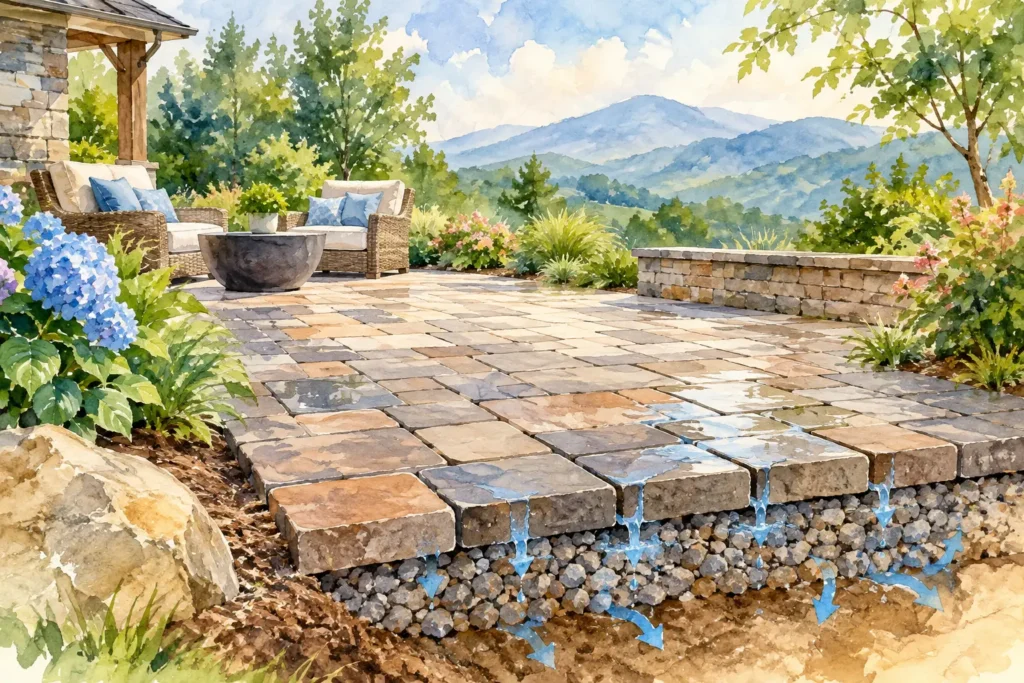
A patio can have beautiful stone, precise cuts, and a carefully planned layout, yet still feel like a problem after a heavy North Carolina rain. Water that pools near the house, settles between pavers, or washes out joints is rarely just a surface issue. Selecting the best patio pavers for drainage means considering the entire assembly below and around the stone: the slope, joint design, base materials, and route water takes once it leaves the patio.
For homeowners in the Triangle, drainage deserves attention from the first design conversation. Our clay-heavy soils, summer downpours, and shaded outdoor areas can expose shortcuts quickly. The right natural stone can create a patio with exceptional character and long-term performance, but only when it is installed as part of a complete water-management plan.
What Makes a Patio Drain Well?
A well-drained patio does not necessarily send every drop of water straight through the surface. Natural stone pavers themselves are generally dense, and many are not designed to absorb large amounts of rainfall. The goal is more practical: move water off the patio surface efficiently, allow controlled drainage through appropriately designed joints when desired, and keep water away from the foundation.
That begins with slope. Most patios should pitch gently away from the home, commonly about 1/8 to 1/4 inch per foot. The exact grade depends on the site, the patio shape, surrounding elevations, and where water can safely discharge. A patio that looks level to the eye can still have enough fall to prevent standing water.
The base matters just as much. Compacted aggregate, properly prepared subgrade, and edge restraints keep pavers stable while allowing the system to handle moisture. Without a stable, correctly graded base, even a premium stone can shift, settle, or develop low spots where water collects.
Best Patio Pavers for Drainage: Natural Stone Options
There is no single stone that is right for every outdoor project. The best choice depends on the desired appearance, the amount of shade and traffic, the patio’s exposure to water, and the installation method. These are several strong options for patios where drainage is a priority.
Granite pavers for strength and low absorption
Granite is one of the most durable choices for an exterior patio. Its dense structure, resistance to weathering, and dependable performance make it especially appealing for high-use spaces, outdoor kitchens, walkways, and poolside areas. It is less likely to absorb moisture than more porous stones, which can help simplify maintenance in wet conditions.
Granite does not solve drainage by itself. Because water will mostly travel across its surface, the grade and joint layout need to direct that runoff intentionally. For homeowners who want a crisp, tailored patio with long-term durability, granite pavers installed over a properly prepared aggregate base are an excellent option.
Natural cleft flagstone for flexible joint design
Flagstone creates a relaxed, organic patio with natural variation in color, shape, and texture. It works particularly well when installed with wider joints that can be filled with permeable aggregate or planted groundcover, depending on the design and maintenance expectations. Those open joints can help reduce surface runoff by giving water more places to enter the base.
The trade-off is that flagstone requires skilled layout and base preparation. Individual pieces vary in thickness and shape, so installers must carefully set each stone to preserve consistent slope and avoid birdbaths. When done well, a dry-laid flagstone patio looks timeless and handles changing outdoor conditions beautifully.
Sandstone for warm color and a softer look
Sandstone offers inviting earth tones that pair naturally with gardens, brick homes, and traditional outdoor living areas. Some varieties have more natural porosity than granite, which can influence how they respond to moisture and staining. In a covered or partly shaded patio, that may mean more attention to cleaning and sealing recommendations.
Sandstone can perform very well in a drainage-conscious design, especially when wider joints and an open-graded base are part of the plan. Material selection is important here. Not all sandstone has the same density or weather resistance, so homeowners should work with a stone professional who can recommend a product suited to local exterior conditions.
Travertine for pool decks and sun-filled patios
Travertine is often chosen for its refined appearance, cooler feel underfoot, and naturally textured surface. Its small pores give it a distinctive character and can be an advantage around pools when combined with thoughtful installation. Lighter colors also tend to stay more comfortable in direct sun than darker stone.
However, travertine requires the right environment and maintenance plan. It is not the automatic answer for every patio, particularly in constantly damp, heavily shaded locations where organic growth can become a concern. Proper slope, drainage beneath the pavers, and appropriate cleaning practices are essential to preserving its appearance.
Choose the Installation Method Before Choosing the Final Stone
The way pavers are installed has as much influence on drainage as the pavers themselves. A dry-laid patio typically uses stone set over a compacted aggregate base with joints filled by a permeable material. This approach can allow water to pass through joints and into the base, where it is directed or dispersed according to the site plan.
A mortar-set patio provides a more formal, tightly finished appearance. It can be a good choice for certain architectural styles and applications, but it requires especially careful waterproofing, slope, and drainage detailing. Since water cannot simply move through the assembly in the same way, it must be directed across the surface toward a planned collection or discharge point.
Neither method is universally better. A dry-laid system may be ideal for a garden-facing patio where natural infiltration is appropriate. A mortar-set installation may make sense beside a home with specific design requirements, provided it is built with professional drainage protection. The wrong approach is treating the decision as decorative only.
Details That Prevent Puddles, Settling, and Washouts
Even the best stone selection can be undermined by a few overlooked details. Before construction begins, look at how roof runoff, surrounding lawn grade, downspouts, and existing drainage paths interact with the future patio. A downspout emptying directly onto a new stone surface can overwhelm joints and create erosion no matter which paver is selected.
Joint material also deserves a conversation. Fine joint sand produces a clean, finished look, but it may not be appropriate for every drainage-focused patio. Open-graded aggregate can support better water movement through wider joints, while some stabilized joint products help resist washout in areas exposed to runoff. The right choice depends on joint width, stone type, installation method, and whether the patio is likely to receive concentrated water.
Edge restraints are less visible but equally important. They hold the field of pavers in place, protecting the alignment and joint structure over time. Without secure edges, the surface can spread and shift, allowing water to find weak points in the base.
Finally, plan for maintenance. Sweep leaves, mulch, and soil from joints so water can keep moving as intended. Address a settled area early rather than waiting for it to become a larger drainage problem. Stone patios are durable, but every exterior surface benefits from periodic attention.
When a Drainage Solution Needs More Than Pavers
Some properties have drainage conditions that cannot be solved by patio materials alone. A low backyard, a slope toward the house, dense clay soil, or a patio built below surrounding grades may require a broader solution. Depending on the conditions, that can include regrading, channel drains, French drains, catch basins, retaining work, or redirecting roof runoff.
This is where an experienced installer adds real value. The goal is not to sell a particular stone at all costs. It is to create an outdoor surface that suits the home, holds its grade, and directs water responsibly for years to come.
At Marble Unlimited, we help homeowners compare natural stone options, installation approaches, and design details before work begins. A showroom visit can make it easier to evaluate color, texture, and finish in person, while an on-site assessment helps identify the drainage considerations that samples alone cannot reveal.
A patio should invite you outside after the rain, not leave you searching for a dry path. Start with a stone you enjoy, then give it the slope, base, joints, and professional installation it needs to perform beautifully.