
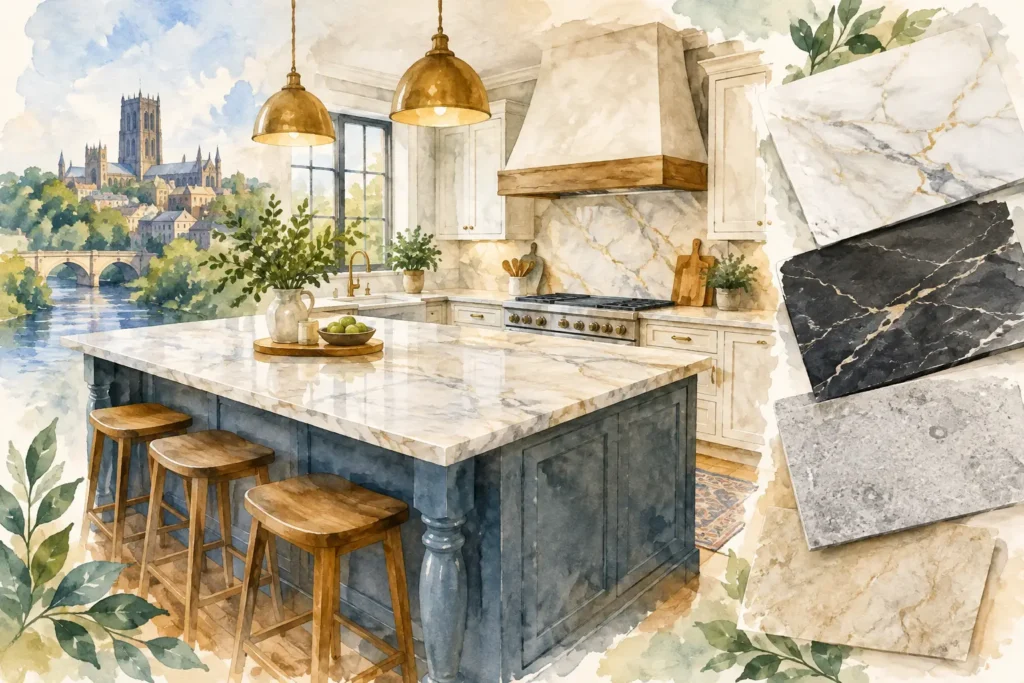
A kitchen can have well-built cabinets, good lighting, and a workable layout, yet still feel dated or unfinished until the surfaces change. A Durham kitchen slab transformation gives the room a new focal point while improving the everyday experience of cooking, serving, and gathering. The right natural stone or engineered surface does more than cover cabinets. It establishes color, movement, texture, and a sense of permanence that ready-made materials rarely achieve.
For homeowners planning a renovation, the most successful result begins before fabrication. It starts with seeing full slabs, understanding how each material behaves, and making selections that suit the household as well as the design.
What a Durham Kitchen Slab Transformation Can Change
A slab transformation is often described as a countertop upgrade, but its impact reaches further. Large-format stone creates visual continuity across a kitchen, especially when the same material carries from the perimeter counters to an island, a full-height wall surface, or a coordinated bar area. The room feels more intentional because its most visible planes are working together.
This approach is especially valuable in kitchens with existing cabinetry worth keeping. New slabs can refresh warm wood finishes, bring depth to painted cabinets, or provide contrast against darker colors without requiring a complete demolition. When cabinetry, appliances, and room layout remain in place, surface selection becomes the main design decision – and the one guests are most likely to notice.
There is also a practical benefit. A custom-fabricated slab is measured for the actual room, including corners, overhangs, appliance clearances, sink cutouts, and wall conditions. That precision matters in older Durham homes, where rooms may not be perfectly square, as well as in newer open-plan kitchens where long runs and large islands make alignment highly visible.
Start With How Your Kitchen Is Used
Material choice should reflect real life, not only a sample shown under showroom lighting. A family that cooks every night, hosts frequently, or has young children may prioritize stain resistance and low day-to-day maintenance. A homeowner drawn to one-of-a-kind veining may be willing to provide more attentive care in return for a distinctive natural surface.
Quartz is often a strong fit for homeowners seeking consistent color, straightforward cleaning, and a polished look. It offers many design options, from quiet whites to darker tones with dramatic movement. Granite remains a dependable natural choice for kitchens that need everyday durability and character. Quartzite appeals to homeowners who want the visual drama of natural stone with excellent hardness, though each slab should be evaluated individually for its color, finish, and care needs.
Marble has a timeless presence that cannot be copied exactly. It develops character over time, which some homeowners love and others prefer to avoid. For an active kitchen, the decision comes down to expectations: marble can be beautiful for a lifetime, but it is best chosen by people who appreciate a living finish rather than a perfectly unchanged surface. Soapstone offers a softer, more organic appearance and can deepen in color over time. Limestone brings warmth and subtle variation, but may be better suited to kitchens where the owner understands its maintenance requirements.
A knowledgeable showroom consultation helps narrow the field. Looking at full slabs is essential because a small sample cannot show the full range of veining, mineral variation, or background color. A slab that appears gray in a sample may read warmer across an entire island. A material with bold movement may become the kitchen’s centerpiece or compete with an already busy cabinet finish. Seeing the whole piece makes those decisions clearer.
Match the Slab to Existing Elements
If cabinets are staying, bring a door sample, paint swatch, or clear photographs to the showroom. The same is true for flooring, wall color, and metal finishes. A surface does not need to match every element, but it should create a deliberate relationship with them.
White or light cabinets give homeowners flexibility. They can pair with a quiet, light surface for an airy kitchen or with a dark, richly patterned slab for contrast. Medium and dark wood cabinetry often benefits from a slab that balances its warmth rather than fighting it. For example, a cooler white may make orange-toned wood look more pronounced, while a creamier background can create a calmer transition.
Lighting deserves attention, too. North-facing kitchens, shaded rooms, and spaces with limited natural light may benefit from a lighter surface or a finish that reflects more light. In a bright kitchen, a deeper stone can add definition without making the room feel closed in.
Plan the Details Before Fabrication
The best slab projects are decided in layers. First comes the material, then the slab layout, then the functional details that turn a beautiful surface into a hardworking kitchen.
A fabricator should help plan where the most dramatic areas of a slab will fall. On a heavily veined quartzite or marble, the island is often the best place to feature movement. On a long perimeter run, seam placement requires careful thought. Seams are a normal part of many installations, particularly when a kitchen has long counters or access limitations, but experienced planning can make them less noticeable and keep the design balanced.
Edge profiles also influence the final look. A simple eased edge suits contemporary kitchens and puts attention on the stone itself. A more detailed profile can add traditional character. The right choice depends on cabinet style, slab thickness, and how formal or relaxed the room should feel.
Sink selection belongs in this stage as well. An undermount sink creates a clean transition from counter to basin and makes wiping crumbs into the sink easier. The size and placement should reflect how the kitchen is used. A wide single-bowl sink may suit serious cooks and oversized cookware, while a divided configuration can help households that prefer separate washing and rinsing areas.
For an island with seating, overhang depth and support need to be addressed early. Stone is strong, but unsupported spans have limits. Proper brackets or other engineered support protect the installation and allow the seating area to feel substantial rather than improvised.
Fabrication and Installation Are Where Craftsmanship Shows
A slab is only as successful as the work that happens after it is selected. Accurate digital or on-site measurements, thoughtful layout, precise cutting, careful edge finishing, and experienced installation all shape the final result.
Before final measurement, cabinets should be installed, level, and securely fastened. Any changes to cabinet position, wall construction, or appliance specifications after templating can affect the fit. This is one reason clear communication between the homeowner, contractor, cabinet installer, and stone team is so valuable.
During fabrication, cutouts for sinks, cooktops, and faucets are created to the approved specifications. Natural materials require knowledgeable handling because every slab has its own veining, fissures, and structural characteristics. These are not necessarily flaws. In many cases, they are part of what makes natural stone unique. An experienced fabricator understands where reinforcement, careful cutting, or strategic layout is needed.
Installation day moves quickly when preparation is complete. Access routes should be clear, appliances and plumbing should be coordinated as needed, and homeowners should understand what remains after the slabs are set. Final plumbing connections, for example, may be completed by the appropriate trade after installation. A professional team will explain the sequence so there are no surprises.
Make a Lasting Choice, Not a Quick One
A successful kitchen renovation does not chase every trend. It creates a room that feels right for the home, supports daily routines, and holds its appeal long after the project is complete. That may mean choosing a dramatic natural slab that becomes an heirloom feature, or a quieter quartz surface that lets cabinetry and lighting lead the design.
It also means being honest about maintenance. Use cutting boards rather than treating any countertop as a cutting surface. Clean spills promptly, particularly on natural stone. Use products recommended for the chosen material, and ask whether periodic sealing is appropriate. These small habits preserve both appearance and performance.
Marble Unlimited has helped North Carolina homeowners make these decisions for more than 27 years, from full-slab selection through custom fabrication and installation. A showroom visit gives you the opportunity to compare materials in person, discuss your kitchen’s dimensions and style, and receive recommendations grounded in how you actually live.
Bring your cabinet sample, a few photos, and a clear picture of what needs to work better in your current kitchen. The right slab is not simply the one that looks best under showroom lights. It is the one that makes your kitchen feel more like home every time you use it.