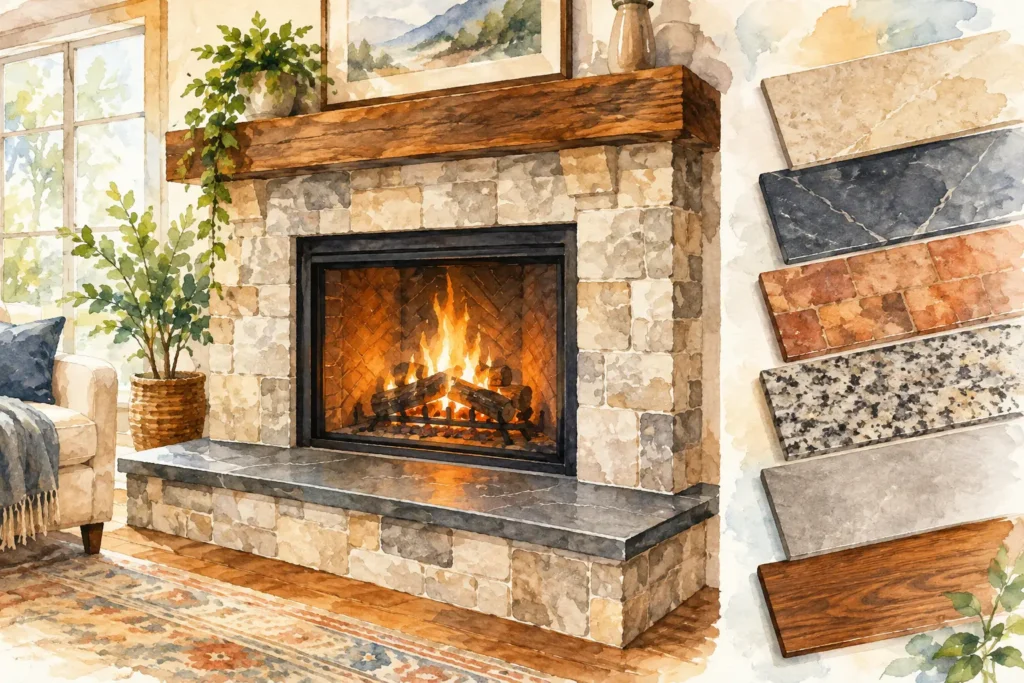
A fireplace hearth takes more punishment than most surfaces in a home. It sits closest to heat, catches ash and stray sparks, supports fireplace tools, and often becomes the visual anchor of the entire room. That is why the best fireplace hearth materials must do more than complement your mantel or flooring. They need to suit the fireplace type, meet safety requirements, and still look beautiful after years of use.
For many North Carolina homeowners, natural stone is the right starting point. Granite, quartzite, marble, soapstone, limestone, and slate each bring a different balance of heat tolerance, maintenance, texture, and color. The best choice is rarely the material that looks best in a small sample. It is the one that fits how you use your fireplace and how you want the room to feel.
What a Hearth Material Needs to Do
A hearth is the horizontal surface at the base of a fireplace. Depending on the design, it may extend into the room as a raised platform or sit flush with the floor. It should not be selected the same way as a decorative wall surface.
First, the material must be appropriate for the heat exposure of your fireplace. A wood-burning fireplace, gas fireplace, and electric unit create very different conditions. The fireplace manufacturer’s specifications and local building requirements determine the required dimensions, clearances, and noncombustible protection. Those details should be confirmed before fabrication begins.
Second, consider daily wear. A family that uses a wood-burning fireplace every weekend will have different needs from a homeowner creating a clean-lined surround for an occasional gas fire. Soot, firewood, pets, boots, and fireplace accessories can all leave their mark. A carefully chosen stone and finish make that wear easier to manage.
Finally, the hearth should relate to the rest of the room. Its color, movement, edge profile, and finish can make a fireplace feel tailored to the architecture rather than added as an afterthought.
Best Fireplace Hearth Materials: Natural Stone Options
Granite: Durable and Versatile
Granite is one of the strongest all-around hearth choices. It handles everyday wear well, offers excellent resistance to scratching, and comes in a wide range of colors and natural patterns. A darker granite can be especially practical around a wood-burning fireplace because it is more forgiving of soot and ash between cleanings.
Polished granite creates a more formal, reflective look, while a honed or textured finish can feel quieter and more traditional. The right finish depends on the surrounding surfaces and whether the hearth will be stepped on. Granite still benefits from periodic sealing, but its maintenance needs are generally straightforward.
Granite is a smart option when you want a substantial natural-stone hearth with dependable performance and broad design flexibility.
Quartzite: Dramatic Beauty With Everyday Strength
Quartzite is a natural stone known for its distinctive movement and impressive durability. It can offer the veining homeowners love in marble while providing greater resistance to scratching and daily wear. For a fireplace that serves as the focal point of an open living area, a single quartzite slab can create a striking, continuous hearth and surround.
Not every quartzite looks alike. Some varieties are soft and subtle, while others have bold mineral veining and rich color variation. Because it is a natural material, viewing the actual slab matters. The section selected for your hearth may show more or less movement than a small showroom sample.
Quartzite typically requires sealing and thoughtful cleaning, particularly on lighter colors. It is an excellent fit for homeowners who want a high-end statement without choosing a material that feels overly delicate.
Marble: Classic and Refined
Marble has a timeless association with fireplaces for good reason. Its soft veining and luminous surface work beautifully in traditional homes, historic renovations, and elegant contemporary spaces. White marble can brighten a darker room, while warmer varieties pair naturally with wood mantels, brass accents, and painted built-ins.
The trade-off is maintenance. Marble is softer than granite or quartzite and can etch when exposed to acidic substances. It may also show soot more readily on light colors. A honed finish is often a practical choice because it gives marble a softer appearance and makes minor surface changes less noticeable than a high-polish finish.
Marble is best for homeowners who value its distinctive character and understand that a natural patina can be part of its long-term appeal. With proper sealing, careful cleaning, and professional installation, it remains a beautiful hearth material for generations.
Soapstone: Warm, Quiet, and Exceptionally Well Suited to Heat
Soapstone has long been used around heat-producing appliances because of its excellent heat characteristics. Its dense, smooth surface has a soft feel and a deep, understated appearance that suits both rustic and modern interiors. Colors generally range from charcoal to green-gray, often deepening over time.
Unlike many lighter stones, soapstone is naturally forgiving around fireplaces. It does not need sealing in the same way as granite, marble, or quartzite, and its darker color helps conceal everyday fireplace residue. It can scratch more easily than granite, but smaller marks can often be softened or blended into the surface over time.
A soapstone hearth is an especially appealing choice for a wood-burning fireplace, a cozy den, or a home where the fireplace is used often rather than simply admired.
Limestone: Soft Color for Traditional Spaces
Limestone brings warmth that many harder stones cannot replicate. Its muted creams, taupes, grays, and sandy tones work well in homes with classic architecture, natural wood, plaster walls, or a relaxed European-inspired look. It can make a large fireplace feel established and inviting rather than overly formal.
Because limestone is comparatively soft and porous, it needs more protection from staining and scratching. A sealed, honed limestone hearth is usually better suited to lower-traffic fireplaces or gas installations than to an actively used wood-burning hearth. It can be the right choice when color and atmosphere are the priority, provided the homeowner is comfortable with attentive care.
Slate: Textured and Naturally Practical
Slate offers a more casual, grounded look than polished stone. Its layered texture and deep gray, charcoal, green, or blue tones complement cottages, craftsman homes, mountain-inspired interiors, and spaces with exposed wood or brick. It is also naturally good at disguising ash and everyday marks.
The exact performance of slate varies by variety. Denser slate is generally more durable and easier to maintain than softer material with a pronounced cleft texture. For a hearth that will see regular use, selecting a quality slab and choosing an appropriate finish are essential.
Choosing the Right Finish and Edge
The finish can change both the look and the practicality of your hearth. A polished surface reflects light and emphasizes pattern, making it a strong option for formal fireplaces and smooth contemporary designs. Honed stone has a low-sheen surface that feels more relaxed and tends to disguise minor scratches or smudges. Textured finishes offer visual depth but may collect more dust and ash in crevices.
Edges deserve the same attention. A simple eased edge is clean, comfortable, and versatile. A thicker built-up edge can give a hearth greater visual weight, especially below a tall surround. More decorative profiles may suit traditional rooms, but they should be chosen with the fireplace’s scale in mind. An oversized profile on a shallow hearth can feel heavy, while a narrow edge may get lost beneath a substantial mantel.
Do Not Choose by Appearance Alone
A beautiful slab is only one part of a successful fireplace project. Thickness, support, substrate preparation, expansion considerations, and the relationship between the hearth and surrounding finishes all affect the final result. Natural stone is heavy, and large-format pieces require precise measuring, careful fabrication, and experienced handling during installation.
It is also wise to distinguish a hearth from a fireplace surround. The surround is the vertical surface around the firebox, while the hearth takes more direct physical use. You may choose the same material for both, or combine materials for contrast. For example, a honed black granite hearth can ground a lighter marble surround, while a full quartzite installation can create a more continuous statement.
Before committing to a stone, bring cabinet samples, paint colors, flooring samples, and photos of the room to a showroom consultation. Seeing full slabs in person reveals undertones, veining, and surface movement that photographs cannot capture. It also gives you the opportunity to discuss how the material will be fabricated around the specific dimensions of your fireplace.
A fireplace should feel as dependable as it is inviting. At Marble Unlimited, a showroom visit can help you compare full slabs, talk through maintenance expectations, and select a custom hearth that feels right for your home, your fireplace, and the way your family gathers around it.