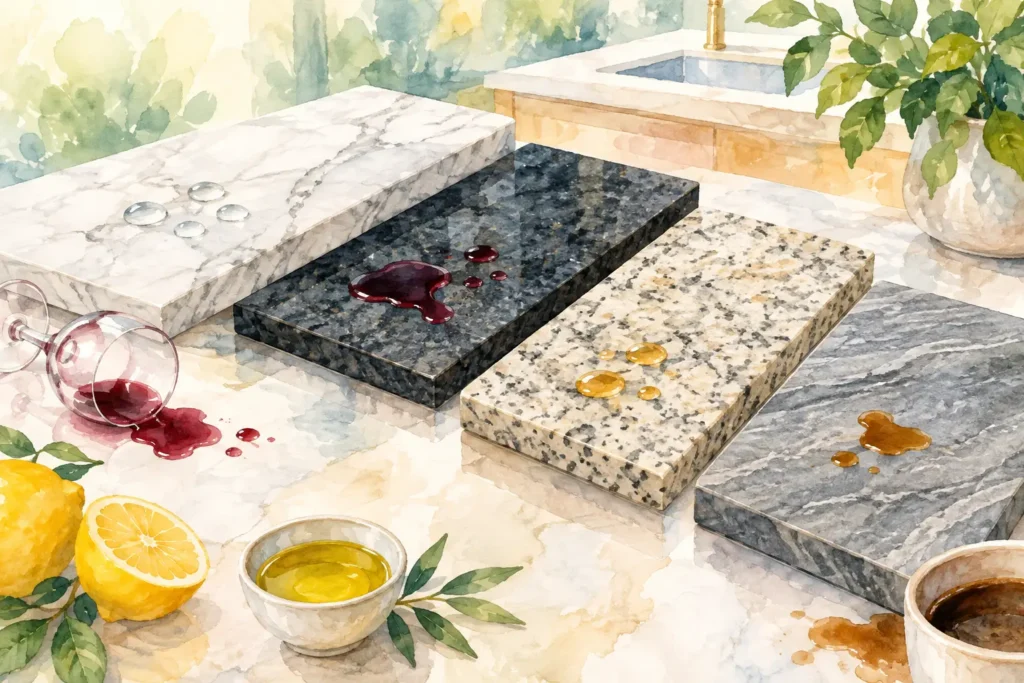
A glass of red wine left beside the sink, olive oil splashed near the range, and a child’s blueberry smoothie can reveal a countertop’s true personality quickly. Homeowners asking which stones resist stains are usually looking for more than a beautiful slab. They want a surface that suits the way their family actually cooks, hosts, and lives.
The best answer depends on whether you prefer natural stone or an engineered material, how much daily maintenance feels reasonable, and the color and finish you love. No countertop is completely immune to spills, heat, scratches, or wear. Yet some materials give busy kitchens and bathrooms a much larger margin for error.
Which Stones Resist Stains Most Reliably?
For the strongest everyday stain resistance, quartz is typically the leading choice. Its manufactured surface is nonporous, so common household liquids do not soak in the way they can with some natural stones. Granite, quartzite, and soapstone can also perform very well, particularly when the right slab, finish, and care routine are chosen. Marble is a timeless design material, but it is generally the least forgiving option for stain-sensitive spaces.
Stain resistance should not be confused with resistance to etching. A countertop can resist absorbing coffee or oil yet still show a dull mark after contact with lemon juice, vinegar, or wine. This distinction matters most with marble and other calcite-based stones.
Quartz: the low-maintenance stain-resistant choice
Quartz is often the practical favorite for families who want a polished kitchen without needing to think much about sealing. Because it is nonporous, spills from juice, cooking oil, coffee, and makeup generally stay on the surface until wiped away. Regular cleaning with a mild soap and soft cloth is usually all it needs.
That simplicity makes quartz especially appealing for kitchen islands, bathroom vanities, laundry rooms, and multi-family projects where consistency and easy upkeep matter. It is available in a wide range of colors and patterns, including options that offer the movement of natural stone.
There are trade-offs. Quartz is not the best place to set very hot cookware directly from the oven or cooktop, and it is usually better suited to interior spaces than areas with prolonged direct sun. A knowledgeable fabricator can help you select an appropriate material for the room and the exposure it receives.
Granite: dependable natural beauty with proper sealing
Granite has long earned its place in hardworking kitchens. It is a natural stone, so its porosity varies from one slab to another. Dense granites can be highly stain resistant, while lighter or more porous selections may need more diligent sealing and quicker spill cleanup.
When professionally sealed and maintained, granite handles normal kitchen use exceptionally well. It also offers strong heat resistance, making it an attractive choice for enthusiastic cooks. Darker granites often disguise day-to-day marks, but color alone should not determine performance. The specific slab matters more than a broad material label.
A sealer does not make granite invincible. Instead, it slows absorption and gives you time to clean up spills before they become a problem. For many homeowners, that is an easy and worthwhile level of maintenance in exchange for a one-of-a-kind natural surface.
Quartzite: a strong option for active kitchens
Quartzite is often selected by homeowners who want natural movement and dramatic veining with greater durability than marble. It is typically harder and more resistant to scratching than many other natural stones, and it can have very good stain resistance once properly sealed.
Still, quartzite is not one uniform product. Some varieties are extremely dense, while others have more open structure or natural fissures. A trusted showroom consultation is valuable here because the performance of a particular slab can differ significantly from another slab labeled quartzite.
For a kitchen that sees frequent cooking, quartzite can be an excellent middle ground: natural beauty, strong heat performance, and manageable care. Plan on periodic sealing, wipe up acidic or deeply colored spills promptly, and use cutting boards to preserve the finish.
Soapstone: naturally low-porosity and easygoing
Soapstone has a softer, quieter look than polished granite or quartzite, with a smooth feel that develops character over time. It is naturally low-porosity, which means it is highly resistant to staining and generally does not require the same sealing routine as many other natural stones.
The material does scratch more easily than granite or quartzite, especially in busy food-prep zones. Some homeowners appreciate the lived-in patina and occasional surface marks, while others prefer a more pristine appearance. Mineral oil or specialty soapstone treatments can deepen its color and help blend small scratches, but this is largely a visual preference rather than a stain-protection requirement.
Soapstone is also heat resistant, making it a capable choice near a range or fireplace surround. Its softer nature simply calls for realistic expectations about how it will age.
Marble: beautiful, but best for homeowners who embrace patina
Marble remains one of the most requested surfaces for its depth, veining, and classic character. It can be a wonderful choice for a bathroom vanity, fireplace, baking area, or a kitchen where the owners appreciate a surface that becomes more personal over time.
For stain resistance, however, marble needs the most care among the materials discussed here. It is more porous than dense granite or quartz, and acidic foods can etch the polished finish. Tomato sauce, citrus, wine, vinegar, and some cleaning products may leave marks even if they do not create a deep stain.
Sealing helps reduce absorption, but it will not prevent etching. If marble is the material you truly love, thoughtful placement can make a difference. Consider using it on a lower-traffic island, a vanity, or a baking station instead of the main cleanup area. Honed finishes can also make everyday etching less noticeable than a high-polish finish.
Stain Resistance Depends on More Than the Stone
Choosing among stain-resistant countertop materials is not as simple as selecting a name from a chart. The slab’s density, finish, color, edge details, installation quality, and your cleaning habits all affect long-term performance.
A light-colored surface can show dark spills more readily than a deep charcoal or richly patterned slab, even when both are equally resistant to absorption. A honed finish may hide small surface changes better than a polished finish, while a polished finish can make cleanup feel especially easy. Natural fissures and pronounced veining add visual interest but should be discussed during slab selection so you understand how they may look after fabrication.
Professional installation matters, too. Proper seams, sink cutouts, support, and careful sealing around vulnerable areas help protect a finished countertop from moisture exposure over time. A beautiful slab deserves fabrication that respects its structure and intended use.
A Simple Care Routine That Protects Your Investment
Even the most stain-resistant countertop benefits from prompt cleanup. Use a soft cloth or paper towel for spills, then clean with mild soap and water or a stone-safe cleaner. Avoid harsh abrasives, strong acids, and cleaners not recommended for your specific surface.
For natural stone, ask about a sealing schedule based on the exact material selected and where it will be installed. A simple water test can be useful: if water darkens the stone and does not quickly evaporate back to its original color, it may be time to evaluate whether resealing is needed. Your fabricator can provide care guidance tailored to the slab rather than a generic rule.
Use trivets for hot cookware, cutting boards for food preparation, and coasters in areas where drinks tend to sit. These habits are quick, but they protect both appearance and finish across nearly every countertop material.
Choose for the Way You Live
If your priority is the easiest day-to-day stain resistance, quartz is hard to beat. If you want a natural surface with excellent performance, properly sealed granite or quartzite may be the right fit. Soapstone offers a relaxed, low-porosity option for those who enjoy patina, while marble rewards homeowners who value timeless beauty and can accept more visible character over time.
At Marble Unlimited, a showroom visit lets you compare full slabs in real light, discuss how your household uses each space, and see which colors and finishes fit your cabinetry, sinks, and overall design. The right countertop is not simply the one that resists the most stains. It is the one you will enjoy using and looking at for years to come.