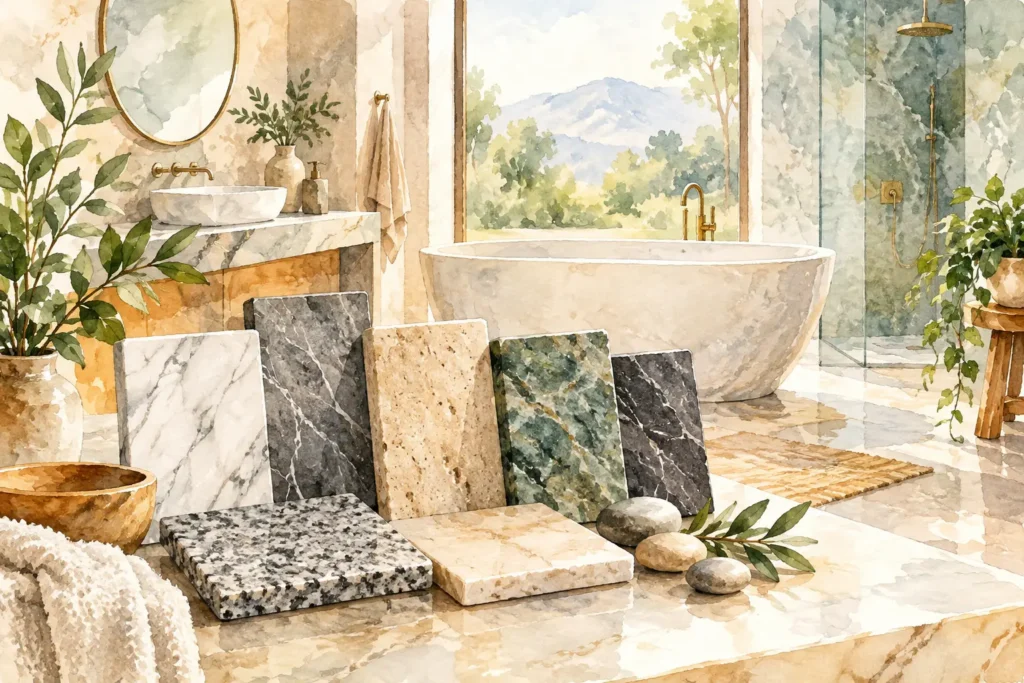
A bathroom can look beautifully finished on paper and still feel ordinary once the vanity top, shower surround, and floor are in place. Stone changes that. It introduces depth, natural movement, and a sense of permanence that painted cabinets and plumbing fixtures alone cannot provide. The best bathroom stone choices are not universal, though. The right surface depends on where it will be used, how much maintenance you welcome, and the look you want to live with for years.
For a primary bath in a Chapel Hill or Durham home, that may mean selecting a statement marble slab for a low-traffic vanity. For a busy family bathroom, it may mean choosing a more forgiving quartz or granite surface that handles daily routines with less concern. A thoughtful selection starts with the room’s real demands, not just a favorite sample.
What Makes a Bathroom Stone Choice Work?
Bathroom surfaces contend with moisture, cosmetics, hand soap, styling products, toothpaste, and occasional standing water. They also need to coordinate with cabinetry, mirrors, lighting, sinks, and the overall scale of the room. A material that performs beautifully as a vanity may need a different finish or more careful planning when used on a shower wall or floor.
Start by considering three questions. First, where will the material go: vanity, shower surround, wall cladding, flooring, tub deck, or a combination? Second, how much natural variation do you want? Finally, are you comfortable with periodic sealing and the character that natural stone can develop over time?
No material is entirely maintenance-free, and no surface should be selected on maintenance alone. The goal is to match the stone to your household and design priorities, then rely on proper fabrication, installation, sealing, and care to protect the investment.
Best Bathroom Stone Choices by Material
Marble for classic, expressive bathrooms
Marble remains one of the most requested bathroom materials because it delivers a look that is difficult to imitate. Its veining can be soft and quiet or dramatic and architectural, making it especially effective for vanity tops, full-height shower walls, tub surrounds, and accent features. A carefully selected slab can become the visual center of the entire room.
Marble is a softer, more absorbent natural stone than some alternatives. It can etch when exposed to acidic products and may develop a gentle patina with use. That is not necessarily a flaw. Many homeowners appreciate the lived-in character, particularly in a primary bath that is maintained with care. If you prefer a surface that always appears unchanged, marble may be better suited to a lower-use vanity or vertical application than a heavily used countertop.
A honed finish is often a practical choice for marble in bathrooms because it offers a softer sheen and can make minor etching less noticeable than a high-polish finish. Your fabricator can also help you choose an edge profile and sink style that complement the slab without competing with its movement.
Quartz for dependable daily performance
Quartz is an engineered surface valued for consistent color, broad design options, and straightforward care. It is nonporous, so it does not require sealing, and it stands up well to the everyday spills common around bathroom vanities. For secondary baths, powder rooms, and homes with active children or frequent guests, quartz can be an excellent balance of style and convenience.
The visual range is substantial. Some quartz designs are clean and understated, while others offer veining inspired by natural stone. It is a strong choice when you want a coordinated appearance across several bathrooms or need to match a specific cabinet color.
Quartz does have limitations. It is best protected from excessive heat, and it should be installed by experienced professionals who understand support requirements, seams, cutouts, and the material’s handling needs. In a bathroom vanity setting, however, it provides reliable performance with very little day-to-day effort.
Quartzite for natural beauty and strength
Quartzite appeals to homeowners who want the organic movement of a natural slab with excellent durability. It often features sweeping veining, crystalline detail, and colors that range from bright white to warm gray, blue, green, and sandy earth tones. Its hardness makes it a compelling option for vanity tops and other bathroom surfaces where you want natural stone without choosing the softer character of marble.
Like most natural stone, quartzite should be properly sealed and cleaned with products appropriate for stone. The specific slab matters, too. Quartzites vary, and an experienced showroom consultation helps clarify the appearance, finish, and care expectations of the material you are considering.
For bathrooms with wood cabinetry, warm metal finishes, or a spa-like palette, quartzite can bring movement and personality while still feeling tailored. Large-format slabs are particularly effective when you want fewer visual interruptions across a vanity or shower surround.
Granite for resilient, distinctive surfaces
Granite is a proven choice for homeowners who prioritize durability. It resists scratches and handles daily use well when sealed correctly. While some people associate granite with traditional kitchens, the available color range makes it equally valuable in bathrooms, especially when a room needs depth, contrast, or a more dramatic natural pattern.
A lighter granite can create a calm, tailored vanity, while a darker selection can ground white cabinetry and brushed metal fixtures. Each slab is distinct, so viewing the actual material before fabrication is essential. Small samples cannot fully show the scale, variation, or veining you will see in a finished vanity.
Granite is an especially sensible option for shared bathrooms and busy households. With appropriate care, it provides long-term value and a surface that remains visually substantial rather than disposable.
Soapstone for soft, understated character
Soapstone has a quiet, matte appearance that works well in bathrooms designed around warmth and restraint. It typically comes in gray to charcoal tones, sometimes with subtle veining, and it pairs naturally with painted cabinetry, white walls, and aged or satin metal finishes.
Unlike many natural stones, soapstone is dense and less likely to absorb moisture. It is softer than granite or quartzite, however, so it can scratch. Those marks can often be softened or accepted as part of the material’s evolving character. Homeowners who want a perfectly uniform surface may prefer quartz, while those drawn to a rich, relaxed finish often find soapstone very rewarding.
Limestone for warm, natural elegance
Limestone brings a gentle, earthy look that suits traditional homes, European-inspired bathrooms, and spaces built around warm neutrals. Its subtle pattern can make a room feel calm without appearing plain. It is often used for walls, floors, surrounds, and architectural details where its soft coloration can be appreciated across a larger area.
Because limestone is more porous and can be sensitive to acids, it requires informed material selection and consistent care. It may not be the first recommendation for every high-use vanity, but it can be a beautiful choice when the design calls for its warmth and the homeowner understands its maintenance needs.
Matching Stone to the Bathroom Application
A vanity top is usually the best place to introduce a more expressive slab. Marble, quartzite, granite, quartz, and soapstone can all work well, depending on the desired level of care. If the vanity includes an undermount sink, careful fabrication around the cutout and a properly finished edge will make the installation feel intentional and polished.
For shower walls and tub surrounds, large slabs create a refined, continuous appearance with fewer joints to interrupt the stone’s movement. Marble, quartzite, granite, and selected quartz materials are often considered for these applications. Proper waterproofing behind the finished surface is as critical as the stone itself. A beautiful slab cannot compensate for an installation system that has not been planned correctly.
Flooring needs additional thought. Finish, traction, drainage, and the room’s overall maintenance plan matter as much as color. A honed or textured finish may be more appropriate than a polished one in areas exposed to water. This is where working with a fabricator and installer who understands complete bathroom projects can prevent a choice that looks right in the showroom but performs poorly in use.
Details That Make Stone Feel Custom
The slab is only part of the finished design. Edge profiles, sink placement, backsplash height, seam location, and vein direction all affect the final result. A waterfall edge can create a striking modern vanity, while a softened profile may suit a traditional cabinet style. Bookmatched stone panels can turn a shower wall into a focal point, but they require careful slab selection and layout before cutting begins.
Lighting deserves attention as well. Warm lighting can enhance cream, taupe, and gold tones, while cooler light may emphasize gray and blue veining. Bring cabinet samples, paint colors, hardware, and inspiration images to the showroom whenever possible. Seeing materials together helps avoid decisions made in isolation.
Choose the Slab, Then Plan the Installation
The best bathroom stone choice is the one that fits your daily life and still makes the room feel special every time you walk in. Visit a showroom to see full slabs, not just small samples, and ask how each material will perform in your specific application. At Marble Unlimited, a hands-on consultation can help you compare stone options, plan fabrication details, and move from a design idea to a bathroom finished with lasting craftsmanship. Schedule a showroom visit or request a free quote when you are ready to see what your space can become.