
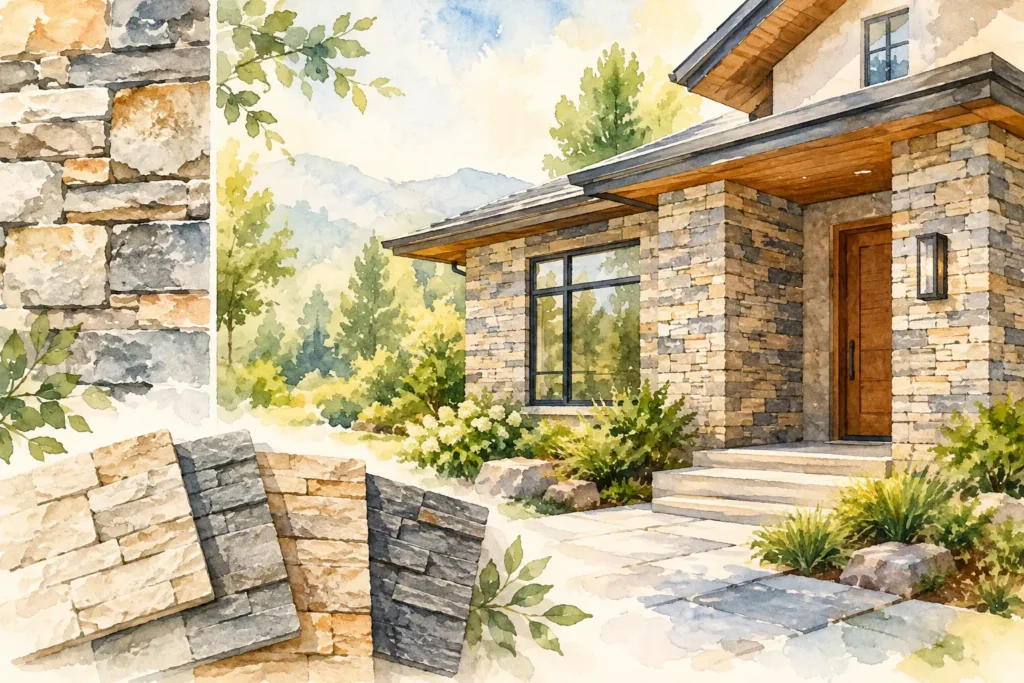
A well-designed stone wall can make an entry feel established, give a fireplace real presence, or turn an ordinary outdoor living area into a defining feature of the home. But stone cladding is not simply a finish selected for color. It is a wall system, and this architectural stone cladding guide explains the choices that affect how it looks, performs, and ages.
For homeowners planning a renovation in the Triangle, the best results begin with a clear idea of where the stone belongs, how much visual weight the space can carry, and what sits behind it. The material matters, but so do proportions, transitions, water management, and professional installation.
What Architectural Stone Cladding Does
Architectural stone cladding is a layer of natural or manufactured stone installed over a prepared wall or structural surface. It provides the appearance and character of a substantial stone wall while allowing the underlying structure to be framed masonry, concrete, or another suitable substrate.
Cladding can be used indoors on fireplace surrounds, feature walls, columns, stair walls, wine rooms, and entry spaces. Outdoors, it is often used around foundations, front entries, chimneys, retaining walls, outdoor kitchens, pool features, and full facade sections. The application changes the technical requirements. An interior fireplace surround, for example, has different moisture and attachment considerations than a rain-exposed exterior wall.
The goal is not to put stone everywhere. The strongest designs use it to create emphasis. A stone-clad entry paired with a restrained siding or stucco field can feel more intentional than a facade covered from corner to corner. Likewise, an interior feature wall benefits from careful coordination with flooring, cabinetry, hearth materials, and lighting.
Choose Stone for the Setting, Not Just the Sample
A small sample is useful for narrowing colors, but it cannot show the variation, scale, and movement of the finished installation. Natural stone has changes in veining, mineral content, texture, and shade. Those variations are part of its appeal, particularly when material is selected and laid out with the overall wall in mind.
Granite, Quartzite, Limestone, and Other Natural Options
Granite is a durable choice for exterior cladding where strength, weather resistance, and a more defined grain are desired. It can work especially well on contemporary homes, landscape features, and high-traffic areas.
Quartzite offers strength along with distinctive movement and color variation. Depending on the selection and finish, it can lean rustic, transitional, or refined. It is often a strong fit where homeowners want natural texture without a uniform appearance.
Limestone has a softer, more architectural look that works beautifully with traditional, European-inspired, and transitional homes. Because some limestone varieties are more porous or weather differently than granite, the right selection and protective strategy depend on exposure and location.
Marble can create an elegant interior statement, particularly on a fireplace surround or formal feature wall. Its natural beauty is unmistakable, but it is generally better suited to protected applications where moisture, freeze-thaw cycles, and heavy abrasion are not primary concerns.
The best option depends on the wall’s exposure, the desired finish, maintenance expectations, and the rest of the home. A warm, split-face limestone may complement painted brick and traditional millwork, while a clean-cut gray quartzite may better support a modern elevation. Seeing larger pieces in person is the most reliable way to judge scale and variation.
Thin Veneer or Full-Depth Stone
Thin stone veneer is cut to reduce weight and can be installed over properly prepared wall assemblies. It is a practical option for many interior walls, facades, and remodels where the structure cannot support the load of full-depth stone without additional work.
Full-depth stone has greater thickness and visual depth. It can be ideal for certain masonry applications, substantial landscape walls, and projects where the authentic mass of the stone is central to the design. It also requires more structural planning, labor, and often a larger budget.
Neither approach is automatically better. Thin veneer can deliver a convincing, long-lasting finish when it is detailed correctly. Full-depth stone may be worth the investment when the project calls for deeper reveals, greater physical presence, or structural masonry construction.
The Details That Make Cladding Look Custom
The difference between a polished installation and a wall that feels added on is often found at the edges. Stone needs thoughtful transitions at windows, doors, corners, rooflines, fireplaces, and changes in material. These details establish visual order and help protect the wall.
For exterior work, window surrounds, sills, coping, and cap pieces should direct water away from the face of the wall. Horizontal surfaces need an appropriate slope so water does not sit against the stone or migrate behind it. At grade, the cladding should be planned with drainage, splashback, landscaping, and seasonal moisture in mind.
Joint style matters as well. A dry-stacked appearance has tightly fitted stones with minimal visible mortar, producing a cleaner, more contemporary result. A mortared joint can emphasize individual stones and suit traditional or rustic architecture. The chosen joint should support the scale of the stone. Small pieces with heavy, wide joints can look busy, while large-format pieces may need enough definition to avoid appearing flat.
On a fireplace, consider the hearth depth, mantel proportion, viewing height, and adjacent surfaces before the stone is installed. On an exterior elevation, consider how the stone terminates at siding, trim, or masonry. These decisions should happen before fabrication and installation, not after the wall is underway.
Water Management Is Part of the Design
Exterior cladding must be treated as a weather-exposed assembly, not a decorative skin. Water naturally finds openings around penetrations, joints, and transitions. A properly installed system includes suitable substrate preparation, flashing, drainage provisions, and attachment methods based on the wall construction and selected stone.
This is where shortcuts become expensive. Stone can look excellent on installation day and still fail later if moisture is trapped behind it or if movement in the building is not accommodated. Cracking, staining, loose pieces, and deterioration around openings are often signs that the underlying wall details were not properly addressed.
North Carolina’s changing temperatures, humidity, and heavy rain make this planning especially relevant. Exterior stone should be specified for the local conditions, and installers should understand how the cladding interacts with the home’s existing exterior envelope. If waterproofing, repair, or masonry preparation is needed, addressing it before the stone is installed protects both the project and the investment.
Plan the Project in the Right Order
Stone cladding projects move more smoothly when material selection, field measurements, and adjacent finishes are coordinated early. Start by defining the project area and collecting photos of the surrounding architecture. Then consider the colors already fixed in the space, such as roofing, brick, cabinetry, flooring, or window frames.
Next, view stone options in larger formats. Ask to see the range of color and texture, not only a single display piece. For a project using natural stone, it is wise to discuss how the material will be blended across the wall. This helps avoid concentrating darker, lighter, or more heavily textured pieces in one area.
Field measurements should occur before final fabrication decisions, especially when the project includes cut surrounds, caps, hearths, columns, or other custom elements. A professional team can identify conditions that affect the scope, including wall irregularities, access challenges, existing damage, and the need for substrate work.
For a whole-home renovation, coordinate cladding with countertops, backsplashes, flooring, and exterior hardscape selections. The materials do not need to match exactly. In fact, an overly matched design can feel flat. They should share a compatible undertone, texture, or level of formality.
Maintenance Depends on the Stone and Location
Natural stone is durable, but durable does not mean maintenance-free. Exterior walls benefit from periodic inspection, particularly around caps, sills, joints, and penetrations. Keep vegetation from growing tightly against the stone, manage sprinkler spray, and address any damaged mortar or sealant before water reaches the wall assembly.
Some stones and finishes may benefit from sealing, especially in areas exposed to staining or frequent moisture. A sealer is not a substitute for good installation, and it will not solve drainage problems. It is simply one part of an appropriate care plan.
For cleaning, begin with the gentlest method recommended for the specific stone. Avoid harsh acidic cleaners on sensitive materials, and do not assume a pressure washer is safe for every wall. If staining, efflorescence, or cracking appears, a qualified stone professional can identify the cause before recommending a treatment.
A stone-clad wall should feel like it belongs to the home from the first day and still look considered years later. Bring photos, measurements, and finish samples to a showroom consultation, then let experienced fabricators and installers help turn the idea into a wall system designed for the way your home is built and lived in.