
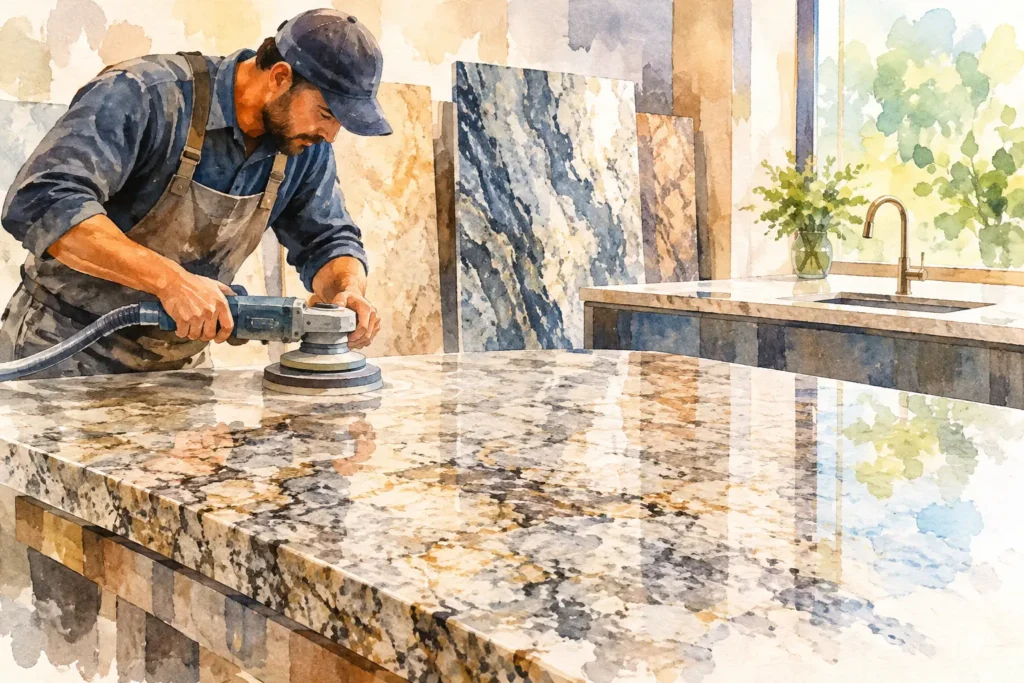
A granite slab can look exceptional in a showroom and still disappoint if the work between selection and installation is rushed. Granite fabrication is the process that turns that raw slab into a countertop, fireplace surround, bar top, outdoor kitchen surface, or other custom feature that fits your home precisely. The quality of that process affects the details you see every day: how the pattern flows, how an edge feels in your hand, how a sink sits, and how neatly the finished stone meets cabinetry and walls.
For homeowners planning a kitchen or bath renovation, understanding the fabrication process makes it easier to compare proposals and make decisions with confidence. The slab matters, but so do the measurements, layout, equipment, skilled finishing, and installation behind it.
Granite Fabrication Starts With the Right Slab
Granite is a natural stone, so every slab has its own movement, mineral variation, color shifts, and character. Even slabs from the same lot are not identical. That is why choosing from the actual slabs intended for your project is often more useful than selecting from a small sample.
During a showroom visit, view slabs in natural and indoor lighting when possible. Consider the dominant color as well as the secondary tones that may connect with cabinet paint, flooring, hardware, or wall color. A dramatic slab may be the focal point of a quiet kitchen, while a more consistent granite can bring balance to a room with detailed cabinetry or active patterns elsewhere.
The size of the slab also matters. Large islands, long runs, and waterfall-style applications may require more material or a carefully planned seam. A knowledgeable stone team can explain those requirements before the slab is cut, rather than leaving them as a surprise later in the project.
Accurate Field Measurements Set the Standard
Fabrication begins in earnest after cabinets are installed, secured, and level. A fabricator measures the actual site, not only a drawing. Even in a well-built kitchen, walls may be slightly out of square, and long cabinet runs may vary by a fraction of an inch. Those realities need to be captured before cutting stone.
Modern digital templating creates a highly accurate record of countertop dimensions, wall angles, overhangs, openings, and fixture locations. The template also confirms details that influence both appearance and function: the sink model, faucet location, cooktop specifications, backsplash height, and any support needed for seating areas.
This stage is a good time to make final decisions. Changing a sink from an undermount model to a farmhouse style, moving a cooktop, or increasing an overhang after fabrication has started can affect the schedule and cost. Clear communication between the homeowner, cabinet installer, plumber, and stone fabricator helps prevent avoidable adjustments.
Planning the Layout Before a Single Cut
The layout is where technical skill and design judgment meet. Fabricators position the template on the selected slab to determine where the most attractive areas of stone will appear. On a granite with sweeping movement, that may mean centering a visual feature on an island. On a quieter material, it may mean orienting the grain consistently across connected pieces.
Seams are sometimes necessary, particularly on large designs or layouts with limited access into the home. They should be planned intentionally, not treated as an afterthought. A well-placed seam can follow a cabinet division, avoid a high-stress area, preserve the best pattern flow, and remain discreet in daily use. No natural-stone seam is completely invisible, but careful color matching and precise joining make a meaningful difference.
How Granite Is Cut, Shaped, and Finished
Once the layout is approved, specialized equipment cuts the granite to the exact template. Computer-guided saws and waterjet systems can produce accurate straight cuts, curves, and openings for sinks or appliances. This machinery brings precision, but it does not replace craftsmanship. Experienced fabricators still evaluate the slab, monitor cuts, refine edges, and inspect the finished pieces by hand.
Sink and cooktop cutouts deserve particular attention. Corners are shaped to reduce stress concentrations, and unsupported areas are evaluated for strength. Natural stone is extremely durable in service, yet any material can be vulnerable when an opening is poorly planned or handled carelessly during transport.
Edge profiles are formed and polished during fabrication. A simple eased edge works well in many homes because it is clean, comfortable, and easy to maintain. Rounded profiles offer a softer look, while more detailed profiles can complement traditional cabinetry. The right choice depends on the room’s style, the thickness of the stone, and the amount of detail already present in the design.
Polishing is not simply about creating shine. The goal is a consistent finish that matches the slab face and feels smooth along every exposed edge. For honed granite, the fabricator works to preserve an even, low-sheen appearance. This finishing work is one reason a locally experienced shop can provide better control over the final result than a process focused only on speed.
Details That Separate Careful Work From Quick Work
Quality is often visible in the transitions. Look at the way the stone meets the wall, the alignment of the edge profile, the consistency of the overhang, and the fit around sinks and fixtures. These are small details individually, but together they determine whether the completed space feels tailored.
A careful fabricator also considers practical use. Faucet holes need enough clearance from the wall and sink. Overhangs need appropriate support when their depth or the granite’s thickness calls for it. Seams should be smooth to the touch and properly filled. Cabinets must provide a sound, level foundation before the stone arrives.
Thickness can influence both the look and the fabrication approach. Standard countertop thickness is often appropriate, while thicker edges can create a more substantial appearance on islands, fireplace surrounds, or statement surfaces. Built-up or mitered edges can achieve a thicker visual profile, but they require precise joining and are best evaluated alongside the slab pattern. A heavily veined granite may need more deliberate planning than a uniform one.
Installation Is Part of the Fabrication Experience
Installation day is the final test of the planning that came before it. Finished granite pieces are heavy and must be moved, positioned, leveled, seamed, and secured with care. Professional installers protect surrounding cabinetry and surfaces, check fit before final placement, and make minor adjustments when field conditions require them.
After the countertops are set, installers complete seams and secure undermount sinks according to the project requirements. Plumbing connections and appliance hookups are typically completed by the appropriate trade after the stone installation. Knowing the sequence in advance helps a remodel stay organized and prevents a beautifully fabricated surface from being delayed by a missing fixture or incomplete cabinet work.
Before the crew leaves, inspect the installation in good light. Confirm that the selected stone is installed in the expected locations, edges are consistent, seams are smooth, and cutouts align properly. Ask about any recommended cure time before reconnecting plumbing or placing heavy items on the surface.
Care Begins With Realistic Expectations
Granite is valued for its heat resistance, durability, and natural beauty, but it is not a no-thought material. Depending on the granite and finish, periodic sealing may help protect against moisture and staining. A fabricator can recommend a care routine based on the specific stone rather than offering one generic answer for every slab.
For daily cleaning, use a soft cloth and a stone-safe cleaner or mild soap with water, then dry the surface. Avoid harsh chemicals and abrasive pads that can dull the finish or affect sealers. Wipe cooking spills promptly, especially oils, wine, citrus, or heavily pigmented foods. Granite handles busy family kitchens well, but simple care preserves its finish for the long term.
Choosing a Fabrication Partner
Price matters, but granite fabrication is not a category where the lowest quote always tells the full story. Compare what is included: slab selection support, digital measurements, edge work, sink cutouts, seam planning, delivery, installation, and follow-up. Ask who will measure and install the project, how they handle large or complex layouts, and when final decisions must be made.
For homeowners in the Triangle, Marble Unlimited brings the material selection, fabrication, and installation conversation together in one place. Seeing full slabs and discussing your layout with an experienced team can make the path from inspiration to finished surface much clearer.
The best next step is simple: bring cabinet colors, room measurements, inspiration images, and your questions to a showroom consultation. A good granite project should feel considered from the first slab selection through the day you begin using the space.