A quartzite countertop can give a kitchen the visual movement of natural marble with the everyday strength many active households need. Its veining, crystalline depth, and individual character make it especially appealing when the countertop is meant to be a focal point rather than simply a work surface. But natural stone is never a one-size-fits-all decision. The right slab, finish, fabrication plan, and care routine all matter.
For homeowners planning a kitchen renovation in the Triangle, quartzite is often worth considering early in the design process. It can influence cabinet color, backsplash selection, edge details, sink placement, and even the amount of lighting a room needs. Seeing full slabs in person is the best way to understand what makes this material special.
What Makes a Quartzite Countertop Different?
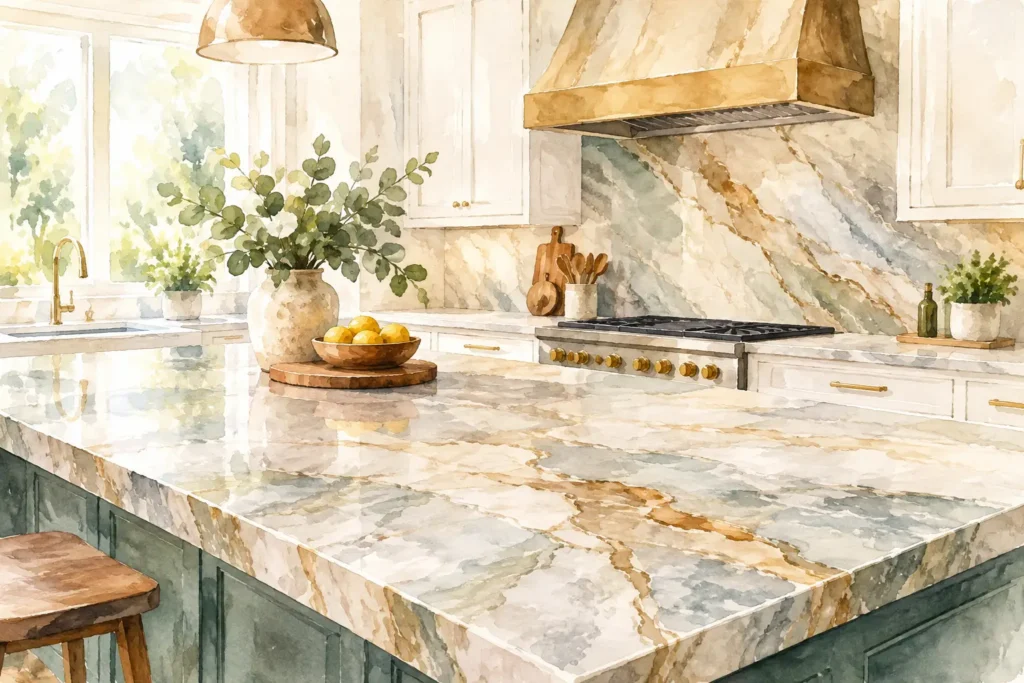
Quartzite is a natural stone formed when sandstone is transformed deep within the earth by heat and pressure. That process creates a dense, hard material with a crystalline appearance. Many quartzite slabs feature soft white or gray backgrounds, warm gold veining, dramatic blue tones, or bolder mineral movement that cannot be duplicated exactly from one slab to another.
The name can cause confusion because quartzite and quartz are very different materials. Quartzite is quarried natural stone. Quartz is an engineered surface made from crushed stone and resins. Both can be excellent countertop choices, but they perform differently and offer distinct looks. Homeowners drawn to the depth and natural variation of stone usually find quartzite especially compelling.
Natural beauty comes with natural variation
A sample can suggest a color direction, but it cannot show the full personality of a slab. Veins may become more pronounced across a large island, colors may shift from one end to the slab to the other, and naturally occurring mineral deposits can create areas of movement that look quiet up close and dramatic from several feet away.
That variation is a strength when it is selected intentionally. A slab with broad, flowing veining can turn a large island into a true design feature. A calmer selection may better suit a kitchen with strongly patterned cabinetry or a busy backsplash. The goal is not to find a slab that looks manufactured. It is to find one whose character works with the room.
Strength for real kitchen use
Many quartzites are exceptionally hard and perform well in busy kitchens. They generally resist scratching better than softer natural stones and tolerate heat well. That makes quartzite a practical option for families who cook often, entertain regularly, or want a countertop that can keep its polished appearance through years of daily use.
Still, durability should not be mistaken for indestructibility. Avoid cutting directly on the stone, use trivets for very hot cookware, and do not assume every quartzite has identical performance. Some materials sold under the quartzite name may contain softer minerals or have different porosity levels. An experienced stone professional can help assess a specific slab before fabrication.
Quartzite Countertop Care: What to Expect
Quartzite is lower maintenance than many homeowners expect, but it does require consistent, sensible care. Most installations should be sealed to help the stone resist absorption from common kitchen spills. The right sealer and resealing schedule depend on the individual material, its finish, and how the kitchen is used.
For day-to-day cleaning, use a soft cloth, warm water, and a stone-safe cleaner. Wipe up cooking oils, wine, citrus juice, coffee, and other spills promptly. Acidic or abrasive products can dull a polished surface or affect the sealer, so household cleaners should be chosen carefully.
Sealing is protection, not a permanent shield
A quality sealer helps slow the absorption of liquids, giving you time to clean up spills. It does not make a natural stone surface completely stain-proof. If water darkens the surface instead of beading up, it may be time to have the stone evaluated for resealing.
This is one reason professional guidance matters. A fabricator can recommend care practices based on the exact slab rather than offering a generic maintenance promise. The best approach is straightforward: protect the stone, clean spills promptly, and address any concerns before they become a larger issue.
Polished, honed, and leathered finishes
Finish changes both the appearance and the practical feel of quartzite. A polished finish reflects light and brings out the stone’s color and veining. It is a classic choice for kitchens that need brightness or a more formal appearance.
A honed finish has a softer, more matte look that can feel relaxed and contemporary. It may show fingerprints, oils, or water marks differently than polished stone. Leathered quartzite offers texture and a more tactile finish, often adding depth to darker or more dramatic slabs. The right choice depends on the slab, lighting, cabinet style, and how much surface variation you are comfortable seeing in daily life.
How to Choose the Right Quartzite Slab
The best quartzite selection process starts with the whole room, not just a favorite color. Bring cabinet door samples, paint colors, flooring samples, and photos of adjacent spaces to the showroom. These references make it easier to see whether a slab creates the contrast, warmth, or visual calm you want.
It also helps to consider the scale of the kitchen. A large open kitchen can often carry a bolder slab with sweeping movement. In a smaller kitchen, a quieter selection may make the room feel more open. Neither approach is better. It is a matter of proportion and the role you want the countertop to play.
Look at the entire slab, not only a sample
When you choose natural stone, the full slab is the decision. View it under different angles and lighting conditions. Stand back to see the overall movement, then get close enough to inspect natural fissures, mineral lines, and changes in color.
Ask how the fabricator plans to lay out the countertops. The placement of a sink cutout, cooktop, seam, or waterfall edge can change the final appearance significantly. For islands with bold veining, bookmatching may be an option. This technique aligns two adjoining slab sections so their patterns mirror each other, creating a striking focal point.
Plan details before fabrication begins
A beautiful slab deserves details that support it. Edge profiles can make a countertop feel tailored to the home, from a simple eased edge to a more substantial layered profile. Sink selection affects both function and cutout design. Overhangs, support requirements, wall conditions, and seam locations should all be addressed during templating rather than after installation is scheduled.
At Marble Unlimited, homeowners can view a broad range of full slabs and work through these decisions with a team that understands both design and fabrication. That hands-on process is particularly valuable with quartzite because the material’s natural character needs thoughtful planning.
Is Quartzite Worth the Investment?
Quartzite is often chosen for its long-term visual impact as much as its strength. It can make a kitchen feel custom because no two slabs are exactly alike. In the right setting, it complements painted cabinets, warm wood tones, dark cabinetry, metal accents, and a wide range of architectural styles.
The trade-off is that natural stone asks for a little more participation from the homeowner than a fully engineered material might. You will need to use proper cleaners, maintain the sealer when needed, and accept the small variations that make the material genuine. For many homeowners, those are reasonable expectations for a surface with this much presence and longevity.
If you are considering a quartzite countertop, schedule a showroom visit before settling on a color from a screen or small sample. Seeing the slabs, discussing your kitchen habits, and reviewing fabrication details in person can turn an attractive idea into a surface that feels exactly right in your home.