
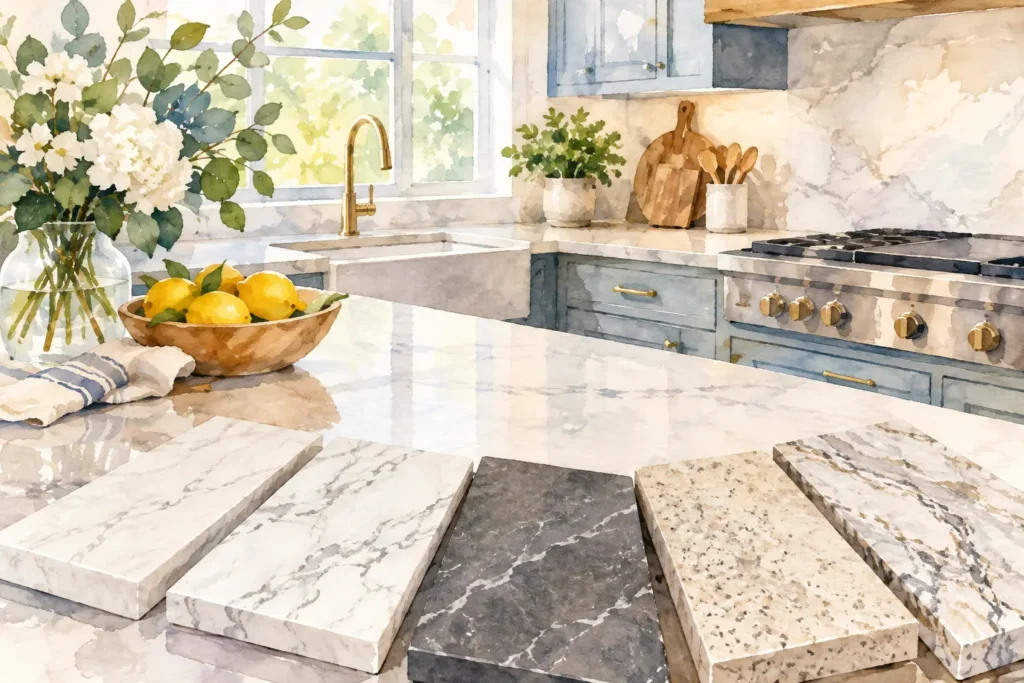
Cabinet doors, backsplash samples, and lighting can make a quartz countertop look completely different from one home to the next. The right choice is not simply the lightest color or the boldest pattern in the showroom. It is the surface that works with your kitchen’s scale, the way your household cooks, and the details that make the finished room feel intentional.
For homeowners planning a kitchen or bath renovation, quartz offers a compelling balance of design range and everyday practicality. It can create the quiet, clean backdrop a modern kitchen needs or bring the movement and contrast that keeps a larger space from feeling flat. Selecting it well requires more than choosing a sample. It calls for a close look at the full slab, your layout, and the craftsmanship behind fabrication and installation.
What a quartz countertop is made to handle
Quartz is an engineered surface made from natural quartz minerals combined with resins and pigments. That composition gives it a consistent structure and a nonporous finish that resists everyday spills without routine sealing. For busy kitchens, bathrooms, laundry rooms, and bar areas, that low-maintenance performance is a major advantage.
A quartz countertop holds up well against stains from coffee, juice, oils, and common household messes when they are cleaned in a timely manner. Its nonporous surface also makes regular care straightforward: warm water, mild soap, and a soft cloth are generally all that is needed. There is no need to build a maintenance schedule around periodic sealing.
The trade-off is heat. Quartz is durable, but it is not a surface for setting a hot skillet or slow cooker directly on the counter. High or sudden heat can affect the resin binders and may leave permanent marks. Trivets and hot pads are a simple habit that protects the investment. It is also wise to use a cutting board rather than cutting directly on any finished countertop surface.
For most indoor applications, quartz is an excellent fit. Areas with sustained direct sun deserve a conversation during planning, particularly when large windows or sunrooms are involved. A knowledgeable fabricator can help determine whether the location, color, and product selection suit the amount of exposure.
Start with the slab, not a small sample
A small swatch can tell you whether you prefer warm white, cool gray, soft beige, or deep charcoal. It cannot always show how a color will behave across a large island, along a long perimeter run, or next to your existing floors. This matters especially with quartz that has pronounced veining, layered movement, or a concrete-inspired finish.
Visit a showroom and look at full slabs whenever possible. Stand back several feet, then move closer. Notice whether the veining is delicate or high contrast, whether the background reads warm or cool, and whether the pattern repeats in a way you find appealing. Bring cabinet doors, paint chips, flooring samples, and a backsplash sample if they are available. These pieces need to work together under the lighting in your home, not only under showroom lighting.
Light quartz can make a compact kitchen feel more open, but a bright white surface may look stark beside creamy cabinetry. Darker colors bring definition and can anchor a room with pale cabinets, though they may show crumbs, dust, or fingerprints more readily in certain finishes. Mid-tone grays, taupes, and warmer soft whites often offer a forgiving middle ground for active households.
Pattern deserves just as much consideration as color. A heavily veined quartz can become the visual centerpiece of the room, particularly on a large island. That may be exactly right if the cabinetry is simple and the backsplash is understated. If you already have strong wood grain, bold hardware, or a feature wall, a quieter quartz can give the overall design room to breathe.
Plan the quartz countertop around real kitchen use
A beautiful slab performs best when the layout supports how you use the room. Before final measurements, think through landing areas beside the range, refrigerator, and sink. Consider whether an overhang is needed for seating, where small appliances will live, and whether the island needs uninterrupted prep space.
Sink selection affects the countertop more than many homeowners expect. An undermount sink creates a clean transition from counter to basin and makes wiping crumbs into the sink easier. The sink size, bowl configuration, faucet placement, and accessories all need to be confirmed before fabrication. A larger single-bowl sink can be practical for sheet pans and serving pieces, while divided bowls suit households that prefer separate washing and rinsing areas.
Edge profiles are another quiet design decision with a visible result. A simple eased edge complements most kitchens and is easy to live with. A softly rounded profile can feel more traditional, while a more detailed edge adds formality to a statement island or furniture-style vanity. The best edge is usually one that supports the architecture of the home rather than competing with it.
If your project includes a waterfall island, full-height backsplash, or a raised bar, discuss those details early. These applications may require careful vein alignment, additional material, and thoughtful seam placement. They can be striking features, but they should be planned around the slab rather than treated as a last-minute addition.
Seams, overhangs, and details that show craftsmanship
Most countertop layouts require seams, particularly in larger kitchens or rooms with turns. A skilled fabricator places seams where they are structurally sound and as visually discreet as possible. Material pattern, cabinet layout, slab dimensions, and access into the home all influence where a seam can go.
It is helpful to ask how the pattern will be oriented on the island and perimeter counters. With veined quartz, the direction of movement can change the entire feel of the kitchen. In some cases, a book-matched effect or a continuous-looking layout is possible; in others, practical constraints make a simpler approach the better choice. The right answer depends on the selected slab and the room itself.
Overhangs for seating also require planning. A modest overhang may be supported by the cabinetry alone, while deeper projections can need concealed steel or other support. This is not merely a structural concern. Proper support preserves the clean profile you selected and helps prevent stress on the finished surface over time.
Accurate templating is the step that turns a design decision into a custom installation. Once cabinets are installed and level, measurements can account for walls that are not perfectly straight, appliance clearances, sink cutouts, and any unique architectural conditions. Careful fabrication and experienced installation are what make a quartz surface look tailored to the home rather than simply placed on top of cabinets.
Understanding price beyond the square foot
Quartz countertop pricing is influenced by more than the material color. Slab size, pattern complexity, thickness, edge selection, cutouts, backsplash height, seam requirements, and installation conditions all affect the final investment. A large island with dramatic veining may require more material than its visible square footage suggests because the fabricator needs to position the pattern correctly.
This is why a detailed quote is more useful than a quick square-foot estimate. It should reflect the actual scope of the project, including removal if needed, templating, fabrication, delivery, installation, sink cutouts, and support requirements. Clear scope helps homeowners compare options honestly and avoid surprises after selections have been made.
A less expensive slab is not always the better value if it does not fit the layout efficiently or if the color leaves you compromising on the rest of the design. Conversely, a premium-looking quartz may be a smart choice when it allows you to simplify other finishes and create a lasting focal point. The goal is not to spend more for its own sake. It is to select materials and details that will still feel right years after the renovation is complete.
A showroom visit makes the decision easier
The fastest way to narrow quartz choices is to see a range of full slabs with your own finishes in hand. At Marble Unlimited, homeowners can compare material movement, color, thickness, and edge possibilities while discussing the practical details that affect fabrication and installation. That guidance is particularly valuable when you are deciding between a subtle design and a more expressive slab.
Come prepared with room measurements, photographs of the existing space, cabinet and paint samples, and inspiration images that show what you are drawn to. You do not need every answer before the visit. A productive consultation often helps identify the questions that matter most, from sink placement to the best way to carry a vein through an island.
When you are ready to choose, focus on the surface you will enjoy using every morning, not just the sample that catches your eye first. A well-selected quartz countertop should feel at home with your cabinets, support the way you cook and gather, and give your renovation a finished look that stays satisfying long after installation day.