
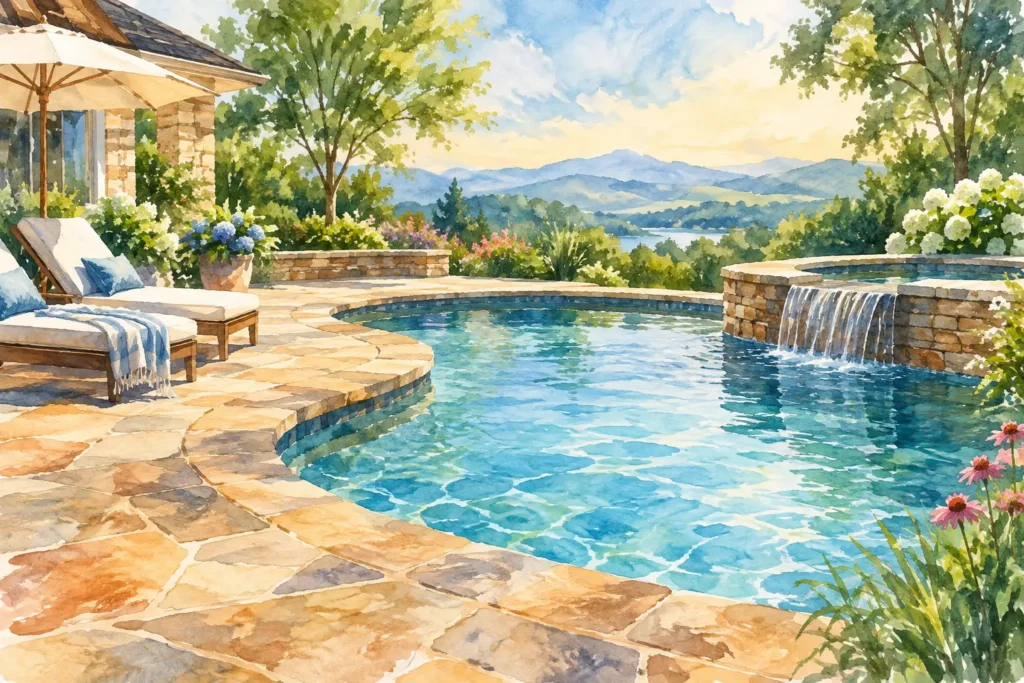
A pool deck has a harder job than almost any other surface around the home. It must look welcoming from the patio door, feel comfortable under bare feet, handle splashing water and afternoon storms, and stand up to years of sun, furniture movement, and weekend gatherings. A natural stone pool deck can meet all of those demands, but the right result starts with more than choosing a color from a sample.
For homeowners planning an outdoor upgrade in the Triangle and surrounding communities, material selection, finish, layout, drainage, and professional installation all work together. When those details are considered early, stone becomes a lasting part of the home rather than a surface that needs constant attention.
Start with How You Use the Pool Area
Before comparing stone varieties, consider the life that happens around the pool. A quiet courtyard with a few lounge chairs calls for a different design than a large family pool used for cookouts, kids, and frequent entertaining. The deck should provide enough room for circulation, seating, and access to gates or doors without making the pool feel disconnected from the rest of the yard.
It also helps to look at the existing architecture. A warm limestone can complement a traditional brick home, while a gray or blue-toned stone may suit a more contemporary exterior. Nearby retaining walls, steps, fireplaces, and patio spaces should be part of the conversation. A thoughtfully selected stone can create continuity between the pool and the home instead of making the deck feel like a separate project.
Scale matters as well. Larger-format pieces create a calmer, more expansive appearance and often work beautifully around geometric pools. Smaller pieces or a more varied pattern can bring movement and character to an informal garden setting. Neither approach is automatically better. The strongest choice is the one that supports the architecture and the way your family uses the space.
Choosing Stone for a Natural Stone Pool Deck
Not every stone performs the same way outdoors. Density, absorption, texture, color variation, and heat retention all affect how a material will live around water and in North Carolina weather. Viewing full slabs or larger samples in person is especially valuable because a small swatch cannot show the full range of veining, movement, and natural variation.
Travertine and limestone offer a relaxed, timeless look
Travertine is a popular choice for pool environments because of its naturally textured character and warm, inviting palette. Its surface can feel comfortable underfoot, particularly in lighter colors, and its visual variation pairs well with both classic and Mediterranean-inspired designs. As with any natural material, the finish and installation approach should be selected carefully for wet areas.
Limestone offers a refined, understated appearance with colors that can range from soft cream and sand to cool gray. Some varieties are well suited to exterior applications, while others are better reserved for protected areas. A knowledgeable stone professional can help determine which option has the density and finish appropriate for the project.
Granite and quartzite bring exceptional durability
For homeowners who want pronounced natural movement or a more dramatic color palette, granite and quartzite deserve consideration. These materials are generally dense and durable, making them strong candidates for busy outdoor spaces when specified properly. Their performance and appearance vary by variety, so the discussion should go beyond the material name alone.
A light-colored granite or quartzite can help reduce heat absorption compared with a dark surface. A textured finish is often preferable near water, where traction is a central concern. These stones can also coordinate beautifully with outdoor kitchens, fireplace surrounds, walls, and stair treads for a complete backyard design.
Color affects comfort as much as style
Dark stone can make a handsome statement, but it may become uncomfortably hot in direct summer sun. Lighter shades tend to reflect more sunlight and make the deck easier to enjoy barefoot. This does not mean every pool deck must be pale. Shade structures, landscape placement, and the amount of open sun can influence the right decision.
Natural variation is another benefit worth embracing. Stone is not manufactured to repeat the same pattern from piece to piece. A good layout uses that variation intentionally, blending tones across the deck and placing distinctive pieces where they enhance the overall composition.
Finish and Safety Should Lead the Conversation
A polished surface may be ideal for an interior vanity or fireplace surround, but it is generally not the right choice for a wet pool perimeter. Outdoor stone needs a finish with enough texture to support confident footing when feet are wet. Honed, brushed, tumbled, or naturally cleft finishes may be considered depending on the stone and the desired appearance.
Texture should feel intentional, not harsh. The deck needs traction, yet it should still be comfortable for children, guests, and anyone walking barefoot from the pool to the house. Ask to see and touch actual finished samples. This simple step gives you a much clearer understanding of the material than viewing photos alone.
Pool coping deserves the same attention as the main deck. Coping defines the waterline, provides a finished edge, and often becomes the place where people sit. Its profile should be comfortable, visually proportionate to the pool, and coordinated with the deck layout. Fabricated stone coping can give the project a custom, tailored finish that standard pieces rarely match.
Drainage Is What Protects the Investment
The most beautiful deck can develop problems if water has nowhere to go. Proper slope moves rainwater and splash-out away from the pool structure and home, reducing standing water and helping protect the stone installation over time. The grade must be planned before installation begins, not corrected after the surface is in place.
Drainage details depend on the site. Some projects benefit from subtle grading toward a landscaped area, while others need dedicated drains or carefully placed channels near the house and other structures. Existing patios, doors, retaining walls, and elevation changes all influence the plan.
The base beneath the stone is equally important. It must be stable, well prepared, and appropriate for the chosen material and installation method. Expansion joints and transitions also need careful placement to accommodate movement and reduce stress on the surface. These details are not always visible at the end of the job, but they are often what separate a deck that lasts from one that needs premature repair.
Plan for Maintenance, Not Constant Work
Natural stone is durable, but it is not maintenance-free. Routine care is straightforward: sweep away leaves and grit, rinse off sunscreen or food spills promptly, and use cleaners made for natural stone rather than harsh household products. Avoid acidic or abrasive cleaners that can affect the surface or grout joints.
Many exterior stones benefit from sealing, although the right schedule depends on the material, finish, exposure, and use of the pool area. A sealer can help reduce staining and simplify cleanup, but it does not replace proper cleaning or drainage. Your installer should explain what maintenance the selected stone requires and what level of color change, weathering, or natural patina to expect.
This is also where realistic expectations matter. Natural stone will not remain visually identical to the day it was installed. Outdoor exposure adds character over time. For homeowners who appreciate authentic materials, that gradual evolution is part of the appeal. If a perfectly uniform appearance is the priority, it is worth discussing that preference before choosing a stone.
Why Professional Planning Makes a Difference
A pool deck involves more than setting stone in a pleasing pattern. It often requires coordination between pool features, masonry, drainage, steps, walls, outdoor living areas, and landscape transitions. An experienced team can help identify potential challenges before materials are ordered, especially when the project includes custom coping, curved edges, elevation changes, or matching stone on nearby surfaces.
At Marble Unlimited, homeowners can review a broad selection of natural materials and receive guidance from selection through fabrication and installation. Seeing full pieces in a showroom makes it easier to judge color, texture, and scale, while experienced installers can help ensure the finished deck is built around the realities of your site.
A well-planned pool deck should invite you outside more often. Schedule a showroom visit or request a free quote to begin selecting a stone surface that feels right underfoot, looks right beside your home, and is prepared for many North Carolina summers ahead.