
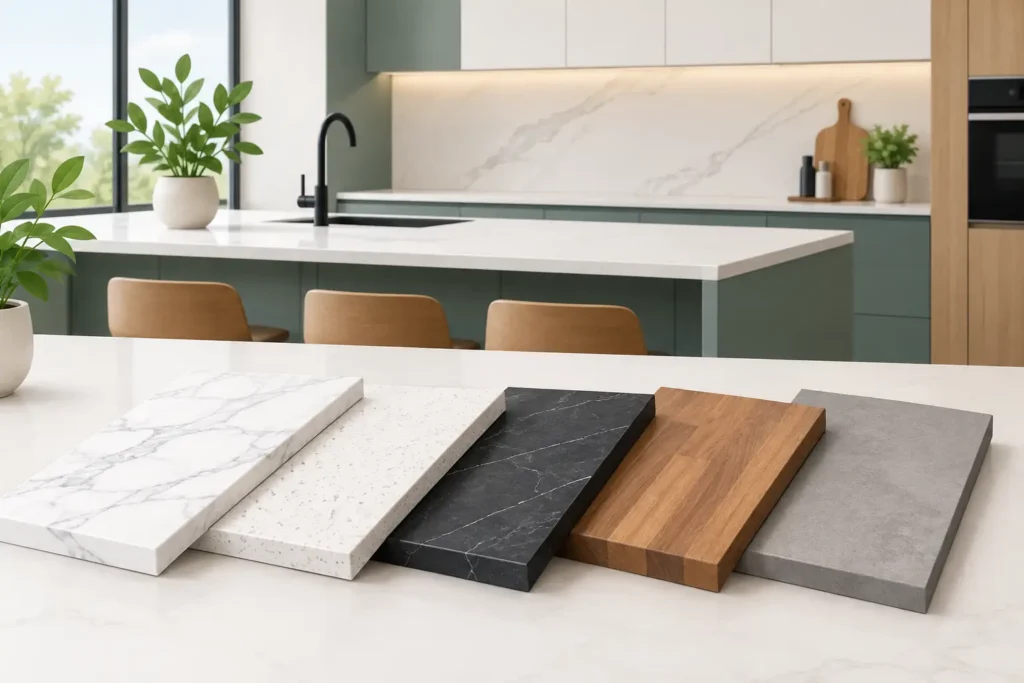
A countertop can look perfect under showroom lights and still be the wrong choice for the way your household lives. The best countertop material for kitchens is not simply the one with the most dramatic veining or the lowest maintenance label. It is the material that fits your cooking habits, your tolerance for natural variation, your budget, and the character of your home.
For many North Carolina homeowners, the decision comes down to quartz, granite, quartzite, marble, or soapstone. Each can create a beautiful, lasting kitchen when it is selected carefully and fabricated by experienced professionals. The key is understanding where each material performs best and what it asks of you over time.
How to Choose the Best Countertop Material for Kitchens
Start with real life, not just inspiration photos. Does your kitchen host frequent family meals, baking projects, and busy mornings? Do you want a consistent, tailored appearance or the one-of-a-kind movement that comes from natural stone? Are you comfortable with a surface that develops a soft patina, or would you rather minimize visible change?
Heat, stain resistance, scratch resistance, and maintenance all matter, but no surface is entirely worry-free. Even durable stone benefits from reasonable care, including wiping spills promptly and using cutting boards and trivets. The right choice is usually about which trade-offs feel natural to your household.
Cabinet color, lighting, backsplash selections, sink style, and edge details also shape the final result. A large slab may show colors and veining that are impossible to see in a small sample. That is why viewing the actual material before fabrication is so valuable, particularly with marble, granite, and quartzite.
Quartz: Consistent Style and Straightforward Care
Quartz is an engineered surface made with natural quartz minerals and resins. It is a popular choice for homeowners who want a broad range of colors, a relatively uniform pattern, and simple everyday maintenance. White quartz with gentle veining can create a clean, polished kitchen, while deeper colors and more expressive designs can anchor modern or traditional cabinetry.
Because quartz is nonporous, it does not generally require sealing. It handles common kitchen spills well, making it appealing for active households. Cleaning is typically simple with a soft cloth, mild soap, and water.
Its main consideration is heat. Quartz can be damaged by very hot cookware, so a trivet is necessary near cooktops and serving areas. It is also not intended for outdoor kitchens where intense sunlight and changing temperatures can affect its appearance and performance. For an indoor kitchen where easy care and color consistency lead the wish list, quartz is often an excellent fit.
Granite: Natural Strength With Individual Character
Granite remains a favorite for good reason. Every slab is formed by nature, so it brings depth, mineral variation, and movement that cannot be duplicated. Some granite patterns are quiet and refined; others make a confident visual statement. It can work equally well in a classic kitchen with warm wood cabinetry or a crisp contemporary space.
Granite is highly durable and handles heat well, although trivets are still a smart habit. Properly sealed granite resists staining and stands up well to daily use. The maintenance requirement is modest, but it is real: depending on the specific stone and sealer, periodic resealing may be recommended.
The best way to choose granite is to select the actual slab rather than relying on a small swatch. A slab’s overall pattern, color shifts, and natural features are part of what make the finished countertop personal. Professional layout also matters, especially when the kitchen includes a large island or prominent seams.
Quartzite: Dramatic Natural Beauty for Active Kitchens
Quartzite is often chosen by homeowners who love the flowing look of marble but want a harder natural stone for a hardworking kitchen. It offers striking movement, from soft white and gray designs to warm gold, blue, and green tones. No two slabs are alike, which makes quartzite especially compelling for statement islands.
True quartzite is very hard and generally resists scratching well. It also handles heat effectively, making it a strong option for serious cooks. Like other natural stones, it should be sealed to help protect against staining.
One important point: not every stone sold under the quartzite name performs exactly the same way. Some materials have more mineral variation and may be more sensitive to acids or staining than others. An experienced stone professional can help identify the properties of a specific slab, explain care expectations, and recommend the right sealer. That guidance is worth having before you commit to a surface selected primarily for its appearance.
Marble: Timeless, Luminous, and Meant to Be Lived With
Marble has a light-reflecting quality that few other materials can match. Its veining, softness of color, and historic appeal make it a natural choice for kitchens designed around elegance and warmth. It pairs beautifully with painted cabinets, wood tones, brass accents, and architectural details.
Marble is softer and more reactive to acidic foods than granite or quartzite. Lemon juice, wine, vinegar, and tomato-based ingredients can leave etching, which appears as a dull mark in the finish rather than a traditional stain. It can also scratch more easily than harder stone.
Those characteristics do not mean marble is unsuitable for a kitchen. They mean it is best for homeowners who appreciate a surface that gains character with use. A honed finish can make everyday etching less noticeable than a polished finish. For someone who wants their kitchen to feel collected and lived-in rather than perfectly preserved, marble can be a deeply rewarding choice.
Soapstone and Limestone: Softer Looks With Distinct Personalities
Soapstone has a rich, velvety appearance that suits both historic homes and clean-lined modern kitchens. It is dense and nonporous, so it does not require sealing in the same way many natural stones do. Its color often deepens over time, especially if mineral oil or a darkening treatment is used.
Soapstone is heat-resistant and forgiving around spills, but it is softer than granite and quartzite. Small scratches can occur, though many homeowners find that they blend into the stone’s natural patina. If a uniform, untouched appearance is your priority, soapstone may not be the best match. If you value warmth and character, it can be exceptional.
Limestone offers a quiet, earthy look that works beautifully in certain designs, especially where a softer, old-world feel is desired. It requires more consideration in an active kitchen because it is generally more porous and acid-sensitive than harder stones. It can be a wonderful choice when its maintenance needs align with the homeowner’s expectations and the kitchen’s level of use.
Do Not Choose by Durability Alone
The toughest surface is not automatically the best countertop material for kitchens. A busy family may prefer quartz for its easy care, while a homeowner who loves natural movement may find quartzite worth the added sealing routine. A passionate baker may choose marble for a dedicated baking area, accepting its patina as part of the design. A homeowner restoring an older home may decide that soapstone has exactly the right soul.
Think about how the surface will look alongside your cabinet door sample, flooring, hardware, and paint colors. Consider whether you want a bold island with quieter perimeter counters or one material throughout. Ask how seams will be placed, how the edge profile will change the look, and whether an undermount or farmhouse sink best suits the slab and cabinet construction.
These are not minor finishing decisions. They affect both the appearance and long-term function of the kitchen.
See the Full Slab Before You Decide
Photographs and small samples are useful starting points, but a countertop is a large visual surface. Veining may run differently across a full slab, and the undertones can shift from cool gray to warm cream depending on your lighting. Seeing materials in person gives you a better understanding of texture, movement, and scale.
At Marble Unlimited, homeowners can compare a broad selection of full slabs and receive practical guidance on durability, maintenance, fabrication details, and design coordination. A showroom visit is an opportunity to bring cabinet samples, paint swatches, and inspiration images, then narrow the field with confidence.
Choose the surface that supports the kitchen you want to use every day, not just the one that looks best in a single photograph. Schedule a showroom visit or request a free quote when you are ready to see what the right slab can do for your home.