
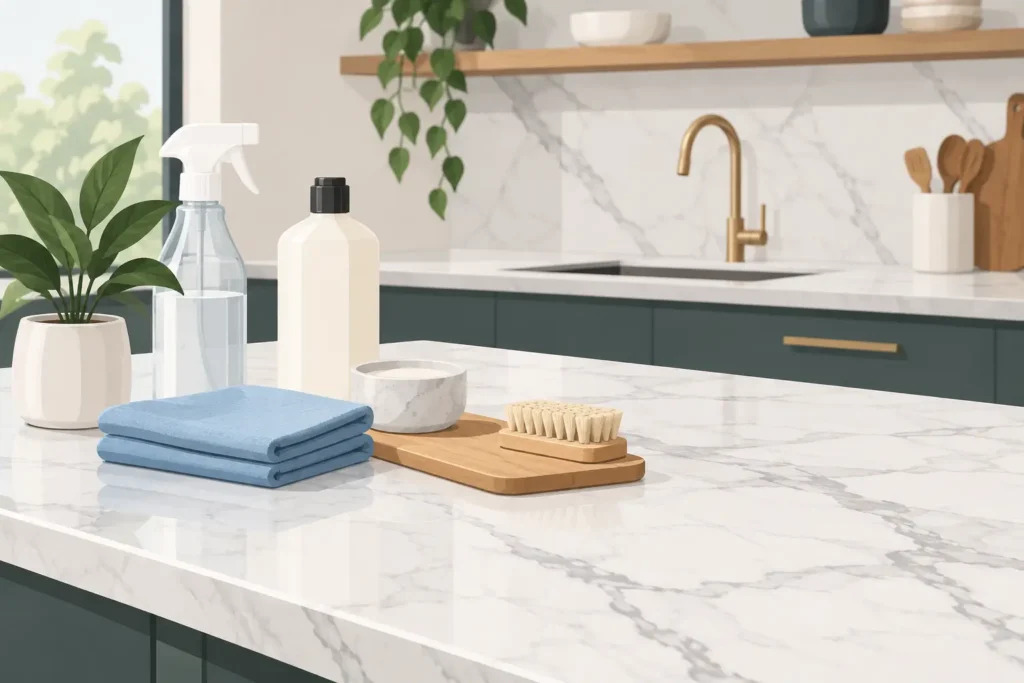
A marble countertop earns its place in a kitchen by looking better with close attention, not by pretending it needs none. The soft movement, luminous color, and one-of-a-kind veining are difficult to duplicate. This marble countertop maintenance guide explains the practical habits that preserve those qualities while helping you feel comfortable using your kitchen every day.
Marble is a natural calcium-based stone. That composition is the reason it has such character, and it is also why acidic foods, standing liquids, and abrasive cleaners require a more thoughtful approach. With the right care routine, marble can remain a beautiful, functional surface for decades.
Understand What Marble Is Telling You
The two conditions homeowners most often notice are staining and etching. They may look similar at first glance, but they have different causes and different remedies.
A stain occurs when a substance penetrates the stone. Cooking oil, dark berries, wine, coffee, and some cosmetics can leave a darker area, especially if they remain on the surface for a while. A quality sealer helps slow absorption, giving you more time to wipe up spills, but it does not make marble stain-proof.
Etching is a change in the stone itself. Lemon juice, vinegar, tomato sauce, wine, and other acids can react with marble and leave a duller spot or faint mark. On polished marble, an etch may catch the light differently than the surrounding surface. It is not dirt, so adding more cleaner will not remove it.
This distinction matters. Most fresh stains respond to prompt cleaning, while light etching may become less noticeable over time as the countertop develops a natural patina. Some homeowners appreciate that lived-in character. Others prefer a consistently polished appearance and may choose professional honing or restoration when marks accumulate. Neither preference is wrong, but it is helpful to set expectations before selecting marble.
Daily Marble Countertop Maintenance Guide
Daily care is straightforward. Wipe the countertop with a soft microfiber cloth, warm water, and a pH-neutral stone cleaner. Follow with a dry cloth rather than allowing water to air-dry, particularly in areas with hard water. This simple step prevents streaks and mineral residue from dulling the finish.
For routine kitchen cleanup, mild dish soap diluted in water can work occasionally, provided it is rinsed away and the surface is dried afterward. Avoid making it your only cleaner, since repeated soap use can leave a film. A stone-specific cleaner is usually the better long-term choice.
The rule that protects marble best is simple: blot spills promptly. Do not scrub a spill outward, especially one containing oil or acid. Place a soft cloth over the area, lift the liquid, then clean gently. Keep a microfiber cloth within easy reach of the sink, range, and coffee area so the habit feels effortless.
Never use acidic or harsh household products on marble. That includes vinegar, lemon-based cleaners, bleach, ammonia, powdered scouring products, and abrasive scrub pads. Even a product labeled “natural” may be unsuitable if it contains acidic ingredients. When trying any unfamiliar product, check that it is specifically safe for natural stone.
Use Protection Where It Makes Sense
Marble performs well in an active kitchen when homeowners use a few sensible barriers. Set drinks on coasters, especially near a bar area or breakfast counter. Use trivets beneath hot cookware, and place a cutting board under knives, food preparation, and acidic ingredients. Marble is durable, but it can scratch or react when it is treated like a chopping block.
A tray near the coffee maker, espresso machine, or cooking oils is a smart addition. Those areas see repeated moisture and drips, often before anyone notices them. In a bathroom, use a small tray for skincare, perfume, toothpaste, and hand soap. Products left in place for long periods can trap moisture or transfer color to the stone.
Protection should support the way you live, not turn the countertop into a display piece no one can touch. A family that cooks nightly may use more boards and trivets than a household that uses the kitchen lightly. The right routine depends on the finish, the color of the marble, and your comfort with natural variation over time.
Sealing Marble: What It Does and What It Does Not Do
Most marble countertops benefit from a penetrating sealer. The sealer fills tiny pores below the surface and helps resist the rapid absorption of liquids. It is an added layer of time and protection, not an invisible shield against every spill or etch.
How often marble needs sealing depends on the specific slab, its finish, the sealer used, and how the surface is used. Many installations are checked annually, though some may need attention sooner or remain well protected longer. Rather than following a calendar alone, perform a simple water test in an inconspicuous area. Place a few drops of water on the surface and watch for several minutes. If the stone darkens as it absorbs the water, it may be time to discuss resealing.
Do not apply sealer over a countertop that is dirty, damp, or marked by a stain you hope to hide. Sealer can make a problem more difficult to address if it is trapped beneath the treatment. Proper surface preparation and the correct product matter, which is why professional guidance is worthwhile for an unfamiliar stone or a high-use kitchen.
How to Handle Common Marble Problems
A fresh oil mark, food spill, or ring should be addressed promptly, but not aggressively. Start with a pH-neutral stone cleaner and a soft cloth. If discoloration remains, the appropriate next step depends on what caused it. Oil-based stains, organic food stains, and mineral deposits may require different poultice materials and techniques.
A poultice is a paste designed to draw a stain out of porous stone as it dries. It can be effective, but it is not a universal fix. Using the wrong ingredient can worsen the issue or change the finish. If you do not know the source of the mark, take a clear photo and ask a stone-care professional before experimenting.
For etching, resist the temptation to scrub. Light etches are often visible only at certain angles and may blend into a softer patina with normal use. Deeper or widespread etching can often be improved by a professional who understands the stone’s finish and the desired appearance. Spot-polishing one small area without matching the surrounding sheen can create a more noticeable patch.
Small scratches are another situation where restraint pays off. A polished surface, honed surface, and textured finish each respond differently to repair. Professional restoration is often the most reliable route when the countertop has multiple scratches, etches, or dull areas that affect the overall look.
Choose a Finish That Fits Your Household
Maintenance begins with the finish you select. Polished marble has a reflective surface that emphasizes color depth and veining, but etching can be easier to see in direct light. A honed finish has a softer, more matte appearance and may make everyday etching less obvious. It is still marble and still needs thoughtful cleaning, yet many busy households find its relaxed appearance more forgiving.
Color and pattern also influence how much wear you notice. A crisp white marble with a uniform background can make a dark stain or dull spot stand out sooner than a heavily veined or naturally varied slab. This does not mean one choice is better. It means your fabricator should help you compare real slabs and discuss how each material will look after years of use, not just on installation day.
At Marble Unlimited, that conversation is part of a good showroom visit. Seeing full slabs in person makes it easier to evaluate movement, finish, edge details, and how the stone will coordinate with cabinetry and other surfaces in your home.
When to Call a Stone Professional
Call for professional help when a stain has remained after careful cleaning, an etched area becomes widespread, or the surface seems to be absorbing water more quickly than before. A qualified stone team can identify the likely cause, recommend whether cleaning, poulticing, resealing, honing, or restoration is appropriate, and avoid unnecessary treatments.
It is also wise to seek guidance before installing a new sink, changing plumbing fixtures, or placing a heavy appliance on a marble countertop. Natural stone is strong, but cutouts, seams, and unsupported areas deserve careful handling.
Marble rewards owners who accept its natural qualities rather than fighting them. Keep the right cleaner nearby, wipe spills while they are fresh, use simple protection during food preparation, and ask for help before a minor mark becomes a larger repair. That is how a distinctive countertop stays not only beautiful, but genuinely part of the life of your home.