A quartzite kitchen can stop a homeowner in their tracks. The stone has the movement, depth, and one-of-a-kind character people often want from a natural slab, yet it can stand up well to a busy household. Still, understanding quartzite countertop pros and cons before selecting a slab matters. Its beauty is real, but so are the differences in hardness, maintenance, price, and appearance from one slab to the next.
For a kitchen remodel, the best choice is not simply the material with the longest list of benefits. It is the material that fits how you cook, clean, entertain, and want your home to feel for years to come.
What Is Quartzite?
Quartzite is a natural stone formed when sandstone is transformed by intense heat and pressure deep within the earth. That process fuses the original quartz grains into a dense, hard material. The result is a surface often known for soft whites, creams, grays, and dramatic veining, though quartzite also comes in warmer gold, green, blue, and charcoal tones.
Quartzite is sometimes confused with quartz because the names are similar. They are very different countertop materials. Quartzite is cut from natural stone blocks into slabs. Quartz is an engineered surface made with crushed stone and binders. Both can be excellent choices, but their visual character, care needs, and performance are not identical.
One additional point deserves careful attention: some slabs sold as quartzite may be softer stones with a similar appearance. An experienced stone professional can help confirm the material and explain its expected care requirements before fabrication begins.
Quartzite Countertop Pros and Cons at a Glance
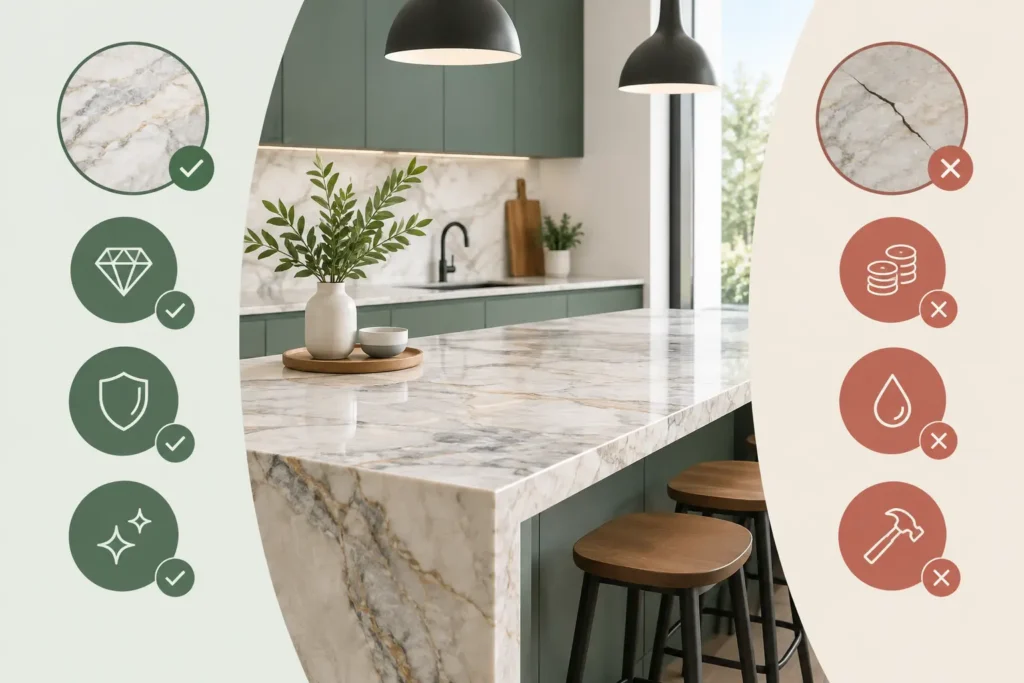
Quartzite earns its place in high-end kitchens because it offers a rare balance of natural beauty and everyday strength. Its biggest trade-off is that it needs more thoughtful ownership than a fully manufactured, nonporous surface.
The advantages of quartzite countertops
Natural movement that cannot be duplicated. Each slab has its own mineral pattern, color shifts, and veining. For homeowners who want a kitchen to feel layered and personal rather than uniform, that variation is a major advantage. A quiet white quartzite can complement painted cabinetry without looking flat, while a more expressive slab can become the focal point of the entire room.
Excellent hardness for an active kitchen. True quartzite is among the harder natural countertop materials. It generally resists scratches better than many softer natural stones, making it a strong candidate for families who cook often, host friends, or use the kitchen as a central gathering space. It is not indestructible, but it is built for real use when properly fabricated and maintained.
Good heat resistance. Natural stone performs well around normal kitchen heat. Quartzite is less likely to be affected by a warm serving dish than many resin-based materials. Even so, using trivets remains the smart habit. Direct, extreme heat can affect sealers, stress a countertop, or create a problem at seams and edges.
A premium look with lasting appeal. Quartzite has visual depth that comes from geology rather than a printed pattern. Light interacts with its crystalline structure in a way that can make a kitchen feel brighter and more refined. For homeowners considering resale value, natural stone is also a material many buyers recognize and appreciate.
Versatility beyond the kitchen. A carefully selected quartzite can work beautifully on bathroom vanities, fireplace surrounds, bar tops, and certain covered outdoor applications. The right choice depends on the slab, the finish, the exposure, and the installation details, but its durability gives designers room to carry a cohesive material story through a home.
The potential drawbacks to consider
It needs sealing and routine care. Quartzite is porous to varying degrees. A quality sealer helps resist absorption from cooking oils, wine, coffee, and other household spills, but sealing is not a permanent force field. Depending on the specific stone and sealer, periodic resealing may be recommended. Wiping spills promptly and cleaning with products made for natural stone will protect the finish.
Not every slab looks like the sample. This is part of quartzite’s charm, but it can surprise homeowners expecting consistency. Vein direction, background color, mineral deposits, and movement can change considerably across a full slab. Seeing the actual slabs reserved for your project is the best way to make confident decisions about color, layout, seams, and backsplash coordination.
It can be a significant investment. Material availability, slab quality, thickness, color rarity, project size, edge details, cutouts, and installation complexity all affect price. A bold slab with dramatic movement may require more planning to achieve a pleasing pattern across an island and perimeter counters. Quartzite is often chosen for its long-term value and appearance, not because it is the lowest-cost option.
Fabrication requires experience. Dense natural stone is demanding to cut, shape, transport, and install. Veining and natural fissures may require specific handling, and a large island can need thoughtful seam placement or additional support. The fabrication team should review cabinet condition, overhangs, sink choice, cooktop cutouts, and access to the installation area well before installation day.
Acidic spills can still be an issue. Quartzite is generally more acid-resistant than marble, but performance varies by stone. Lemon juice, vinegar, and similar ingredients should not sit on the surface for long. Prompt cleanup is simple, but it is an ownership habit worth considering if your household prefers a surface that needs virtually no attention.
How Quartzite Performs in a Real North Carolina Kitchen
The question is rarely whether quartzite is beautiful enough. The more useful question is whether it suits your daily rhythm.
Quartzite can be an excellent fit for a Durham, Chapel Hill, or Raleigh kitchen that sees frequent cooking, homework at the island, and weekend entertaining. It offers the elegant, organic look many homeowners want in an open-concept renovation while providing meaningful scratch resistance. A honed finish can create a softer, more relaxed appearance, while a polished finish brings out the stone’s color and crystalline detail.
However, homeowners who dislike any maintenance routine may be happier with a material that does not require resealing. Likewise, someone seeking a perfectly even white background from counter to counter should recognize that natural variation is unavoidable. Quartzite is best appreciated when its individuality is viewed as an asset rather than a flaw.
Choosing the Right Quartzite Slab
Photos are helpful for inspiration, but a slab should be selected in person whenever possible. Lighting changes color perception, and a small sample cannot show the full pattern or range of a natural stone. View slabs beside cabinet door samples, paint colors, flooring, and hardware if you have them available.
Pay attention to more than the center of the slab. Look at the edges, areas of concentrated veining, and any natural fissures. Fissures are not necessarily cracks or defects. They are natural features created during the stone’s formation, and an experienced fabricator can explain what they mean for your particular selection.
It is also wise to discuss layout before fabrication. Ask how the slab’s movement will flow across an island, whether bookmatching is appropriate for a backsplash, where seams may be needed, and how the chosen edge profile will support the overall design. These decisions are often what separate a good countertop installation from one that feels intentionally designed.
Care That Keeps Quartzite Looking Its Best
Daily care is straightforward: use a soft cloth or sponge with a pH-neutral stone cleaner, then dry the surface as needed. Avoid abrasive scrubbers and cleaners that contain harsh acids or strong alkalis. A cutting board is still recommended, both to protect your knives and to avoid unnecessary wear.
Do not assume a countertop needs resealing on a fixed annual schedule. The right interval depends on the particular quartzite, the sealer used, and how the space is used. If water darkens the stone rather than beading on the surface, it may be time to ask a stone professional about resealing.
Frequently Asked Questions
Is quartzite better than granite?
Neither is universally better. Quartzite often appeals to homeowners who want lighter colors and more flowing veining, while granite offers its own range of patterns and can have different care needs. The better choice depends on the specific slabs you love, your budget, and your maintenance preferences.
Can quartzite stain?
Yes, especially if it is not properly sealed or if spills are left for a long time. Most common kitchen spills can be managed well with a quality sealer and prompt cleanup. Because porosity varies, the performance of the exact slab matters more than a general claim about the category.
Are seams visible in quartzite countertops?
Most large countertop projects require seams, particularly when an island is oversized or access into the home is limited. A skilled fabricator places seams carefully and color-matches them to minimize visibility, but they should be discussed openly during planning.
Quartzite rewards homeowners who value natural character and are willing to give a beautiful surface sensible care. Schedule a showroom visit with Marble Unlimited to view full slabs, compare colors against your design selections, and receive guidance that fits the way you actually live in your home.